Pages

Showing posts with label Costly. Show all posts

Monday, August 15, 2016

Donie's Ireland daily news BLOG

Ireland’s mortgage rates still the highest in Europe


IRISH HOMEOWNERS CONTINUE TO PAY THE HIGHEST COSTS IN EUROPE FOR THEIR LOANS, WHILE SAVERS HERE GET SOME OF THE WORST RATES, ACCORDING TO OFFICIAL FIGURES.

The latest Central Bank survey showed the average rate Irish banks charge new customers for all types of floating rate mortgages stood at 3.22% in June.
The rate rises to 3.56% when the large amount of so-called renegotiated or restructured home loans are excluded.
The mortgage rate in the Republic compares with an average 1.81% banks charge new business customers across the Eurozone.
In Ireland, mortgage rates for new customers, including renegotiated loans, has fallen by a meagre 9 basis points in the past 12 months. The decline stands at 30 basis points once renegotiated loans are excluded.
Rates for variable rate mortgages fell 53 basis points to an average of 3.60%. Fixed rates for one to three years fell here by 26 basis points.
On deposits, the rates banks pay customers for their savings have shrunk in Ireland and the eurozone. However, banks here pay savers 0.13%, compared with an average rate of 0.58% across the whole of the eurozone.
Most Irish lenders this year have encouraged borrowers to switch to fixed rate mortgages from standard variable rates.
Irish banks also say that around half of all mortgage borrowers here pay tacker mortgage rates of around 1% or less.
Critics, however, say some banks persist in charging existing borrowers higher rates than those offered to new customers.
“The reductions in the ECB rates have been passed onto depositors, but mortgage holders have not benefited to any significant degree,” said Brendan Burgess of the Fair Mortgage Rates Campaign.
Rachel McGovern, chief operations officer at the industry group Professional Insurance Brokers Association, urged banks to offer “good” long-term rates of up to 20 years.
The figures show “two thirds of all new mortgages issued in the year to June were standard variable rate arrangements points to a lack of proper long-term fixed rates in the market and shows how out-of-step Ireland is with its European counterparts, she said.
The Central Bank said that banks sold new mortgage agreements of €417m in June and €4.5bn over the past year.
The new business excludes renegotiated mortgage arrangements struck between customers and banks.
There was €300m worth of home loans renegotiated in June.
The average rate paid by homeowners for their renegotiated mortgages stands at 3.03%, the figures show.

Crimes against small businesses in Ireland cost €1.8bn annually

A WIDE RANGING SURVEY REVEALS SHOPS MOST AFFECTED, THROUGH THEFT AND VANDALISM

   
Isme is calling for greater CCTV surveillance and more Gardaí.

A SURVEY OF SMALL AND MEDIUM-SIZED BUSINESSES HAS ESTIMATED THAT CRIMES AGAINST BUSINESS COST THEM €1.83 BILLION ANNUALLY.

The study by the Irish Small and Medium Enterprises Association (Isme), found that 31% of Ireland’s 245,000 SMEs were affected by crime in the last year, with an average direct cost of €6,570, a total of €499 million.
Each of the 245,000 businesses, it found, spends an average of €5,428 on crime prevention measures, a total of €1.33 billion.
The number of businesses directly affected by crime is down 5% when compared with the previous year’s survey, Isme said. Almost half of businesses in Dublin city reported crime, with 36% in Dublin county and 19% in Munster. Of those affected, 45% experienced more than two crimes.
Retail businesses were most affected, followed by construction and distribution businesses. Almost a third of incidents were theft by outsiders, with 27% of incidents related to vandalism. About 62% of respondents were not covered by insurance, with about a fifth of businesses electing not to report incidents to An Garda Síochána.
The survey indicated a low take-up of services provided by the Crime Prevention Office, with Dublin businesses most likely to use it.
National forum on crime?
Isme has made 11 recommendations for reducing the level of crimes against businesses, including measures to properly categorise and define incidents, so trends can be better measured and analysed. The group also suggested a national forum on crime to propose solutions and share information, comprising members from the Garda, politicians and the business community. The association also called for greater closed circuit television (CCTV) surveillance and increased numbers of Gardaí. It also called for changes to data protection rules to allow businesses share CCTV.
“The reduction of business crime is fundamental to business prosperity and is not being prioritised by government,” said Mark Fielding, the chief executive of Isme. He also claimed businesses have a “total lack of faith” in the criminal justice system.
“Crime against business is often seen as victimless but it has a very real impact on SMEs and their employees. SMEs are particularly vulnerable to business crime as they lack scale and therefore they experience greater difficulty in absorbing the direct and indirect costs of crime,” he said.

Allianz Insurer makes premium Advt ‘Dare To’ take a positive step? 

   
A scene from the Allianz ‘dare to’ campaign

WITH THE RISING COST OF INSURANCE MAKING HEADLINES ALL THIS YEAR, ALLIANZ – ONE OF THE LARGEST MULTI-LINE INSURERS IN THE IRISH MARKET – HAS LAUNCHED ITS LATEST BRAND CAMPAIGN CALLED ‘DARE TO’.

Allianz Ireland has a turnover in excess of €450m and employs 1,450 people and is owned by the German-headquartered Allianz SE Group.
Created by Rapport Marketing Communications and produced by production company Hot Sauce, the campaign aims to convey the positivity of the Irish economy and the people and businesses that ‘dare to’ make it tick over while at the same time demonstrating the peace of mind the company’s customers enjoy, allowing them to live life to the full.

A Second Garda denies a Mary Boyle cover-up?

Retired sergeant alleges his comments in a documentary were taken out of context

       
Mary Boyle went missing in 1977.

A SECOND GARDA OFFICER WHO CONTRIBUTED TO A DOCUMENTARY ABOUT THE DISAPPEARANCE OF MARY BOYLE HAS DENIED CLAIMS OF POLITICAL INTERFERENCE IN THE INVESTIGATION OF THE CASE.

Retired detective sergeant Aidan Murray, who featured in Mary Boyle: The Untold Story, has claimed the programme was “selective” and “misleading” in how it presented his interview.
The documentary includes allegations of political interference and a cover-up in the original Garda investigation into the disappearance of the six-year-old child near her grandparents’ home in Ballyshannon in 1977.
In a sworn statement to a solicitor, Mr Murray said that at no stage during his investigation into the disappearance of the little girl in Donegal was he subjected to “interference” or “pressure”.
He said his two senior officers, a superintendent and an inspector, were “honourable and professional men” and “at no point attempted to influence” him in the conduct of the investigation. He alleged that the documentary had “taken a number of my comments out of context and creates the wrong impression”.
Mr Murray’s comments echo those of his former colleague, retired sergeant Martin Collins, who also featured in the documentary, Mary Boyle: The Untold Story.
Speaking to his local newspaper in Donegal, Mr Collins also denied any political interference.
Both retired gardai investigated the disappearance of Mary, who was last seen walking across fields near her grandparents’ home. Both Gardai were interviewed for the documentary on Mary’s disappearance, made by the journalist, Gemma O’Doherty, who campaigned for an inquest and independent inquiry into the child’s disappearance.
Read more: Sean McEniff says he is not politician at the centre of Mary Boyle documentary
In their interviews, both retired gardai referred to a phone call allegedly made to Ballyshannon Garda Station.
Mr Murray told the documentary: “The result of that phone call is that certain people weren’t allowed to be interviewed and it was all hands off. The sting went out of the whole investigation after that.”
He also said he got a “nudge” from the inspector at the time to “ease off” when he was interviewing the chief suspect.
In his interview for the documentary, Mr Collins said: “The gist of it [the phone call] was that none of a particular family should be made suspect for Mary’s disappearance.”
In the statement, which he made last week, Mr Murray said: “I was not aware of any alleged phone call at the time and I subsequently heard the rumour many months later at a garda conference.”
He said: “The reason Inspector Daly asked me to pause the interview was because of his genuine concern for the mental health of the person being interviewed. It was not for any other reason.”
Mr Murray alleged that the Mary Boyle documentary was “selectively edited to suggest that this was because of political interference. This is absolutely incorrect.”
The Mary Boyle documentary has had more than 140,000 views since it was broadcast on YouTube last month.
Two politicians have publicly denied making the phone call to Ballyshannon Garda Station. The Garda Commissioner has now asked the Serious Crime Review Team to re-examine the child’s disappearance.
Documentary-maker Gemma O’Doherty did not provide a comment for publication, when contacted. She has assisted Mary’s twin sister, Ann Doherty, and country singer Margo O’Donnell, who is a distant relative of the family, in their campaign for justice for Mary Boyle. Ann Doherty wants an inquest and is preparing a legal action to take to the European Convention on Human Rights, alleging malpractice by An Garda Siochana and the Government.
The issue of alleged political interference in the case was raised in the European Parliament by Sinn Fein MEP Lynn Boylan and has been the subject of a number of statements by the party in recent months.

Cancer overtakes heart disease as the main cause of death in 12 European countries

     
Although diseases of the heart and blood vessels (cardiovascular disease, CVD) kill more people worldwide than anything else, with 17.3 million deaths globally, cancer has now overtaken CVD as the main cause of death in 12 European countries.
New data on the burden of CVD in Europe for 2016, which are published today (Monday) in the European Heart Journal [1], show that in the European region (defined as the 53 member states of the World Health Organisation) CVD caused more than four million deaths each year, 45% of all deaths. However, success in preventing and treating the disease has led to large decreases in CVD in a number of countries.
Despite cancer accounting for less than half the number of deaths than CVD in Europe as a whole, in nine of the 15 countries which were members of the European Union before 2004 (EU-15) and in another country that was among those that joined the EU afterwards (EU-28), more men now die from cancer than CVD. These countries are: Belgium, Denmark, France, Italy, Luxembourg, The Netherlands, Portugal, Slovenia, Spain and the UK. This was also the case in Norway and Israel (which are not members of the EU). Among women, more die from cancer than CVD in Denmark and Israel.
Dr Nick Townsend, senior researcher at the BHF Centre on Population Approaches for Non-Communicable Disease Prevention at the University of Oxford (UK), who led the research, said: “These figures highlight the wide inequalities between European countries in deaths from CVD. The 12 countries in which cancer has overtaken CVD as the main cause of death are all found in Western Europe, with nine of them having been members of the EU before 2004. The highest numbers of deaths from CVD tend to be seen in Eastern European countries.”
In France, where cancer was first seen to overtake CVD as the main cause of death in men, figures from the most recent year available (2011) show that 92,375 men died from cancer and 64,659 died from CVD. In Spain, the next country in which cancer overtook CVD, 67,711 men died from cancer and 53,487 died from CVD in 2013 (the year with the most recent data). In the UK in 2013, 87,511 men died from cancer and 79,935 from CVD.
“Although we have seen progress across Europe in the prevention and treatment of CVD, leading to decreases in mortality from it, it is clear that such progress is not consistent across the continent. With higher mortality from CVD still found in Eastern Europe and non-EU countries, it is clear that the progress that has been made in Western Europe and most EU countries is yet to be achieved equally throughout the region,” said Dr Townsend.
Inequalities between European countries can be seen in the percentage of deaths from CVD and age standardised death rates (ASDR) – where the death rates per 100,000 of the population have been adjusted according to the proportions of people in different age groups in the population. Out of a total of 3.8 million deaths in the EU-15 countries, 33% of these were caused by CVD (1.3 million), compared to 38% of deaths in the EU-28 countries (1.9 million) and 54% of deaths in non-EU member countries (2.1 million).
ASDRs from CVD ranged from 275 per 100,000 men and 174 per 100,000 women in France, to 1,444 per 100,000 men and 1,087 per 100,000 women in Kyrgyzstan. In the UK, the figures were 334 men and 228 women per 100,000.
Similar inequalities exist for premature deaths (deaths in people younger than 75). In the EU-15 countries, 21.4% of premature deaths were from CVD (0.25 million); in the EU-28 countries, 26% were from CVD (0.45 million); and in non-EU countries, 35.8% were from CVD (1.3 million).
For the first time, the researchers also report the number of years of life lost to deaths from CVD or years lived with disability due to the condition, a measurement known as disability-adjusted life years (DALYS). One DALY is equivalent to one year of healthy life lost. These also underlined the inequalities between different parts of Europe.
The number of DALYS lost to CVD in 2012 were highest in Ukraine (194 per 1000 of the population), Russian Federation (181 per 1000), Bulgaria (167 per 1000), Belarus (163 per 1000), and Latvia (153 per 1000). They were lowest in Luxembourg (39 per 1000), Cyprus (37 per 1000), Ireland (35 per 1000), Iceland (32 per 1000), and Israel (26 per 1000).
Dr Townsend said: “There were higher rates of years lost to death or disability due to CVD in Eastern Europe, although some differences may be due to different population distributions between countries as these rates were not standardised for age or sex.”
The authors of the study call for monitoring and surveillance of CVD in order to help countries in Europe work towards reducing the inequalities seen across the continent.
“We need more research into why some countries are showing improved outcomes, while others are not,” said Dr Townsend. “Improved data need to be collected in all countries in order to make comparisons on deaths and suffering from CVD between countries so that health professionals and national governments can target interventions more effectively to reduce inequalities.
“In particular, we need better figures on the numbers of new cases and the numbers of people living with CVD across Europe, as well as better data on the hidden burden of CVD – CVD that has not been identified by health services or included in national statistics. This would be invaluable to people working in public health, to help us identify problem areas and design better prevention and treatment strategies.”
The authors of the study point out that their research cannot explain the reasons for the patterns in CVD seen in Europe, because it is a description of the data on CVD in order to provide an overview of the burden of the disease in Europe.
This study is the authors’ fourth consecutive report on CVD in Europe. Any comparisons with death rates in the reports prior to the one in 2015 should be made with caution as, for the 2015 and 2016 reports, the authors used the new European Standard Population (ESP) based on 2013 population data, which reflect the increase in the elderly population. Previous reports were based on the 1976 ESP.

The most expensive fighter jet in the world was grounded by honey bees
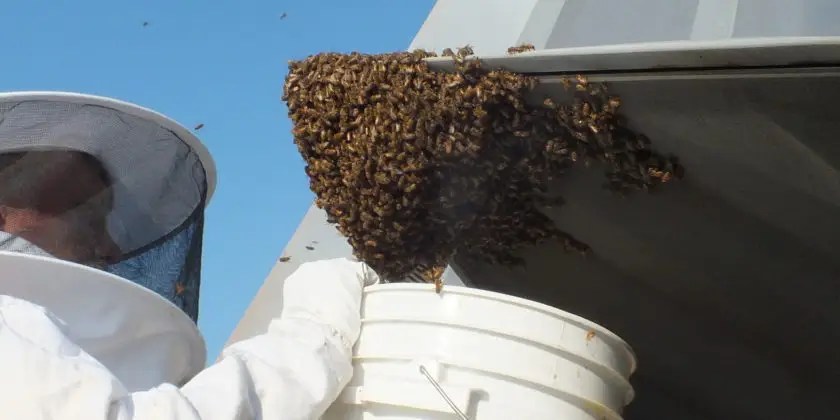
      
Fighter Wing Aircraft Maintainers were bemused when they found a swarm of honey bees hanging from the exhaust nozzle of an F-22 Raptor engine following flight operations at Joint Base Langley-Eustis, Virginia on June 11, 2016.
Initially, everyone’s reaction was to run and find someone who could “get rid” of the bees, but Tech. Sgt. Jeffrey Baskin, 192nd Maintenance Squadron crew chief, knew that these honey bees were too important to exterminate.
“I was shocked like everyone else because it looked like a cloud of thousands of bees, but I knew they wouldn’t sting anyone and were just looking for a new place to live,” said Baskin. “My neighbour maintains two colonies of honey bees and I knew they were at risk for extinction, I figured we might want to get a honey bee expert out to collect them.”
Maintainers notified Capt. Katie Chiarantona, 192nd Aircraft Maintenance Officer about the honey bee swarm. Since this had never happened on the flight line before, Chiarantona initially called the on-base entomologist to assess the situation. The entomologist immediately knew that he did not have the means to relocate the bees, so he referred Chiarantona to a local honey beekeeper in Hampton, Virginia.
Andy Westrich, U.S. Navy retired and local bee keeper, arrived on base with the needed materials and supplies. According to Chiarantona, Westrich said the swarm was one of the largest he had ever seen. He was escorted to the aircraft and used vacuum hoses to safely corral the honey bees off of the aircraft into large buckets. He then took the bee’s home and found that, as a hive, they weighed eight pounds which calculates to almost 20,000 bees!
“The honey bees most likely came from a much larger bee hive somewhere else on base,” said Chief Master Sergeant Gregg Allen, 192nd Maintenance Group Quality Assurance chief, who also happens to be a beekeeper. “Bee hives are constantly growing and they eventually become overcrowded. Around springtime, the bees will make a new queen, scout for a new location and take half of the hive with them to that location.”
Westrich suspected that the swarm of bees were on their way to a new location to build a hive for their queen. Queen bees typically fly with eggs to lay at the new hive and do not eat for up to 10 days before leaving to start a new colony. As a result, the queen is often malnourished for the journey. Westrich believes she landed on the F-22 to rest. Honey bees do not leave the queen, so they swarmed around the F-22 and eventually landed there.
According to Chiarantona, “[Westrich] said that one out of two things could have happened, the queen would have rested and gained energy and the swarm would’ve left in the morning, or they would have decided that the jet engine would be a great place to build a hive.”
Westrich was able to safely relocate the colony to a local beer producer where they will maintain the honey bee colony and use the honey for their production facility.
“Every bee is important to our food source; lots of things would die without bees,” said Baskin. “Most of our crops depend on bees, and our bees need to pollinate. This is why I knew we needed to save them instead of [exterminate] them.”    

Friday, November 20, 2015

Donie's Ireland daily news BLOG

Ireland prepared to send troops to help France, says Enda Kenny

Government willing to send soldiers to replace French forces in Mali or Lebanon

   
Taoiseach Enda Kenny said he had been briefed this morning by the national security committee.
The Government is prepared to send additional Irish troops to Mali or Lebanon in order to relieve French soldiers who will be sent to fight Islamic State, Taoiseach Enda Kenny has indicated.
Mr Kenny said the French ambassador to Ireland has told him France is already stretched in its military commitments as it prepares to intensify its efforts against Islamic State in Syria.
Speaking on Thursday at an Action Plan for Jobs press conference, Mr Kenny said no formal request had come from France to the Irish Government requesting aid.
However, Mr Kenny indicated the Government is prepared to send a small number of Defence Forces personnel to Mali or Lebanon to relieve their French counterparts.
“We have said that, within our conditions and our circumstances, we will assist in whatever way we can here, though probably the numbers will be small,” Mr Kenny said.
French president Francois Hollande has said his country is at war with IS and the French government this week invoked a mutual defence clause within the European Union’s Lisbon Treaty.
“When I signed the book of condolences at the French embassy the other day, the French ambassador did mention this to me that France is now very stretched,” the Taoiseach said.
“At the meeting of (EU) ministers for defence during the week, the French defence minister invoked the relevant article from the European treaties looking for help.
“It’s a matter for every country as to their own national security and defence position, how they might assist in that regard.
We have been working with the French in Mali, 10 members of the Defence Forces out there doing particular duties. “Now, a formal request has not come in from France yet. It may come through the Minister for Defence, it may be dealing with extra personnel that the French may withdraw from south Lebanon or Mali or whatever.
“The point the French make is that the French president has declared that France is at war in respect of these incidents in Syria. The French defence forces are stretched in quite a number of countries and they may make a request for assistance in that regard.
Obviously, there is a process by which Ireland being a neutral country would offer assistance in particular forms and we would consider that when it comes.”
Mr Kenny also said the national security committee – which includes Garda Commissioner Noirin O’Sullivan and the Defence Forces Chief of Staff, Vice Admiral Mark Mellett – briefed him, Tánaiste Joan Burton and Minister for Justice Frances Fitzgerald this morning.
“The Tánaiste and I and the Minister for Justice and the Minister for Foreign Affairs and the Minister for Defence had a briefing this morning from the national security committee, including the Garda Commissioner and the chief of staff of the Defence Forces,” Mr Kenny said.
“The situation insofar as Ireland has concerned has not changed since the Paris attacks. An incident is possible but not likely.”

Atlantic Philanthropies gives €138m grant to tackle dementia

Trinity College Dublin and University of California to share largest allocation to date.

    
Atlantic Philanthropies founder Chuck Feeney (right) with president and chief executive Christopher Oechsli.
Atlantic Philanthropies is to give €138 million – its largest grant to date – to Trinity College Dublin and University of California San Francisco to help tackle the looming dementia epidemic. Almost 50,000 people are living with dementia in Ireland, a number which is projected to double every 20 years if there is no effective intervention.
The new initiative will involve training hundreds of health professionals to carry out dementia research, deliver healthcare and change policies and practices around treatment of the disease. Details are due to be formally announced later today at an event attended by Taoiseach Enda Kenny.
Professor of psychology at Trinity College Dublin Ian Robertson said dementia amounted to a “public health emergency” comparable to the Aids epidemic of the 1980s.
“That led to a big social movement which required all sorts of social advocacy, political will and biomedical research which resulted in Aids becoming a largely treatable condition. “Now we face an even greater problem with dementia,” he added. “There are 48 million people with the disease. That’s set to double every 20 years – and we don’t have any treatment for it.”
The Trinity team will be headed by Prof Robertson and by ProfBrian Lawlor, who specialises in old-age psychiatry.
Latest research indicates that up to 30 per cent of new dementia cases may be preventable through changes in diet, exercise, mental stimulation and tackling risk factors such as diabetes and heart disease. Prof Robertson said a new “global brain health institute” would accelerate the application of science in this area, as well as drawing in additional funding for new research.
In all, some 600 health professionals, or “fellows”, will be trained over the next 15 years to help change policies and practices in the field. It is hoped they will then return to their home countries to become leaders in developing dementia-related healthcare programmes.
Neuroscience
A separate “scholars programme” will focus on training journalists, managers and filmmakers to teach others about the preventable causes of cognitive impairment. Training for both programmes will be multi-disciplinary, including geriatrics, cognitive neuroscience, public policy, health economics, health law and communications.
Christopher Oechsli, Atlantic Philanthropies president and chief executive, said: “Our goal is to create a generation of leaders around the world who have the knowledge, skills and drive to change both the practice of dementia care and the public health and societal forces that affect brain health.”
Atlantic Philanthropies is due to wind down its operations by the end of the decade following three decades of grant-making around the world. The organisation, founded by billionaire Chuck Feeney, has granted more than $6 billion worldwide, with about €1.25 billion going to projects in the Republic and Northern Ireland.
Dr Patrick Prendergast, president and provost of Trinity said the latest announcement would bring benefits to people around the world, create jobs in Ireland and deepen expertise in neuroscience and ageing.
“The sum donated is huge but so, too, is the problem we are trying to solve. There is hardly a family anywhere that has not experienced dementia in some shape or form,” he said.
Prof Bruce Miller of University of California San Franciso said the scale of funding and training in the dementia initiative could help change the course of this disease and protect vulnerable people around the world.
“We want to train leaders, not just in medicine and public policy, but also social science, journalism, law, business and the arts, who can teach others about the preventable causes of cognitive impairment, which disproportionately affect the poor,” he said.

Up to 15% of Irish homes have no access to broadband services – report

   
Respondents say, compared to two years ago, they are paying around €7 less per month for mobile phone bills
Up to 15% of Irish homes do not have access to broadband services and fewer younger people are watching live scheduled TV programming, according to a new survey focusing on our relationship with technology.
The study, commissioned by ComReg and carried out by RedC, also suggests that consumers are paying less for TV, broadband and mobile services when compared with 2013.
Over three quarters (76%) of homes across the country have access to fixed broadband.
This figure rises to 89% for Dublin homes, while just 66% of homes in rural Ireland have broadband access.
The research indicates that although 96% of homes have access to TV services, 9% of households use Netflix and spend an average of seven hours per week viewing the video streaming service.
Moreover, 14% of online paid-for TV service users said they have stopped watching live TV.
The data also suggests that traditional TV viewing has declined among younger audiences, with 6% of 18-24 year olds having no TV subscription (compared with 2% across age groups).
Sky is most popular provider of TV services in the country, with a 49% market share. UPC is next with 23%, while Saorview has risen to third spot at 19%.
With regard to mobile phone usage, the ComReg research shows the ownership rate for a mobile phone among Irish people stands at 97%.
Women and those aged between 18 and 24 are the most likely to use social media and instant messaging on mobile phones, while 12% of respondents who use these services said they have stopped sending traditional text messages as a result.
Vodafone has the largest market share among mobile service providers at 42%, followed by Three (28%), and Eir (23%).
Respondents say, compared to two years ago, they are paying around €7 less per month for mobile phone bills.
Fewer than half (46%) of people aged between 18 and 24 now use landlines at home, while 88% of those over the age of 65 still have a home landline.
From the 1,039 interviews conducted for the study, the vast majority of respondents (70%) purchase TV, phone, and broadband services in bundles. This rate falls to just 49% in rural areas.
Those buying TV, phone, and broadband services in a bundle claim they are now paying €4 less per month than they were in 2013.
The number of bundles sold that cover broadband, TV and phone has doubled since 2013, from 16% to 33%.
ComReg also commissioned similar research for Irish SMEs, with the results showing that 68% of firms use social media for business purposes, while Facebook is the most popular site.
Of the 500 companies surveyed by RedC, 55% of them use the social network to engage with potential customers.

Superbugs breach final antibiotic line of defence

E.coli strain showing resistance to colistin isolated from intensively farmed pig in China 


Superbugs are thought to have spread from animals & have smashed through the last line in antibiotic defences and now pose a global threat, scientists say.

Researchers identified a gene that makes infectious bacteria such as Escherichia coli (E.coli) highly resistant to polymyxins, the last group of antibiotics left after all others have failed.
The discovery in China, described as “extremely worrying” by one scientist, suggests the gene can easily be transferred to bacteria with the potential to cause epidemics.
Besides E. coli they include the pneumonia bug Klebsiella pneumoniae and Pseudomonas aeruginosa, which can trigger serious lung, blood and surgical infections.
An E.coli strain showing resistance to the polymyxin drug colistin was isolated from an intensively farmed pig in Shanghai during routine testing.
Scientists found the bug was able to transfer its immunity to the drug to other strains via the mobile gene mcr-1. This led to further tests of bacterial samples collected from pigs at slaughter in four Chinese provinces, and pork and chicken sold in 30 open markets and 27 supermarkets across Guangzhou province between 2011 and 2014.
Bacteria from infected patients at two hospitals in Guangdongand Zhejiang provinces were also tested.
A high prevalence of the resistance gene was found in E. coli bugs isolated from animals and raw meat samples. The gene was also identified in 16 E.coli and K. pneumoniae samples taken from 1,322 hospitalised patients.
Alarmingly, the proportion of samples testing positive for the super-resistance gene increased from year to year, said the scientists.
Lead researcher Professor Jian-Hua Liu, from the South China Agricultural University in Guangzhou, said: “These are extremely worrying results. The polymyxins (colistin and polymyxin B) were the last class of antibiotics in which resistance was incapable of spreading from cell to cell. Until now, colistin resistance resulted from chromosomal mutations, making the resistance mechanism unstable and incapable of spreading to other bacteria.
“Our results reveal the emergence of the first polymyxin resistance gene that is readily passed between common bacteria such as Escherichia coli and Klesbsiella pneumoniae, suggesting that the progression from extensive drug resistance to pan-drug resistance is inevitable.”
It was likely that polymyxin resistance via mcr-1 originated in animals before spreading to humans, said the scientists writing in The Lancet Infectious Diseases journal.
Increasingly heavy use of colistin by Chinese farmers may have helped E.coli to acquire the gene, they added.
Worldwide, the demand for colistin in agriculture was expected to reach almost 12,000 tonnes per year by the end of this year, rising to 16,500 tonnes by 2021.
The scientists wrote: “The emergence of mcr-1 heralds the breach of the last group of antibiotics. Although currently confined to China, mcr-1 is likely to emulate other resistance genes… and spread worldwide. There is a critical need to re-evaluate the use of polymyxins in animals and for very close international monitoring and surveillance of mcr-1 in human and veterinary medicine.”
The Chinese Ministry of Agriculture has launched an immediate risk assessment of colistin use in animal feed additives.
British experts called the discovery “disturbing” and “alarming”.
Dr David Burch, veterinary surgeon and an independent member of the Ruma (Responsible Use of Medicines in Agriculture) Alliance, said: “The report of a new resistance gene (mcr-1) against polymixins (colistin) found in Escherichia coli from pigs in China, which can be potentially plasmid transferred between bacterial species and potentially to man via meat, is indeed disturbing and disappointing.”
He pointed out that China’s pig farming industry is the largest in the world, more than twice the size of Europe’s. The use of generic antimicrobial drugs in animals is not normally under veterinary control in China.
The risk of the resistance gene spreading was heightened by increased trade and tourism bridging China and the West, said Dr Burch.
Professor Nigel Brown, president of the Microbiology Society, said: “This discovery that resistance to colistin can be transferred between bacteria is alarming.
“Although resistance to this important and widely-used polymyxin group of antibiotics has previously been shown, it was generally caused by mutation in individual organisms. Now that it has been demonstrated that resistance can be transferred between bacteria and across bacterial species, another line of defence against infection is in danger of being breached.
“We need careful surveillance to track the potential global spread of this resistance, and investment in research to discover new drugs with different modes of action.”

Climate change is ‘single biggest threat’ to polar bear survival

   
‘High probability’ of a 30% decline in polar bear numbers by 2050 due to retreating sea ice, IUCN study finds
In Canadian towns such as Churchill, polar bears have already come into conflict with humans as the ice season in Hudson Bay shortens.
Global warming is now the single most important threat to the survival of the polar bear with retreating sea ice set to decimate populations, according to a new study by the International Union for the Conservation of Nature (IUCN).
It found a “high probability” that the planet’s 26,000 polar bears will suffer a 30% decline in population by 2050 due to the loss of their habitat, which is disappearing at a faster rate than predicted by climate models.
“There is a high risk of extinction and the threat is serious,” said Dena Cator of the IUCN’s species survival commission. “You could consider polar bears to be a canary in the coal mine. They are an iconic and beautiful species that is extremely important to indigenous communities. But changes to their sea ice habitat are already being seen as a result of climate change.”
The animals, already classified as vulnerable by the IUCN, depend on seasonal sea ice, which they use as a platform to hunt ring seals and bearded seals after their summer fast.
But the extent of sea ice at its lowest point each year, in September, has shrunk at a rate of 14% per decade from 1979 to 2011, with the fourth-lowest extent recorded this year.
Annual ice-free periods of five months or more will spread hunger among polar bears, the IUCN said, pushing the species over a “tipping point”, with widespread reproductive failure and starvation in some areas.
Latest projections indicate that swaths of the Arctic could be ice-free for five months of the year or more by mid-century. Three of the 19 sub-population groups of polar bears studied are already in decline, in Baffin Bay, Kane Basin and the Southern Beaufort Sea.
But warming temperatures could also increase diseases among the polar bear’s traditional prey, further reinforcing the negative spiral. Pollution, human encroachment, and resource exploitation such as oil drilling only add to this dynamic.
In Canadian towns such as Churchill, polar bears have already come into conflict with humans, as the ice season in the western Hudson Bay has fallen by about one day per year over the last three decades.
Polar bears fight for survival as sea ice melts – video
“Human-bear conflict strategies are really coming into play in Churchill,” Cator said. “Polar bears are opportunists, like other bears. They look for what they can eat. When there is no sea ice, they will scavenge anything from whale carcasses to small animals or human rubbish.”
Advertisement
Because the charismatic bears sit at the top of polar food chains, their decline could be devastating for local ecosystems, which could become unbalanced and chaotic.
It could also affect indigenous communities which have traditionally hunted the animals for food and fur. In some mythologies, where polar bears are revered as wise, powerful and almost human, the sense of loss is acute.
“In living memory, my people have never experienced the extinction of any animals in Greenland, so losing the polar bear would be very sad,” said Bjarne Lyberth, a biologist for KMAPK, the hunters and fishers’ association of Greenland.
Some communities in east Greenland still speak of mythical giant polar bears living on sea ice far from human civilisation, Lyberth said. But Greenland is poor – only 2% of the frozen country is arable – and KMPAK lobbies for an extension of polar bear hunting permits.
Bear skins are a status symbol in northern Greenland, and frequently used for clothing. In 2012, Greenland contributed 138 kills to the world’s annual cull of 700-800 polar bears.
An underwater view of a polar bear ( Ursus maritimus) swimming near Harbour Islands in Hudson Bay. Photograph: Paul Souders/Corbis
Lyberth was wary of the IUCN’s assessment – which he had not seen – even though it surveyed all 19 polar bear populations in the most comprehensive science-based assessment yet undertaken.
“No hunter that I know can see any decline in the polar bear populations,” he said. “They are observing more polar bears in east Greenland. Twenty years ago, hunters had to travel hundreds of kilometres to find polar bears. Now they come to the town of Ittoqqortoormiit.”
Charlotte Moshøj, a wildlife biologist who has studied the region attributed this to global warming already underway. “There aren’t more bears,” she told the Arctic Journal. “There is less habitat.”
Last September, the five polar bear range states – Greenland, Canada, the US, Russia and Norway – agreed a Polar action plan, which the IUCN describes as “the first global conservation strategy to strive for the long-term persistence of polar bears in the wild”.