Pages

Showing posts with label Curiosity. Show all posts

Monday, August 10, 2015

Donie's Ireland daily news BLOG

Greece hopes to conclude bailout talks by Aug. 11


Greece hopes to conclude negotiations with international creditors by early Tuesday at the latest, a Greek official said as talks continued in Athens on a new multi-billion euro bailout.

Greece’s finance and economy ministers were locked in negotiations with representatives of creditors on Sunday. Greek officials have previously said they expect the bailout accord to go to the country’s parliament for approval by Aug. 18.
“Efforts are being made to conclude the negotiations, the horizon is by Monday night or early Tuesday,” said a Greek official who declined to be named.
“When the new bailout comes to parliament for a vote it will be one bill with two articles – one article will be the loan agreement and the MoU (memorandum of understanding) and the second article will be the prior actions,” the official said, referring to measures Greece needs to take for the bailout accord to take effect.
The negotiations began on July 20. A senior Greek finance official told Reuters the aim was for a meeting of euro zone finance ministers to review the accord on Friday, Aug. 14.
Athens is negotiating with European Union institutions and the International Monetary Fund for up to 86 billion euros ($94 billion) in fresh loans to stave off economic collapse and stay in the euro zone. The bailout must be in place by Aug. 20, when Greece has a repayment falling due to the European Central Bank.

Twenty Irish care centres facing closure

   
Some twenty care centres across the country face closure, affecting hundreds of people with intellectual disabilities.
The Sunday Business Post reports that health watchdog Hiqa has issued 20 HSE-run care homes with notices to cancel or refuse applications for registration unless they make drastic improvements or immediate changes.
According to the newspaper, only two of the residential homes said they were resolving the issues.
The Áras Attracta care home in Swinford, Co Mayo (pictured), which was at the centre of a Prime Time investigation, is one of the affected 20 centres.
Fianna Fáil’s spokesperson on disability and mental health deputy Colm Keaveny said the closure notices could have been prevented, and claimed the situation was much worse than had been reported.
He said there had been a lack of investment over a number of years.
“The Government has secretly and silently warehoused people with intellectual disabilities (in a) most blatant abuse of equality,” he said.
“It’s an absolute scandal (and) the situation is much worse than has been reported. The Government has, if any thing, deprioritised disability.”

Fleadh Cheoil na hÉireann 2015: ‘biggest Irish trad music festival’ launched in Sligo on Sunday

 Sligo is set to shine during the Fleadh 

The Sligo event is a magnet for ‘larger Irish family’ and those with no Irish links, says President Higgins.

  The website of Fleadh Cheoil na hÉireann 2015, taking place in Sligo.
Sligo was full of people dragging wheelie suitcases and musical instruments through its streets on Sunday as Fleadh Cheoil na hÉireann , “the biggest traditional Irish music festival on the planet”, was launched by PresidentMichael D Higgins.
Just a few hundred enthusiasts attended the first Fleadh Cheoil in Mullingar in 1951 when, according to President Higgins, “Ireland’s traditional culture was at a low ebb”.
  On Sunday, when he launched the eight-day 2015 Fleadh at the “Wild Atlantic Way gig rig” in the centre of Sligo, the President pointed out that over 350,000 people are expected to attend this year.
Senator Labhrás Ó Murchú was predicting closer to 400,000, and as someone who has attended “probably about 50” fleadhanna he is something of an expert.

Comhaltas praised

Praising the “heroic” work of Comhaltas Ceoltoirí Éireann in reviving Irish music, the President pointed out that the Fleadh was a magnet for the “larger Irish family” and also for people with no links to Ireland.
Mr Higgins welcomed visitors with “ neither ancestral nor geographic links to Ireland but who, with a curiosity that we all welcome, have developed a kinship with the Irish through culture and our folk traditions”.
A lot has changed since 1951. Fleadh hoodies and T-shirts are the attire of choice for many young musicians in Sligo. The official Fleadh cheoil website is encouraging them to “play music, make new friends and take music selfies (tweeted using #sligofleadh2015)”.
The elite of the traditional music world will arrive in the coming days and will be warmly welcomed, judging from the number of signs outside pubs declaring “musicians welcome”. “Sterling welcome” was another popular notice.
If people thought WB Yeats was going to even briefly step out of the limelight for the week of the Fleadh, they reckoned without the Drumcliffe-based Cos Cos dance group.

Under Bare BenBulben’s Head

They presented a pageant entitled “Under Bare BenBulben’s Head” billed as “an artistic interpretation of an imaginary meeting between two of Sligo’s best known historical figures, WB Yeats and St Colmcille”.

It was an apt pairing. Not only has the 6th century missionary close links with Drumcliffe, but the history books show that after being buried on the island of Iona off Scotland, his remains were disinterred many years later and moved to Downpatrick where he was laid alongside St Patrick and St Brigid.
With the serious business of Scoil Eige now getting into gear for thousands of young competitors, Irish Rail has laid on extra services between Sligo and Carrick-on-Shannon for those staying in outlying towns and villages .
The company is also mindful of those hoping to enjoy “a good evening out without the stresses of driving home afterwards”.
Another popular transport initiative is the John LennonEducational Tour Bus, which Music Generation Sligo and the Fleadh Cheoil have organised .
Supported by Yoko Ono Lennon, the bus boasts a fully equipped music studio and on Wednesday a lucky group of young musicians will be aboard for a masterclass in how to record and produce original music and make a video.
For others there will be busking opportunities on every corner.

The “Wild Atlantic Way” is a big success for Irish tourism

wild-atlantic-way  

Projects such as the Wild Atlantic Way have led to a significant boost to tourism here according to Tourism Ireland.

They also say that more people now consider Ireland good value for money.
Figures released this week show that over 400,000 more visitors came to Ireland in the first half of the year.
CEO of Tourism Ireland Niall Gibbons said projects including the Wild Atlantic Way and Ireland’s Ancient East were proving to be a big draw for tourists.
“It really worked in the international marketplace,” he said. “We have a very compelling story to tell (but) it’s important we don’t get complacent.”

Anti-smoking breakthrough drug eats nicotine like Pac-man!
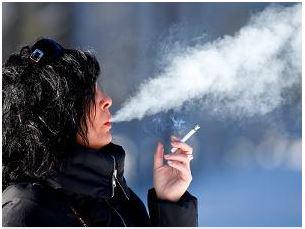
    

A new breakthrough research reveals a promising enzyme therapy that would help smokers quit for good.

A new study reveals a nicotine-eating bacteria that takes mental high and fun out of smoking.
The research was conducted at The Scripps Research Institute (TSRI) who were searching for an alternate, and effective, solution for people who wanted to quit smoking but needed help, according to NYC Today.
The nicotine-eating bacteria has an enzyme that would prevent the nicotine from ever reaching the brain, which in turn, who rob the smoker of any mental pleasure in the activity. The bacterial enzyme is called NicA2 is geared to make smoking less rewarding for smokers, in turn, internally encouraging them to quit.
The lead of the study, Kim Janda, is a chemistry professor and member of the Skaggs Institute for chemical biology at TSRI. Janda said that the experiment is promising, but still in the early stages. They hope that it will soon become one of the most successful therapies for smoking cessation.
The study to create this breakthrough therapy has been under the microscope for many years in the lab. The process has proven to work as they have been able to extract the enzyme from bacterium Pseudomonas putida.
The therapy is predicted to help about 80-90 percent of smokers who choose to use it. When used, the enzyme has effectively dropped the half-life of nicotine from hours down to minutes once added into the bloodstream. They also predict that at higher doses, the effect could be even more powerful.
Janda added, “The bacterium is like a little Pac-Man. It goes along and eats nicotine. Our research is in the early phase of drug development process, but the study tells us the enzyme has the right properties to eventually become a successful therapeutic.”
The enzyme was originally discovered in the soil from a tobacco field. The bacterium naturally consumes nicotine as a main source of nitrogen and carbon. The testing continued there in the lab where researches happily found the enzyme to be stable, which Janda says was an amazing sign.
“The enzyme is also relatively stable in serum, which is important for a therapeutic candidate,” said Song Xue, a TSRI graduate student.

NASA releases two Online tools for exploring Mars to the public

    
On the three-year anniversary of the Mars landing of NASA’s Curiosity rover, NASA is unveiling two new online tools that open the mysterious terrain of the Red Planet to a new generation of explorers, inviting the public to help with its journey to Mars.
Mars Trek is a free, Web-based application that provides high-quality, detailed visualizations of the planet using real data from 50 years of NASA exploration and allowing astronomers, citizen scientists and students to study the Red Planet’s features.
Experience Curiosity allows viewers to journey along with the one-ton rover on its Martian expeditions. The program simulates Mars in 3-D based on actual data from Curiosity and NASA’s Mars Reconnaissance Orbiter (MRO), giving users first-hand experience in a day in the life of a Mars rover.
A NASA team already is using Mars Trek to aid in the selection of possible landing sites for the agency’s Mars 2020 rover, and the application will be used as part of NASA’s newly announced process to examine and select candidate sites for the first human exploration mission to Mars in the 2030s.
“This tool has opened my eyes as to how we should first approach roaming on another world, and now the public can join in on the fun,” said Jim Green, director of NASA’s Planetary Science Division in Washington. “Our robotic scientific explorers are paving the way, making great progress on the journey to Mars. Together, humans and robots will pioneer Mars and the solar system.”
Mars Trek has interactive maps, which include the ability to overlay a range of data sets generated from instruments aboard spacecraft orbiting Mars, and analysis tools for measuring surface features. Standard keyboard gaming controls are used to maneuver the users across Mars’ surface, and 3-D printer-exportable topography allows users to print physical models of surface features.
Mars Trek was developed by NASA’s Lunar Mapping and Modeling Project, which provides mission planners, lunar scientists and the public with analysis and data visualization tools for our moon.
Experience Curiosity also uses real science data to create a realistic and game-ready rover model based entirely on real mechanisms and executed commands. Users can manipulate the rover’s tools and view Mars through each of its cameras.
“We’ve done a lot of heavy 3-D processing to make Experience Curiosity work in a browser. Anybody with access to the Web can take a journey to Mars,” said Kevin Hussey, manager of the Visualization Applications and Development group at NASA’sJet Propulsion Laboratory in Pasadena, California, which manages and operates the Curiosity rover.
Curiosity’s adventures on the Red Planet began in the early morning hours of August 6th, 2012, Eastern time (evening of August 5th, Pacific time), when a landing technique called the sky-crane maneuver deposited the rover in the 96-mile-wide (154-kilometer-wide) Gale Crater. From there, the rover began investigating its new home, discovering it had landed near an ancient lakebed sprinkled with organic material. Billions of years ago, fresh water would have flowed into this lake, offering conditions favorable for microbial life.
“At three years old, Curiosity already has had a rich and fascinating life. This new program lets the public experience some of the rover’s adventures first-hand,” said Jim Erickson, the project manager for the mission at JPL.
NASA has been on Mars for five decades with robotic explorers, and August traditionally has been a busy month for exploration of the planet. Viking 2 was put into orbit around Mars 39 years ago on August 7th, 1976, making NASA’s second successful landing on the Martian surface weeks later.
Mars Reconnaissance Orbiter was launched on August 12th, 2005, and still is in operation orbiting Mars. And Tuesday, August 4th, marked the eight-year anniversary of the launch of the Phoenix mission to the north polar region of the Red Planet.
NASA’s orbiters and rovers have changed the way we look at Mars and enable continued scientific discoveries that one day will pave the way for astronauts to explore the Red Planet.     

Friday, October 5, 2012

Donie's Ireland news BLOG Friday


Irish women forcibly adopted in the 1950’s demand access to their files from the state


Tens of thousands of people were sent for adoption around the 1950s after their mothers were deemed too young or unfit

Two women who lived for years not knowing they had been forcibly adopted have called for official State records to be opened to try and trace their birth mothers.
Theresa Tinggal, 58, and Maria Dumbell, 42, are among tens of thousands of people sent for adoption around the 1950s after their mothers were deemed too young or unfit.
“I was handed over to my adoptive parents at two-days-old and then registered as their legal child,” Ms Tinggal said. “It came as a great shock therefore when I discovered that I wasn’t who I thought I was.”
The Government has delayed until next year, plans for new adoption legislation which would allow people access to files to trace biological parents.
The women claim the Health Service Executive (HSE) has told them they cannot release files linked to informal adoptions.
Ms Tinggal was brought up as Theresa Hiney. The nurse who helped deliver her kept records of her own and a box with 1,000 names, including her name, has been recovered by her relatives. “The state could have found my birth mother but they didn’t really bother,” she said.
A website – adoptedillegally-ireland.com – has been set up to try and bring together people affected by adoptions authorised by hospitals, churches, religious orders and doctors after judging a mother unfit.
Ms Dumbell found out she was adopted when she applied for a passport. She discovered her birth was never registered and she only got an Irish passport after threatening a human rights lawsuit in Europe. “The attitude of the Irish Government when I asked them for information was ‘Well, things were done illegally then and we don’t know who you are’,” she said.
Clare Daly TD, who supports the women’s cause, said the records exist. She added: “It is not good enough to talk about guaranteeing children’s rights in a new referendum if we continue to ignore children failed in the past. The right to identity is the most basic human right.”
A spokeswoman for the Children’s Minister Frances Fitzgerald said she had no difficulty in meeting the women. She said they had been urged to discuss their cases with the national specialist for adoption in the HSE before she would meet them. The minister has also been pursuing the new legislation with the Attorney General’s office.

Treasury Holdings to go into liquidation

   
Treasury holdings directors. Johnny Ronan (left) and Richard Barrett.

Treasury Holdings lawyers have today told the High Court that they will not be opposing an application by KBC Bank to wind up the group next week.

The move clears the way for liquidators to be appointed to the business, which was previously one of Ireland’s largest property operations.
It directly employs up to 45 people at its headquarters in Dublin.
At its height, Treasury Holdings was a multibillion euro property business with operations spanning as far as China.
But after the boom, it crashed with debts of around €2.7bn and it has spent much of the past year in a protracted legal battle with Nama.
Today, lawyers for Treasury Holdings told the High Court it will not be opposing a petition to wind up the business by KBC Bank on Tuesday next.
KBC says that it is owed more than €70m for the development of Spencer Dock in Dublin.
The move to liquidate the group is supported by Nama over concerns that assets of a Treasury subsidiary in Singapore were transferred to a company in the Channel Islands linked to Treasury director Richard Barrett. 
This will be raised on Tuesday as KBC’s lawyers say they have not received an adequate explanation for this overnight transaction.

Wind energy delivery worth ‘30,000 jobs and €18bn to Ireland’

   Taoiseach announces 145 wind-turbine jobs in Galway

Ireland should aim to supply the rest of Europe, especially Britain, with wind energy, which has the potential to create 30,000 jobs here, a leading figure in the industry urged yesterday.

Irish Wind Energy Association (IWEA) chief executive Kenneth Matthews also called for joined-up thinking between Government and enterprise to deliver the economic potential of wind energy. Upwards of 2,000 people now work in the fast-growing sector.
“For the first time, being at the edge of Europe gives us an advantage. Our ambition should be to provide Europe with wind energy,” Mr Matthews said.
Speaking at the launch of a new IWEA policy paper at a conference in Killarney, he said renewable energy exporting was a significant national opportunity that needed to be seized. He said the policy paper would help the Government ensure the framework was correct to realise this potential.
Mr Matthews said government policy to facilitate 4GW (gigawatts) of wind energy produced for the domestic market and 6GW for export could deliver up to 18,400 jobs by 2020.
He said renewable energy divisions are needed in the IDA, Enterprise Ireland and Forfá: “If state agencies work in tandem with industry, they could attract turbine manufacturers to Ireland, as well as supplying turbines to projects here.
  “An Irish base could then be used as a launch-pad into the European onshore and sizeable UK offshore market. This cooperative approach could unlock an additional 9,000-12,000 jobs, bringing the true jobs total up to 30,400 by 2020.” 
The paper also calls on Government to develop a joint Irish-UK government policy. The UK needs 18GW of wind energy before 2020 and a policy should facilitate the achievement of at least 6GW of wind energy for export from Ireland. That would attract investment of more than €18bn into our economy, Mr Matthews said.
The paper also calls for a government-industry implementation group to bring together private and public stakeholders, agencies and private capital.
In a keynote address, Minister for Arts and Heritage Jimmy Deenihan welcomed the policy paper, saying it provided industry and the Government with a roadmap to maximising the benefits of wind energy.
Airtricity managing director Stephen Wheeler said the approach should be much more ambitious than it has been up to now: “The rest of Europe and, in particular, our closest neighbours the UK need renewable energy, Ireland, has the resources, the comparative advantage and the talent to deliver.”

Sligo widow sues over the contract killing of her husband


The widow of a Co Sligo man who was shot and killed in 1999 is suing four men for damages over her husband’s murder.
Margaret Madden, 58, a B&B owner at Lough Gara House in Monasteraden is suing the men for the loss of her husband and her own shock, pain and distress.
Terence Madden, 52, bled to death after being shot in both legs at close range on 28 January 1999.
Michael Doohan, a former member of the Defence Forces, and formerly of Ashbury Lawns, Ballinode, Co Sligo, Joseph Herron, formerly of Chapel street, Ballyshannon, Co Donegal, and Patrick McGrath, formerly of Cuilpruglish, Gurteen in Co Sligo, received life sentences at the Special Criminal Court in 2000 for their part in the murder.
A fourth man, Thomas Derrig, of Battlefield, Culfadda, Ballymote, Co Sligo, received a three year suspended sentence after pleading guilty to the possession a sawn-off shotgun.
The High Court heard that Doohan’s family and the Madden’s were neighbours and that both families ran B&B businesses.
The court was told that the murder arose from resentment felt by  Doohan towards Terence Madden over the erection of B&B signs.
Resentment had also built over another incident when Mr Madden arrived at Doohan’s father’s funeral in 1997 to sympathise with the family.

Irish Parents urged to check their children’s weight regularly ‘like their eyesight’

   
Children’s weight, like their eyesight, should be checked regularly, a nutrition expert has told the joint committee on health and children.
Safefood’s director of human health and nutrition, Dr Cliodhna Foley Nolan, said parents did not find it easy to accept that their child was overweight or obese.
“We need to ‘normalise’ the taking of weight and waistline measurements so it is not seen as criticism or an insult. It should be the same as getting their eyes checked.”
Dr Foley Nolan said Safefood-funded community and pre-school programmes were conditioning parents so they were health aware and, eventually, at a point were they were comfortable with having their children screened.
Senator John Crown asked if fear of causing eating disorders was making people shy away from the issue of addressing children’s weight.
Dr Foley Nolan said the fear about triggering eating disorders, especially in teenage girls, had been overstated. 
However, Safefood was ensuring that all information it provided on healthy eating was both constructive and positive. 
“We know that we are getting the message out there — that there is a better lifestyle choice but it is a slow burn,” she said. 
“That is why we need all the encouragement and support we can get from you [the committee], in terms of policies and funding.” 
Sen Crown, who is a doctor and practices cancer medicine, said obesity was one of the risk factors for a number of cancers. 
“And, surprisingly, if you have cancer, the chances that you do better in treatment is higher if you are not obese. 
“It could be argued that, after smoking, it is perhaps the second biggest risk factor that our population is facing right now in terms of cancer.” 
Sen Crown said there was no food that was dangerous when eaten in moderation, just as there was no food that was safe when eaten in excess. 
“Simply banning certain foods won’t work. 
“You have got to get the message across to people that it is the total volume and number of calories and the efficiency with which you absorb that food that makes the difference.” 
Meanwhile, an international conference in Dublin to mark the 10th anniversary of the European Food Safety Authority heard that counterfeit food was likely to become an increasing concern in the future. 
Chief executive of the Food Safety Authority of Ireland, Prof Alan Reilly, said the European regulatory agencies needed to be alert to emerging health risks, because of the free movement of foods across borders and the potential threat from food fraud. 
He warned that the food fraud could sometimes pose a very serious health risk: “Tragically, this was the case in the Czech Republic recently where alcoholic products were unscrupulously contaminated with methanol, resulting in a number of deaths.” 
He said there needed to be a high level of co-ordination among regulators and enforcement agencies. 

Curiosity rover pauses to get the scoop on Mars

     Curiosity rover pauses to get the scoop on MarsNASA’s intrepid Mars rover is pausing near fine-grained sand dunes to take soil samples that will be used to clean out any traces of Earth’s environment in the rover’s sample collection system.
Martian sandbox: An area dubbed “Rocknest” features fine-grained sands that will be scooped up by the Curiosity rover to test its sampling system and to clean out any lingering traces of Earth’s environment.
After creeping about 500 yards across the rocky floor of Gale Crater on the way to an intriguing intersection of different terrain types, the Mars Curiosity rover is pausing for a few weeks near fine-grained sand dunes to scoop up soil and run it through the vehicle’s sample acquisition system to clean out any lingering traces of Earth’s environment.
After three such “rinse and repeat” cycles, a scoop on the end of the rover’s robot arm will deposit small samples into a pair of sophisticated laboratory instruments, the Chemistry and Mineralogy experiment, or CheMin, and the Sample Analysis at Mars instrument, known as SAM. CheMin will use X-ray diffraction to identify the minerals in a sample while SAM will employ two spectrometers and a gas chromatograph to look for signs of organic compounds.
But first, all traces of Earth’s environment must be cleaned away to eliminate any chance of contaminating a Mars sample.
“Even though we make this hardware super squeaky clean when it’s delivered and assembled at the Jet Propulsion (Laboratory),…by virtue of its just being on Earth you get a kind of residual oily film that is impossible to avoid,” said Daniel Limonadi, a sampling system engineer at JPL. “And the Sample Analysis at Mars instrument is so sensitive we really have to scrub away this layer of oils that accumulates on Earth.”
Curiosity has rolled about 1,600 feet since landing August 6, heading toward an area known as Glenelg, where orbital photographs show three different types of terrain converging. Along the way, engineers have been testing and calibrating the rover’s instruments and subsystems, snapping pictures and collecting data.
Among the last items to be tested are a scoop on the end of the rover’s robot arm and an impact drill. Both devices are designed to deliver soil samples to inlets on the top of the rover’s body leading to the SAM and CheMin instruments.
Engineers have been looking for fine-grained sand to test the scoop system and to clean out its internal components. And they found what they were looking for at a site dubbed Rocknest, a football field shy of Glenelg. Rocknest measures about 8 feet by 16 feet and features dunelike deposits of sand as well as a variety of exposed rocks.
“What we’re doing at the site is we take the sand sample, this fine-grained material, and we effectively use it to rinse our mouth three times and then kind of spit out,” Limonadi said. “We will take a scoop, we will vibrate that sand on all the different surfaces to effectively sandblast those surfaces, then we dump that material out and we rinse and repeat three times to finish cleaning everything out…. Our Earth-based testing has found that to be supereffective at cleaning.”
The first scoop will be collected Saturday, and if all goes well, the cleaning process will be finished in the next week and a half, with part of the third sample being delivered to the CheMin instrument. A fourth sample then will be shared by both CheMin and SAM.
With the scoop tests complete, Curiosity will continue on to Glenelg where its impact drill will be put to the test for the first time, probably sometime in November. Though the scoop can collect soil samples from the surface, the drill will produce debris from the interior of targeted rocks, using the same delivery system employed by the scoop to reach the laboratory instruments.
“Getting these samples is kind of the keystone of the rover mission,” said Mike Watkins, a mission manager at the Jet Propulsion Laboratory. “We’re being deliberately, incredibly careful. So not just taking (samples), but every time we take one, stop, open it up, take a look at it, make a video of us dropping it off. We’re taking a lot of extra steps here to make sure we understand exactly what’s going on, [things] we won’t have to do every time we do a scoop in the future.”