Pages

Showing posts with label Moon. Show all posts

Monday, August 10, 2015

Donie's Ireland daily news BLOG

Greece hopes to conclude bailout talks by Aug. 11


Greece hopes to conclude negotiations with international creditors by early Tuesday at the latest, a Greek official said as talks continued in Athens on a new multi-billion euro bailout.

Greece’s finance and economy ministers were locked in negotiations with representatives of creditors on Sunday. Greek officials have previously said they expect the bailout accord to go to the country’s parliament for approval by Aug. 18.
“Efforts are being made to conclude the negotiations, the horizon is by Monday night or early Tuesday,” said a Greek official who declined to be named.
“When the new bailout comes to parliament for a vote it will be one bill with two articles – one article will be the loan agreement and the MoU (memorandum of understanding) and the second article will be the prior actions,” the official said, referring to measures Greece needs to take for the bailout accord to take effect.
The negotiations began on July 20. A senior Greek finance official told Reuters the aim was for a meeting of euro zone finance ministers to review the accord on Friday, Aug. 14.
Athens is negotiating with European Union institutions and the International Monetary Fund for up to 86 billion euros ($94 billion) in fresh loans to stave off economic collapse and stay in the euro zone. The bailout must be in place by Aug. 20, when Greece has a repayment falling due to the European Central Bank.

Twenty Irish care centres facing closure

   
Some twenty care centres across the country face closure, affecting hundreds of people with intellectual disabilities.
The Sunday Business Post reports that health watchdog Hiqa has issued 20 HSE-run care homes with notices to cancel or refuse applications for registration unless they make drastic improvements or immediate changes.
According to the newspaper, only two of the residential homes said they were resolving the issues.
The Áras Attracta care home in Swinford, Co Mayo (pictured), which was at the centre of a Prime Time investigation, is one of the affected 20 centres.
Fianna Fáil’s spokesperson on disability and mental health deputy Colm Keaveny said the closure notices could have been prevented, and claimed the situation was much worse than had been reported.
He said there had been a lack of investment over a number of years.
“The Government has secretly and silently warehoused people with intellectual disabilities (in a) most blatant abuse of equality,” he said.
“It’s an absolute scandal (and) the situation is much worse than has been reported. The Government has, if any thing, deprioritised disability.”

Fleadh Cheoil na hÉireann 2015: ‘biggest Irish trad music festival’ launched in Sligo on Sunday

 Sligo is set to shine during the Fleadh 

The Sligo event is a magnet for ‘larger Irish family’ and those with no Irish links, says President Higgins.

  The website of Fleadh Cheoil na hÉireann 2015, taking place in Sligo.
Sligo was full of people dragging wheelie suitcases and musical instruments through its streets on Sunday as Fleadh Cheoil na hÉireann , “the biggest traditional Irish music festival on the planet”, was launched by PresidentMichael D Higgins.
Just a few hundred enthusiasts attended the first Fleadh Cheoil in Mullingar in 1951 when, according to President Higgins, “Ireland’s traditional culture was at a low ebb”.
  On Sunday, when he launched the eight-day 2015 Fleadh at the “Wild Atlantic Way gig rig” in the centre of Sligo, the President pointed out that over 350,000 people are expected to attend this year.
Senator Labhrás Ó Murchú was predicting closer to 400,000, and as someone who has attended “probably about 50” fleadhanna he is something of an expert.

Comhaltas praised

Praising the “heroic” work of Comhaltas Ceoltoirí Éireann in reviving Irish music, the President pointed out that the Fleadh was a magnet for the “larger Irish family” and also for people with no links to Ireland.
Mr Higgins welcomed visitors with “ neither ancestral nor geographic links to Ireland but who, with a curiosity that we all welcome, have developed a kinship with the Irish through culture and our folk traditions”.
A lot has changed since 1951. Fleadh hoodies and T-shirts are the attire of choice for many young musicians in Sligo. The official Fleadh cheoil website is encouraging them to “play music, make new friends and take music selfies (tweeted using #sligofleadh2015)”.
The elite of the traditional music world will arrive in the coming days and will be warmly welcomed, judging from the number of signs outside pubs declaring “musicians welcome”. “Sterling welcome” was another popular notice.
If people thought WB Yeats was going to even briefly step out of the limelight for the week of the Fleadh, they reckoned without the Drumcliffe-based Cos Cos dance group.

Under Bare BenBulben’s Head

They presented a pageant entitled “Under Bare BenBulben’s Head” billed as “an artistic interpretation of an imaginary meeting between two of Sligo’s best known historical figures, WB Yeats and St Colmcille”.

It was an apt pairing. Not only has the 6th century missionary close links with Drumcliffe, but the history books show that after being buried on the island of Iona off Scotland, his remains were disinterred many years later and moved to Downpatrick where he was laid alongside St Patrick and St Brigid.
With the serious business of Scoil Eige now getting into gear for thousands of young competitors, Irish Rail has laid on extra services between Sligo and Carrick-on-Shannon for those staying in outlying towns and villages .
The company is also mindful of those hoping to enjoy “a good evening out without the stresses of driving home afterwards”.
Another popular transport initiative is the John LennonEducational Tour Bus, which Music Generation Sligo and the Fleadh Cheoil have organised .
Supported by Yoko Ono Lennon, the bus boasts a fully equipped music studio and on Wednesday a lucky group of young musicians will be aboard for a masterclass in how to record and produce original music and make a video.
For others there will be busking opportunities on every corner.

The “Wild Atlantic Way” is a big success for Irish tourism

wild-atlantic-way  

Projects such as the Wild Atlantic Way have led to a significant boost to tourism here according to Tourism Ireland.

They also say that more people now consider Ireland good value for money.
Figures released this week show that over 400,000 more visitors came to Ireland in the first half of the year.
CEO of Tourism Ireland Niall Gibbons said projects including the Wild Atlantic Way and Ireland’s Ancient East were proving to be a big draw for tourists.
“It really worked in the international marketplace,” he said. “We have a very compelling story to tell (but) it’s important we don’t get complacent.”

Anti-smoking breakthrough drug eats nicotine like Pac-man!
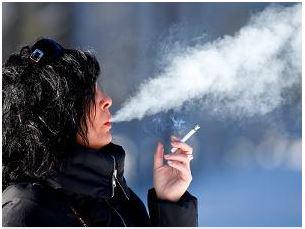
    

A new breakthrough research reveals a promising enzyme therapy that would help smokers quit for good.

A new study reveals a nicotine-eating bacteria that takes mental high and fun out of smoking.
The research was conducted at The Scripps Research Institute (TSRI) who were searching for an alternate, and effective, solution for people who wanted to quit smoking but needed help, according to NYC Today.
The nicotine-eating bacteria has an enzyme that would prevent the nicotine from ever reaching the brain, which in turn, who rob the smoker of any mental pleasure in the activity. The bacterial enzyme is called NicA2 is geared to make smoking less rewarding for smokers, in turn, internally encouraging them to quit.
The lead of the study, Kim Janda, is a chemistry professor and member of the Skaggs Institute for chemical biology at TSRI. Janda said that the experiment is promising, but still in the early stages. They hope that it will soon become one of the most successful therapies for smoking cessation.
The study to create this breakthrough therapy has been under the microscope for many years in the lab. The process has proven to work as they have been able to extract the enzyme from bacterium Pseudomonas putida.
The therapy is predicted to help about 80-90 percent of smokers who choose to use it. When used, the enzyme has effectively dropped the half-life of nicotine from hours down to minutes once added into the bloodstream. They also predict that at higher doses, the effect could be even more powerful.
Janda added, “The bacterium is like a little Pac-Man. It goes along and eats nicotine. Our research is in the early phase of drug development process, but the study tells us the enzyme has the right properties to eventually become a successful therapeutic.”
The enzyme was originally discovered in the soil from a tobacco field. The bacterium naturally consumes nicotine as a main source of nitrogen and carbon. The testing continued there in the lab where researches happily found the enzyme to be stable, which Janda says was an amazing sign.
“The enzyme is also relatively stable in serum, which is important for a therapeutic candidate,” said Song Xue, a TSRI graduate student.

NASA releases two Online tools for exploring Mars to the public

    
On the three-year anniversary of the Mars landing of NASA’s Curiosity rover, NASA is unveiling two new online tools that open the mysterious terrain of the Red Planet to a new generation of explorers, inviting the public to help with its journey to Mars.
Mars Trek is a free, Web-based application that provides high-quality, detailed visualizations of the planet using real data from 50 years of NASA exploration and allowing astronomers, citizen scientists and students to study the Red Planet’s features.
Experience Curiosity allows viewers to journey along with the one-ton rover on its Martian expeditions. The program simulates Mars in 3-D based on actual data from Curiosity and NASA’s Mars Reconnaissance Orbiter (MRO), giving users first-hand experience in a day in the life of a Mars rover.
A NASA team already is using Mars Trek to aid in the selection of possible landing sites for the agency’s Mars 2020 rover, and the application will be used as part of NASA’s newly announced process to examine and select candidate sites for the first human exploration mission to Mars in the 2030s.
“This tool has opened my eyes as to how we should first approach roaming on another world, and now the public can join in on the fun,” said Jim Green, director of NASA’s Planetary Science Division in Washington. “Our robotic scientific explorers are paving the way, making great progress on the journey to Mars. Together, humans and robots will pioneer Mars and the solar system.”
Mars Trek has interactive maps, which include the ability to overlay a range of data sets generated from instruments aboard spacecraft orbiting Mars, and analysis tools for measuring surface features. Standard keyboard gaming controls are used to maneuver the users across Mars’ surface, and 3-D printer-exportable topography allows users to print physical models of surface features.
Mars Trek was developed by NASA’s Lunar Mapping and Modeling Project, which provides mission planners, lunar scientists and the public with analysis and data visualization tools for our moon.
Experience Curiosity also uses real science data to create a realistic and game-ready rover model based entirely on real mechanisms and executed commands. Users can manipulate the rover’s tools and view Mars through each of its cameras.
“We’ve done a lot of heavy 3-D processing to make Experience Curiosity work in a browser. Anybody with access to the Web can take a journey to Mars,” said Kevin Hussey, manager of the Visualization Applications and Development group at NASA’sJet Propulsion Laboratory in Pasadena, California, which manages and operates the Curiosity rover.
Curiosity’s adventures on the Red Planet began in the early morning hours of August 6th, 2012, Eastern time (evening of August 5th, Pacific time), when a landing technique called the sky-crane maneuver deposited the rover in the 96-mile-wide (154-kilometer-wide) Gale Crater. From there, the rover began investigating its new home, discovering it had landed near an ancient lakebed sprinkled with organic material. Billions of years ago, fresh water would have flowed into this lake, offering conditions favorable for microbial life.
“At three years old, Curiosity already has had a rich and fascinating life. This new program lets the public experience some of the rover’s adventures first-hand,” said Jim Erickson, the project manager for the mission at JPL.
NASA has been on Mars for five decades with robotic explorers, and August traditionally has been a busy month for exploration of the planet. Viking 2 was put into orbit around Mars 39 years ago on August 7th, 1976, making NASA’s second successful landing on the Martian surface weeks later.
Mars Reconnaissance Orbiter was launched on August 12th, 2005, and still is in operation orbiting Mars. And Tuesday, August 4th, marked the eight-year anniversary of the launch of the Phoenix mission to the north polar region of the Red Planet.
NASA’s orbiters and rovers have changed the way we look at Mars and enable continued scientific discoveries that one day will pave the way for astronauts to explore the Red Planet.     

Thursday, October 2, 2014

Donie's Ireland daily news BLOG

Central Bank to impose limits on home loans 

The Regulator said to be preparing to publish a consultation paper on its proposals

  
The Central Bank plans to impose limits for the first time on how much banks can lend home buyers as property values in Ireland soar, two people with knowledge of the matter said.
The Central Bank plans to impose limits for the first time on how much banks can lend home buyers as property values in Ireland soar.
The regulator is said to be preparing to publish a consultation paper on its proposals within weeks.
Banks and lobby groups will have a chance to comment on the plans, which center on introducing loan-to-value and loan-to-income restrictions.
A spokesman for the Central Bank declined to comment.
House prices are surging even as banks grapple with the aftermath of mortgage crisis that forced the government to bail out most of the nation’s lenders.
A quarter of the country’s owner-occupier home loans are in arrears or had their terms eased.
Loans granted during the boom for more than 85 per cent of the property value were most likely to default in the wake of the crash, central bank economists said today.
“There is no evidence the current price increases are credit driven, but the number of mortgage approvals, a potential measure of new mortgage credit demand, rose sharply in the first seven months of 2014,” said central bank economists Niamh Hallissey, Robert Kelly and Terry O’Malley in a report published today.
“This is therefore a key time to investigate the tools available to policy makers to safeguard future lending.”
Irish home prices soared 15 percent in the year through August, driven by a 25 per cent jump in Dublin values amid a shortage of properties in the Irish capital, the Central Statistics Office said on September 24.
Still, values remain 41 per cent off their 2007 peak both for Dublin and nationally. Any limits would particularly affect first-time buyers, according to one of the people.
Irish mortgage approvals rose by 54 per cent in value to €462 million in July compared to the same month last year, according to Banking and Payments Federation Ireland.
In 2006, mortgage lending surged to €40 billion. Davy, Ireland’s largest securities firm, said that some lenders are beginning to relax lending criteria as the property market recovers.
“It appears some banks are willing to lend 4.5 times combined income to higher-rated borrowers, but this is at the upper end of what is typically deemed responsible internationally,” Davy said in a report yesterday.
“Typically a limit of 3-4 times is considered a more acceptable level. The onus is on the central bank to put limits on the amount of money that can be borrowed to help keep house prices in check.”

Thirteen children have died on our roads so far this year, 

7 were killed in the whole of 2013


Deaths on Irish roads have remained high this year, after increasing for the first time since 2005 last year.
140 people have been killed so far this year  on Irish roads.
The Road Safety Authority has expressed concern about the high numbers of vulnerable road users being killed.
Thirteen children under the age of 14 have died in road traffic accidents so far this year, compared to seven children who were killed on the roads in the whole of 2013.
Moyagh Murdock, CEO of the Road Safety Authority said: “This year, for the second year in a row, we are seeing a marked increase in deaths on our roads when compared with previous years, where great strides were made to reduce deaths.
Vulnerable road users are most at risk this year – the old and the young, cyclists, pedestrians and motorcyclists.
“We really need to redouble our efforts to try and reduce what was the worst year on our roads in seven years last year.”
Irish Road Safety Week is on from October 6 to 12, the RSA is urging people to get involved in this national drive to save lives.

Sharp fall in the number of Ireland's critical care hospital beds

  • The number of Irish Hospital critical care beds has fallen from 289 to 233
  
An intensive care unit: none of the Republic’s 19 maternity units has an intensive care unit
The number of critical care hospital beds has fallen sharply over the past six years despite a recommendation to double capacity.
The shortage of intensive care beds was highlighted this week at the inquest of Dhara Kivlehan, who died in September 2010 after giving birth a week earlier in Sligo Regional Hospital.
Ms Kivlehan was moved to the Royal Victoria Hospital in Belfast after no bed could be found in the intensive care units of three hospitals in the Republic.
A year before her death a HSE-commissioned report recommended a 45 per cent increase in the number of critical care beds from 289 to 418. Prospectus Consultants said a further increase to 579 beds was needed in the years up to 2020. However, far from increasing, the number has fallen from 289 to 233 at the present time.
The HSE sought to provide an extra 10 critical care beds in the service plan for this year, at a cost of €3 million a year, but was forced to scrap the plan because of funding cuts in last year’s budget, correspondence between the HSE and the Department of Health shows.
Bed occupancy
The HSE says it is implementing a “critical care bed bureau” to optimise utilisation of beds nationally by providing live information on bed occupancy in all units.
However, Ms Kivlehan’s husband Michael said an internal report a few weeks after his wife’s death in 2010 recommended such a national system be put in place.
The HSE was unable to say yesterday why there was such a delay in implementing this recommendation.
None of the Republic’s 19 maternity units has an intensive care unit.
Speaking in the Dáil on Tuesday, Minister for Health Leo Varadkar said while Ireland needed more obstetricians than the 120 available, this was more per head than Canadaand New Zealand.

Staff Lieut Gen. Surprise at soldiers sleeping in cars claim

Says Lieut Gen Conor O’Boyle
  
Lieut Gen Conor O’Boyle: “I would encourage any soldier that has had to sleep in his or her car to talk to the officer in charge in the barracks they’re working in. We do have accommodation”
Defence Forces Chief of Staff Lieut Gen Conor O’Boyle has said he was surprised at Pdforra’s suggestion this week that some soldiers were sleeping in their cars at barracks because they did not have the money for the fuel needed to drive home and back the following morning.
He said anyone sleeping in their car should bring it to the attention of the chain of command and accommodation would be provided for them in their barracks.
Minister for Defence Simon Coveney said he planned to establish the full facts.
“If people are sleeping in their cars, I am very uncomfortable with that and it shouldn’t be happening.
“I would encourage any soldier that has had to sleep in his or her car to talk to the officer in charge in the barracks they’re working in. We do have accommodation . . .
“If there’s one thing the Defence Forces do very well it’s they stick together, they work together and they look after each other.”

Moon’s hidden valley system now revealed

  
The Moon as we see it (L), in terms of height variation (C), and from surface gravity variations (R)
Scientists have identified a huge rectangular feature on the Moon that is buried just below the surface.
The 2,500km-wide structure is believed to be the remains of old rift valleys that later became filled with lava.
Centred on the Moon’s Procellarum region, the feature is really only evident in gravity maps acquired by Nasa’s Grail mission in 2012.
But knowing now of its existence, it is possible to trace the giant rectangle’s subtle outline even in ordinary photos.
Mare Frigoris, for example, a long-recognised dark stripe on the lunar surface, is evidently an edge to the ancient rift system.
“It’s really amazing how big this feature is,” says Prof Jeffery Andrews-Hanna.
“It covers about 17% of the surface of the Moon. And if you think about that in terms relative to the size of the Earth, it covers an area equivalent to North America, Europe and Asia combined,” the Colorado School of Mines scientist told BBC News.
“When we first saw it in the Grail data, we were struck by how big it was, how clear it was, but also by how unexpected it was.
“No-one ever thought you’d see a square or a rectangle on this scale on any planet.”
The full Moon as seen from the Earth, with the Procellarum border structure superimposed in red
So how was this extraordinary feature produced?
Andrews-Hanna and colleagues note that the Procellarum region contains a lot of naturally occurring radioactive elements, such as uranium, thorium and potassium.
On the early Moon, these would have heated the crust, which, when it cooled would have contracted.
Mare Frigoris is evidently an edge to the ancient rift valley system
This shrinking, they propose, would have ripped the surface, opening deep valleys. The geometry is the giveaway.
On Earth, cooling and contraction will preferentially produce hexagons containing 120-degree angles.
The famous Giant’s Causeway in Northern Ireland is a classic example on the small scale, but even in bigger settings, such as in East Africa’s rift valleys, geological lines tend to intersect in this way.
Procellarum’s giant rectangle does the same, too – because the entire feature is draped over a sphere. This means the angles at the corners are wider than 90 degrees.
“What we’re seeing is a clever trick of spherical geometry. For structures on this scale, a polygon with 120-degree angles at the corners actually has four sides instead of six,” explained Prof Andrews-Hanna.
The team cannot tell when the rifting occurred, but the dating of Moon rocks brought back by Apollo would suggest the valleys were filled by volcanic lavas about 3.5 billion years ago.
Giant’s Causeway: Cooling basaltic rock naturally fractures into hexagons
The Grail satellites sensed very subtle variations in the pull of gravity across the Moon’s surface
The new study goes some way to resolving arguments over the origins of Procellarum, which looks different to other, more circular mare (dark regions) on the Moon’s surface.
For these regions, big asteroid impacts were more important in sculpting their forms.
The study is also further proof of the value of the Grail mission, led from the Massachusetts Institute of Technology.
This comprised two, near-identical satellites that chased each other around the Moon over the course of a year.
They mapped changes in the pull of gravity as they flew over areas of differing mass.
Big mountains will have a different signal to deep depressions, obviously. But the data also reveals those locations that have different rock types and densities.
In the case of Procellarum, the pair sensed an excess of mass stemming from the presence of all the basaltic lava filling the rift valleys. 

Wednesday, June 4, 2014

Donie's news Ireland daily BLOG update

100,000 people in Ireland will have their dole cut in an overpayment-clampdown


THERE WILL BE A CLAMPDOWN ON DOLE OVERPAYMENT

More than 100,000 welfare recipients had their €188 dole payments cut last year in Ireland because they had been overpaid,
The clampdown was part of a €70m recovery operation undertaken by Minister Joan Burton’s Social Protection department to combat fraud.
New documents from the department, seen by the Irish Independent, show that because of increased enforcement powers introduced last year, there has been a significant increase in the numbers who have had their payments cut.
The new measures, which came into effect in February 2013, allow Ms Burton’s officials to claw back up to €28, or 15pc, of the weekly dole payment of €188. This they say has led to a 30pc spike in “overpayment recoveries”.
Under the new act, the department can also get an attachment to earnings and monies held in bank accounts by those who have been overpaid in a bid to recoup the excess payments. According to the documents, €35m was recouped from 103,000 people by reducing their weekly payments, while another €35m was gathered from other sources such as bank accounts.
This compares to just over 55,000 cases in 2010 which amounted to €35m and 82,000 cases in 2012 which amounted to €53m, the documents show.
The tough new powers are proving to “be a useful tool” in forcing people no longer in need of State support into a repayment scheme.
The documents were sent by Niamh O’Donoghue, secretary general of the Department of Social Protection to the Public Accounts Committee (PAC), which had sought clarity on its fraud detection competence.
The shocking figures were revealed as it has emerged that three Social Welfare public servants “colluded” with third parties to defraud the taxpayer of €1.3m. The PAC was told last month that two of the cases are under Garda investigation.
Controversial
One staff member, working in the community welfare division, allegedly colluded with an undisclosed number of outside parties over a six-year period between 2006 and 2012 to scam the taxpayer of between €1m and €1.1m.
The documents also reveal that the controversial €10 cuts to child benefit, announced in budget 2013, affected 1,164,000 children in 609,900 families.
Monthly child benefit rates were cut by €10 to €130, while the rates for the third child was cut from €148 to €130. The rates for the fourth and subsequent children were cut from €160 to €140 a month.
The documents also reveal that of the 78,246 recipients across the country who receive lone parents allowance, 76,783 of those were female and just 1,463 were male, a ratio of 52.5 to one.

Skin cancer survival rate soars in pioneering drugs trial


Twenty four skin cancer sufferers in Ireland are on a groundbreaking trial of drugs which shows a near five-fold increase in survival rates.

Researchers pioneering methods of harnessing the body’s own immune system to fight cancer have uncovered further dramatic results in a worldwide clinical trial involving 7,000 people.
The study found cancer survival rates of 94pc and 88pc after one and two years using a combination of treatments of two drugs – up from existing rates of 40pc and 20pc respectively.
Twenty-four Irish people being treated at hospitals in two sites inDublin, and in Galway and Cork, are among those taking part in the latest phase of the trial starting late last year.
Derek Power, consultant medical oncologist at Cork University Hospital and chairman of the Irish Melanoma Forum, said the results of the early stages of the trials show that a skin cancer cure could be within reach. “This really is an amazing breakthrough, albeit it’s early data,” he said.
“Unequivocally, it absolutely marks a sea change. There is the tantalising possibility of a cure with immuno-therapy. It’s not for everyone, that’s an important thing to say, but it does bring about the potential, and that’s an amazing thing to say.”
In Ireland, almost 630 people a year are diagnosed with melanoma and it leads to 110 deaths a year.
Malignant melanoma – when the skin cancer spreads to other parts of the body – is one of the most aggressive forms of the disease, with 75pc of people dying within one year of diagnosis.
The incidence for women in Ireland is one of the highest in Europe – fourth out of 26 countries – while the rate for men is well above average. Scandinavia has the worst rate and south-east Europe the lowest.
The study’s findings were released at the 50th annual meeting of theAmerican Society of Clinical Oncology (Asco) in Chicago.
Global biopharma firm Bristol-Myers Squibb Company is producing the two drugs being used in the trial, nivolumab, and ipilimumab, branded as Yervob on the market, and is funding the study with pharmaceutical firms MSD andRoche.
It is hoped that the combination drug treatment could be available to skin cancer patients in Ireland as soon as next year.

THE COST PER PATIENT COULD START AT €80,000 (£65,000).

Michael Giordano, senior vice-president, head of development, oncology and immunology at the company, said: “The science of immuno-oncology – harnessing the patient’s immune system to treat cancer – is rapidly evolving. These results are the most advanced data set to date evaluating the potential of combining immunotherapies.
“As leaders in the field, they reinforce our aspiration that combining immunotherapies may be foundational and may have the potential to change the standard of care by transforming survival expectations.”

TV advertising blamed for children’s poor diets in Ireland


Television advertising could be to blame for unhealthy eating habits as young viewers recognise twice as many unhealthy food brands as healthy ones.

TV can impact children's diets A new study of children aged three to five found that children recognise more unhealthy brands, even in cases where healthy brands are advertised just as much.
Parents’ own eating habits could also influence children’s knowledge of unhealthy brands, as they choose food for both themselves and their children.
However, a ‘window of opportunity’ was identified in which parents could teach their children about healthier foods during their pre-school years in order to encourage better eating habits in the long term.
The study also suggested that food education takes place in creches and pre-schools – and should include teaching children about which foods are unhealthy.
  The spokeswoman for Safefood, Dr Cliodhna Foley-Nolan, said: “This research reiterates the growing recognition of the need for further restrictions on marketing and advertising of foods high in fat, salt and sugar.”

Boy learner driver (16) found driving tractor in Donegal on main road


A 16-YEAR-OLD LEARNER WAS STOPPED WHILE DRIVING A TRACTOR ON A PUBLIC ROAD IN ONE OF THE MORE UNUSUAL TRAFFIC INCIDENTS OVER THE WEEKEND.

He was pulled over by Gardai in Buncrana, Co Donegal, while operating the vehicle on a narrow country road.
A picture of the incident was posted on the official Garda Twitter feed, along with an appeal to farmers to “be responsible” and “work safely”.
It added: “Would you let a 16-year-old drive this (the tractor) on a public road?” A Garda spokesman said
Overall, the weekend saw an improvement on recent years in terms of traffic safety.
The June bank holiday was the worst period of the year for road deaths in 2012 and 2013.
However, there were three fatalities between midnight on Thursday and last night – a reduction on the five deaths last year and six the year before.
In Dublin, a 40-year-old woman pedestrian was killed at 10.30pm on Friday when she was hit by a car.
It happened on Davitt Road in Dublin 12 where the victim, Caroline Watkins, from Lally Road, Ballyfermot, was crossing the road at the Golden Bridge Luas stop.
The mother of one was taken to St James’s Hospital but was later pronounced dead. Witnesses said the car was dark, possibly a Ford Focus. It took off in the direction of the Naas Road.
Garda forensic investigators were called in to examine the scene. Officers arrested a man in his 30s in Drimnagh the following day.
The man, a well-known gangster, was detained under section 4 of the Criminal Justice Act.
A spokesman said the individual was released without charge on Sunday and a file is being prepared for the DPP.
In Cork, a man in his 50s died when the van he was driving hit a tree. The accident happened on the N72 at Dromagh at 10am on Friday. The man was pronounced dead at the scene.
A driver died yesterday after a single-vehicle crash in Clondalkin. The man, in his 70s, was the only person in the car. The crash occurred near Liffey Valley Shopping Centre at 3.45pm.

Is the moon the next Wi-Fi hotspot for our Earth?


NASA and MIT successfully tested broadband connections between the Earth and the moon. The data rate achieved with lasers beats any Wi-Fi on Earth. This is the ground facility in New Mexico where four telescopes send the signal to the moon.

Looking for the fastest broadband connection around? Then look up, say U.S. scientists who are reporting their successful attempt to set up a broadband connection between the Earth and the moon using lasers.
In October of last year and again early this year, researchers at the Massachusetts Institute of Technology and NASA cooperated in tests of the Lunar Laser Communication Demonstration, using potent laser beams to transmit information from the Earth to the moon at exceptionally fast speeds.
In the tests, the findings of which are being presented publicly this week at the Conference on Lasers and Electro-Optics in California, the LLCD broke a number of records, downloading data over the 238,999 miles between the moon and the Earth at 622 megabits per second. That is about 5 times the current rate from lunar distances, NASA says.
Upload speeds were a bit slower, around 19.44 Mbps, but still fast enough to send a high-definition video to our moon to allow high-definition video conferencing via Skype.
Those data rates far exceed anything NASA is seeing with any of its current radio frequency communications devices, and the download speed in particular is thought to be faster than that of any commercial broadband or Wi-Fi service available in North America, which has typical download speeds of between 15 and 25 Mbps.
The ability to use lasers in space to send and receive information will be a boost to future missions, the researchers said.
“It is generally agreed that present-day science and exploration missions to deep space are constrained by the amount of data they can get back to Earth,” explainedDon Boroson, who headed the MIT research team developing the communication system. “It has been known for years that laser communications have the potential to deliver much higher data rates and use smaller space terminals than radio-based systems.”
Wi-Fi signals, converted to laser pulses, were transmitted between four telescopes in White Sands, New Mexico, and a NASA satellite, LADEE, in orbit around the moon.
The researchers said the success of the MIT LLCD tests was a big step on the way to an even more sophisticated system to be known as the Laser Communications Relay Demonstration (LCRD), set to begin testing in 2017.
“The on-orbit performance [of the LLCD] was excellent and close to what we’d predicted, giving us confidence that we have a good understanding of the underlying physics,” said team member Mark Stevens of MIT’s Lincoln Laboratory.