Pages

Showing posts with label Denis O’Brien. Show all posts

Wednesday, August 5, 2015

Donie's Ireland daily news BLOG upodate

Inflation remains flat across OECD countries membership

New figures show annual rate of inflation unchanged


Excluding food and energy, the annual inflation rate across the OECD stood at 1.6% for the third consecutive month

Global inflation rates remained flat during the year to June, according to new figures compiled by the Organization for Economic Cooperation and Development (OECD).
The group said the annual rate of inflation across its 34 members was unchanged at 0.6%. Excluding food and energy, the annual rate stood at 1.6% for the third consecutive month.
Energy prices continued to fall in the year by minute 9.3%, slightly lower than the 9.8% decline recorded in May. Food price inflation slowed to 1.5% in June as against 1.6% for the preceding month.
In the year to June, inflation was broadly stable in most major OECD economies. In France, inflation was up 0.3% while it expanded from 0.9% to 1% in Canada and from 0.1% to 0.2% in Italy. Inflation decreased slightly in Japan, falling to 0.4% from 0.5%. It also declined in the UK.

Denis O’Brien’s legal action against the Dáil is ‘foolish’ says Lucinda Creighton


Renua leader Lucinda Creighton says she thinks that a legal action by Denis O’Brien against a Dáil Committee is very”foolish”.

Mr O’Brien is taking a case against all 10 members of the Committee on Procedures and Privileges.
It’s after the CPP rejected his complaint that Deputy Catherine Murphy abused parliamentary privilege when making claims about his banking arrangements with IBRC.
Deputy Creighton says it’s essential to defend the integrity of the Houses of the Oireachtas.
“I think this is very unwise and foolish, it’s ill-judged and it’s very misfortunate that Mr O’Brien has chosen to go down this road,” said Deputy Creighton.
“I totally support and fully stand by the members of the committee and indeed by the right of Deputy Murphy to speak on the record in the Dáil on issues that are of huge public concern, and we will continue to maintain that position, and to support the right of members of the Oireachtas to speak without fear on the floor of the Dáil.”

Vehicles and licences to be linked in a points clampdown in Ireland

New central register for Gardaí, courts and RSA

  
New plans would see car owners being required to provide licence details when they purchase a car and each time they transfer ownership – so that a vehicle would always be linked with its driver or driver
Every vehicle on the road will be linked directly to the driver’s licence for the first time, in a radical overhaul designed to ensure that penalty points effectively punish those who have committed motoring offences.
A new central register will be accessible to the Courts Service, the gardaí and the Road Safety Authority (RSA), which is responsible for the allocation of penalty points.
It would see car owners being required to provide licence details when they purchase a car and each time they transfer ownership – so that a vehicle would always be linked with its driver or drivers.
The move is a solution to problems which have dogged the enforcement of the penalty points system.
These include the failure by seven motorists out of every 10 convicted of penalty point offences to produce their licence in court, thus avoiding having the points applied to their licence.
It would also help authorities keep a better track of motorists who have been disqualified from driving.
Sources said the proposal had been discussed extensively by a working group comprising the Department of Justice, Department of Transport, An Garda Síochána, the Courts Service and the Road Safety Authority (RSA).
It is not yet clear what sort of financial investment would be needed in order to implement a system of matching driving licences to vehicles.
However, if the costings can be agreed upon, the initiative could be officially announced by the end of the year.
Details of the proposal come just weeks after the Irish Independent revealed how more than 20,000 motorists had taken advantage of a loophole to avoid getting penalty points on their licences. These were drivers who failed to produce their licences in court over the course of a 15-month period.
Some 72% of motorists convicted of penalty point offences between January 2014 and March of this year managed to avoid the imposition of penalty points in this way.
Significant efforts have been made by the Courts Service to ensure that licences are presented, including the prominent signage and announcements at the beginning of sittings informing motorists of the requirement.
However, in many cases these warnings are still simply being ignored.
It is thought that the new scheme linking licences with cars would get rid of the need to record licence numbers in courts.
Instead, there would be a central register where the details are stored and these would be accessible to the relevant authorities.
Under the current system, when licence numbers are not provided in court, the RSA has to do a time- and resource-consuming matching exercise to ensure that points are applied to the licence of the offender.
Although it is an offence not to produce your licence in court, punishable by a fine of up to €2,000, the law is regularly flouted and until recently was not being enforced by Gardaí.
The force initiated a crackdown last month, with Gardaí prosecuting people for not producing their licences when requested to do so by the judge or the registrar.
Gardaí are due to announce figures on such prosecutions later in the week, but it is understood that at least 30 arrests were made within days.
Meanwhile, the Department of Transport has said it is confident that a separate loophole, which threatened to void penalty points that were issued between August and December of last year, has now been fully closed.
Loopholes
One driver, an Athlone woman Kim Nugent, successfully challenged the imposition of six penalty points, which would have given her a total of 12 and therefore an automatic disqualification.
Her legal team argued that a technical loophole, relating to the failure to properly commence certain relevant legislation from 2010, had the effect of rendering the endorsement and penalty points null and void.
The case was settled and Ms Nugent had her points cancelled.
However, a department spokesman said it was confident that it could successfully fight off any other challenges.
Ms Nugent succeeded as her case had been lodged before the loophole was closed.

A recent survey indicates that cars with dangerous defects are on the road in Ireland


A survey by the Society of the Irish Motor Industry has found that half of their members see cars presenting with dangerous defects around once or twice a month.

93% of garages have seen cars come in with dangerous tyres in the past three months.
SIMI is calling on car owners to keep up their car maintenance as a priority.
Director General Alan Nolan said that it could be a matter of life and death.
“If you don’t get your car serviced and looked after and checked to make sure that it doesn’t have anything dangerous arising, it’s not just about your investment into the car, and that’s important, but it’s about your family in the car, yourself in the car, and other people on the road,” said Mr Nolan.
“And I think the increase in fatalities on the road indicate that there isn’t the same degree of care about servicing cars as there was pre-recession.”

Early diagnosis of lung cancer is critical when dealing with it

 
Lung cancer is the fourth commonest cause of cancer in Ireland. About 2,000 Irish people are diagnosed with lung cancer every year. Around 8 in 10 cases develop in people over the age of 60, usually in smokers. If lung cancer is diagnosed at an early stage, there is a chance of a cure. In general, the more advanced the cancer (the more it has grown and spread), the less chance that treatment will be curative.
TYPES OF LUNG CANCER
Primary lung cancers arise from cells within the lung. The two most common types are called small-cell lung carcinoma (SCLC) and non-small cell lung carcinoma (NSCLC). NSCLCs include squamous cell cancers (the most common type of lung cancer), adenocarcinoma and large-cell carcinoma. About 1 in 5 cases of lung cancer are SCLC; the remainder are NSCLC. All these types of lung cancers arise from various cells which line the airways (bronchi). There are some other, rarer types of primary lung cancer which arise from other types of cells within the lung.
Secondary lung cancers (or lung metastases) are tumours which have spread to the lung from another cancer somewhere else in the body. The lung is a common site for metastases from other cancers. This is because all blood flows through the lungs and may contain tumour cells from any other part of the body.
WHAT CAUSES LUNG CANCER?
Smoking is a major risk factor and is the main cause of lung cancer. Compared with non-smokers, those who smoke between 1-14 cigarettes a day have eight times the risk of dying from lung cancer. Those who smoke 25 or more cigarettes a day have 25 times the risk.
Non-smokers have a low risk of developing lung cancer. However, people who are regularly exposed to other people’s smoke (passive smokers) have a small increased risk. People who work with certain substances have an increased risk, especially if they also smoke. These substances include radioactive materials, asbestos, nickel and chromium. People who live in areas where there is a high level of background radiation from radon have a small increased risk. Air pollution may be a small risk too.
A family history of lung cancer in a first-degree relative (mother, father, brother, sister) slightly increases the risk of lung cancer. But note: most cases of lung cancer do not run in families.
THE SYMPTOMS OF LUNG CANCER
The symptoms of lung cancer can vary between different people. Many people do not have symptoms in the early stages and lung cancer may be diagnosed when a chest X-ray is performed for a different reason. Initial symptoms of lung cancer may include one or more of the following:
  • Persistent cough.
  • Coughing up blood or bloodstained phlegm (sputum).
  • Chest and/or shoulder pains.
  • Tiredness and loss of energy.
  • Weight loss.
  • Shortness of breath or wheezing – especially if a tumour is growing in a main airway and is partially blocking the airflow.
  • Hoarse voice.
  • A change in shape at the end of your fingers (clubbing).
If the cancer spreads to other parts of the body, various other symptoms can develop such as bone pain or swelling of the neck or above the collarbone.
THE DIAGNOSIS
If a doctor suspects that you may have lung cancer, the common initial test is a chest X-ray. This is a simple and quick test and may show changes such as abnormal shadowing. However, a chest X-ray cannot confirm cancer, as there are various other causes of shadowing on a chest X-ray. Other tests are therefore needed.
You may be offered a computerised tomography (CT) scan and other investigations which will help to confirm the diagnosis of lung cancer. You may need other tests which not only provide more information about the cancer but also help to detect whether or not it has spread.
THE TREATMENT OPTIONS
Treatment options which may be considered include surgery, chemotherapy and radiotherapy. The treatment advised for each case depends on various factors, such as:
  • The site of the primary tumour in the lung.
  • The type of cancer.
  • The stage of the cancer (how large the cancer is and whether it has spread).
The types of treatment regimes for SCLC and NSCLC can be very different.
You should have a full discussion with a specialist who knows your case. They will be able to give the pros and cons, likely success rate, possible side-effects and details about the possible treatment options for your type of cancer.

Bonobos can talk like human babies

   
Infants have a limited range of communication options — but they make it work. Moms and dads know that a certain squeal can mean both “I’m happy” and “Change me.” Long before they start speaking, children as young as three months old are able to use sounds to express both positive and negative emotions.
For a long time scientists thought that “functional flexibility,” the ability to produce vocalizations in a range of emotional states and situations before language develops, was unique to human infants. But it turns out that may not be the case after all.
New research shows that wild bonobos, our closest living relative in the primate world, can vocalize in a similar manner by using a squeaking sound, termed “the peep,” that requires context to be understood. Peeps are high-pitched sounds which are short in duration and produced with a closed mouth.
Researchers at the University of Birmingham, UK and the University of Neuchatel, Switzerland conducted research on bonobos in their native setting in the Congo. They found that bonobos utilized “the peep” in a wide range of situations across positive, negative and neutral situations without variation in acoustic structure, which means that the listener must take into account the context into order to discern what the bonobo is communicating.
“I was struck by how frequent their peeps were, and how many different contexts they produce them in,” lead researcher Dr. Zanna Clay from the University of Birmingham’s School of Psychology said in a press release. “It became apparent that because we couldn’t always differentiate between peeps, we needed to understand the context to get to the root of their communication.”
The researchers found that peeps made during negative contexts were acoustically distinct, however, which they believe is a result of higher subglottal air pressure during call production. Negative situations are charged, tense and urgent and can produce physiological consequences that could alter vocal tones.
The findings challenge the belief that animal vocalizations are tied to specific contexts or emotional state, which suggests that “functional flexibility” has evolutionary roots that predate the evolution of human speech.
“We felt that it was premature to conclude that this ability is uniquely human, especially as no one had really looked for it in the great apes,” Dr. Clay said. “It appears that the more we look, the more similarity we find between animals and humans.”   

Tuesday, August 4, 2015

Donie's Ireland daily news BLOG

Sean FitzPatrick escapes punishment as 3 bankers are jailed

Anglo a ‘very, very sick bank’ which took a ‘very dishonest approach to Revenue’ – judge.


Former Anglo Irish Bank chairman Sean FitzPatrick had escaped punishment while employees of the bank were facing jail for altering accounts being sought by Revenue, a judge was told yesterday

Former Anglo Irish Bank chairman Sean FitzPatrick had escaped punishment while employees of the bank were facing jail for altering accounts being sought by Revenue, a judge was told yesterday.
Former chief operations officer Tiarnan O’Mahoney, former company secretary Bernard Daly and former assistant manager Aoife Maguire are all beginning custodial sentences.
They were found guilty by a jury at Dublin Circuit Criminal Court on Thursday on all charges, after nearly seven hours deliberations and a two month trial.
But counsel for Daly, Sean Guerin SC, asked the judge in sentencing yesterday to bear in mind that the case against Mr FitzPatrick, who has never been charged in relation to the fraud, was stronger than the one against his client.
He asked Judge McCartan to consider “the impunity that Mr FitzPatrick has been fortunate enough to meet in these matters.”
O’Mahoney, who was second in command at the bank, received a three-year sentence while Daly, who held the more junior position, was sentenced to two years. Maguire was the lowest ranking of the three and received 18 months.
The three accused appeared tearful throughout the sentencing hearing, and as they were lead away by prison guards.
The court heard that there is no statutory maximum prison term for the charge of conspiracy as it is a common law offence.
However Judge Patrick McCartan indicated he would treat the maximum term for all offences as five years, as they all related to the same scheme.
Judge McCartan said it was clear the accused engaged in a deliberate and ongoing fraud to stop the accounts of their employer, Mr FitzPatrick, from being disclosed to Revenue.
The judge called Anglo a “very sick bank” which “took a very, very dishonest approach to Revenue.”
He said the accused’s actions were “done out of misplaced loyalty, but were still dishonest and were against all good banking principles and practices”.
The judge said it was a very difficult case to sentence because the accused had impeccably good characters.
Judge McCartan said the balance was between the personal positions of the accused and the public interest. “Banking must be based on trust and honesty; It cannot work otherwise. And the Revenue plays a crucial and central role in the society in which we live.”
Referring to the motives for concealing the accounts, Judge McCartan asked: “Why should Mr FitzPatrick or anyone on his behalf want to hide accounts unless there was potential embarrassment to him?”

The culture.

Brendan Grehan SC, for O’Mahoney, said that his client was in line to succeed Mr FitzPatrick as CEO of the bank but lost out to David Drumm who came from the lending side.
Counsel said O’Mahoney came from the “more prudential” treasury side of Anglo and was “deemed not to fit in with the culture of the bank”.
The judge praised the integrity of the IT staff in Anglo who refused to delete the accounts, and decided to archive them instead, leading to their production in evidence during the trial.
He also praised bank employee Zita Vance who refused when asked by O’Mahoney if she would delete an account.
Daly (67) of Collins Avenue West, Whitehall, Dublin, O’Mahoney (56) of Glen Pines, Enniskerry, Co Wicklow and Maguire (62) of Rothe Abbey, South Circular Road, Kilmainham, Dublin had pleaded not guilty to seven charges.
The charges alleged that in 2003 and 2004 they conspired to hide or omit accounts, connected to Mr FitzPatrick from Anglo’s Core Banking System or from documentation provided to Revenue, who were conducting an investigation into bogus non-resident accounts which may have been liable for Deposit Interest Retention Tax (DIRT).
There was a delay in taking the verdict on Thursday because of an anonymous phone call to the office of the DPP saying that the jury foreman’s wife was “very friendly” with Maguire.

Denis O’Brien has launched legal action against a Dáil committee


Every member of the CPP has been named in letters from the businessman’s lawyers.

BUSINESSMAN DENIS O’BRIEN has launched legal proceedings against members of the Dáil Committee on Procedure and Privileges.
It’s understood the action is over the panel’s decision that independent TD Catherine Murphy did not abuse her parliamentary privilege when making claims about his business dealings.
O’Brien – who is already taking legal action against the State and the Oireachtas – sent letters to each member of the committee, via law firm William Fry.
The existing legal proceedings concern comments made by Murphy and Sinn Féin TD Pearse Doherty.
The clerk of the committee contacted members of the CPP on Friday to tell them they had received the legal letters.
The reaction?
TD John Halligan, who is a member of the committee called the move “a gross interference in the running of the CPP”.
The ten-person panel – which is chaired by Dáíl Ceann Comhairle Seán Barrett – is expected to convene to discuss the development, the independent TD for Waterford toldTheJournal.ie.
He called it an attempt to “censor the Dáil” and the privileges committee.
The businessman’s action against the Oireachtas and the State was put back until 7 October at the start of last month.
The action relates to his banking dealings with IBRC.
O’Brien is seeking various declarations from the state in connection to statements made in the Dáil by Murphy and Doherty.
He contends that those statements decided in whole or in part the separate proceedings he and IBRC took against RTE concerning their banking relationship and a broadcast that RTE had planned concerning those affairs.
It’s understood that he will also argue that permitting such statements amounts to a breach of his rights under the Constitution and European Convention on Human Rights.

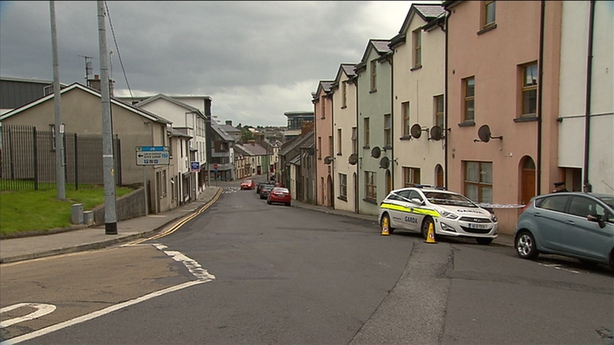
A murder inquiry launched after man found dead with stab wounds in his Sligo home


The victim, named locally as Martin, or Matt, Kivlehan, was discovered after the alarm was raised at 1pm.

A murder inquiry has been launched after a man was found dead with stab wounds in his home.
The victim, named locally as Martin, or Matt, Kivlehan, was discovered after the alarm was raised at 1pm.
The former carpenter, in his late-50s, lived alone at the property on Holborn Street near Sligo town centre.
Mr Kivlehan, who hasn’t worked for several years, was a well-known banjo player who regularly performed in local bars.
Shocked neighbours and pals were last night coming to terms with the death of a man they knew well.
Publican Jackie Brennan, who owns the nearby Rendezvous Bar, was friends with Mr Kivlehan although he said he hadn’t been in his pub for some time.
He added: “He was a wonderful musician and played a number of instruments, especially the guitar.
“He was the nicest fellow you could meet – a bit placid and timid.”
Local People Before Profit councillor Seamus O’Boyle said he knew Mr Kivlehan for more than 30 years.
He added he was well known in the area and was “a character who was very well respected within the community”.Another pal, who did not want to be named, said he was “stunned” by the tragedy.
He added: “You could not ask to meet a more gentle person and “I have never heard Matt raise his voice to anybody in his life.
“He was a lovely warm man who used to do some work for me.”
He said Mr Kivlehan was “one of the finest carpenters in the Sligo area” and that he specialised in cabinet-making.”
Gardai, who confirmed they are investigating the death, sealed off the scene for technical examination yesterday.
Gardai received reports that the stabbing happened during a dispute. Nobody was arrested at the scene.
The Office of the State Pathologist has been informed.
An Garda officer said they are awaiting the results of a postmortem.
A source said that among the people Gardai are seeking to interview is a woman seen with Mr Kivlehan a short time before he was attacked. It is understood he had a partner but this is not the person officers wish to speak to.
Mr Kivlehan was from a well-known family in the area had three brothers and three sisters.

Ibrahim Halawa meets sister and solicitor in Egypt


Ibrahim Halawa from Firhouse Dublin has been allowed to meet with his sister and solicitor in Cairo.

The hour long meeting took place in a private room of the Egyptian prison earlier today..
Ibrahim’s trial had been rescheduled for the 10th time and will now take place in October.
Ibrahim Halawa has appealed to the Irish public to continue to rally for his release.
The 19-year-old from Firhouse in south Dublin has been detained in a prison in Cairo for the past two years for taking part in a political protest.
Today was the first time in several months Ibrahim has been allowed to sit with members of his family for more than a couple of minutes.
Sinn Féin MEP Lynn Boylan is in Egypt and was present for their meeting today
“His mood certainly improved over the course of the hour, from just having that much time with his close relatives,” said Ms Boylan.
“But he was very honest about it, he gets very down, very depressed, and the lack of information coming into him is also very frustrating,” said the MEP.

Eating fresh fruit and veg ‘makes your skin more attractive’


New research found that women who consume more fresh produce reportedly have a healthier and more attractive glow

The best way for women to improve the quality and attractiveness of their skin is to eat fresh fruit and vegetables.
That’s according to new research, which found that women who consume more fresh produce reportedly have a healthier and more attractive glow than those who don’t.
A significant number of Britons fail to eat the recommended five portions of fruit and vegetables a day, and young women are believed to be among the worst offenders.
But the researchers – Scottish and Australian – behind these findings believe that vanity may prove the most persuasive argument yet to eat a healthy diet.
They noted: “Higher daily fruit, vegetable and combined fruit and vegetable intakes were associated with increased overall, unexposed and exposed skin redness and yellowness values.
“Studies indicate that women are ambivalent about the importance of nutrition or their health. Thus, finding novel strategies to motivate increased fruit and vegetables in this group is necessary to protect against chronic diseases.
“Recent evidence has shown that young women are motivated to change their health behaviours based on improving their appearance or looking good rather than health concerns, which are more important amongst older females, 36 to 50 years old.
“Interventions that focus on appearance could be a novel way of motivating young women to improve dietary intake, including fruit and vegetable intakes.”
In the experiment, the researchers monitored the diet of almost 200 Caucasian women aged between 18 and 29 for nine months.
The scientists also measured their skin colour at nine points on the body, from head to foot.

Humble cabbage white butterflies heat up the field of solar research


The humble butterfly could hold the key to unlocking new techniques to make solar energy cheaper and more efficient, pioneering new research has shown.

A team of experts from the University of Exeter has examined new techniques for generating photovoltaic (PV) energy – or ways in which to convert light into power.
They showed that by mimicking the v-shaped posture adopted by Cabbage White butterflies to heat up their flight muscles before take-off, the amount of power produced by solar panels can increase by almost 50%.
Crucially, by replicating this ‘wing-like’ structure, the power-to-weight ratio of the overall solar energy structure is increased 17-fold, making it vastly more efficient.
The research by the team from both the Environment and Sustainability Institute (ESI) and the Centre for Ecology and Conservation, based at the University of Exeter’s Penryn Campus in Cornwall, is published in the leading scientific journal, Scientific Reports.
Professor Tapas Mallick, lead author of the research said: “Biomimicry in engineering is not new. However, this truly multidisciplinary research shows pathways to develop low cost solar power that have not been done before.”
The Cabbage White butterflies are known to take flight before other butterflies on cloudy days – which limit how quickly the insects can use the energy from the sun to heat their flight muscles.
This ability is thought to be due to the v-shaped posturing, known as reflectance basking, they adopt on such days to maximise the concentration of solar energy onto their thorax, which allows for flight.
Furthermore, specific sub-structures of the butterflies’ wings allow the light from the sun to be reflected most efficiently, ensuring that the flight muscles are warmed to an optimal temperature as quickly as possible.
The team of scientists therefore investigated how to replicate the wings to develop a new, lightweight reflective material that could be used in solar energy production.
The team found that the optimal angle by which the butterfly should hold its wings to increase temperature to its body was around 17 degrees, which increased the temperature by 7.3 degrees Centigrade compared to when held flat.
They also showed that by replicating the simple mono-layer of scale cells found in the butterfly wings in solar energy producers, the could vastly improve the power-to-weight rations of future solar concentrators, making them significantly lighter and so more efficient.
Professor Richard ffrench-Constant, who conducts world-leading research into butterfly mimicry at the University of Exeter, said: “This proves that the lowly Cabbage White is not just a pest of your cabbages but actually an insect that is an expert at harvesting solar energy.”
The paper, White butterflies as solar photovoltaic concentrators, by Katie Shanks, Dr Senthilarasu Sundaram, Professor Richard ffrench-Constant  and Professor Tapas Mallick from the University of Exeter, is available online.