Pages

Showing posts with label Michael Lowry. Show all posts

Saturday, January 30, 2016

Donie's Ireland daily news BLOG update

Irish Labour party promises to slash taxes by a third if returned to power?
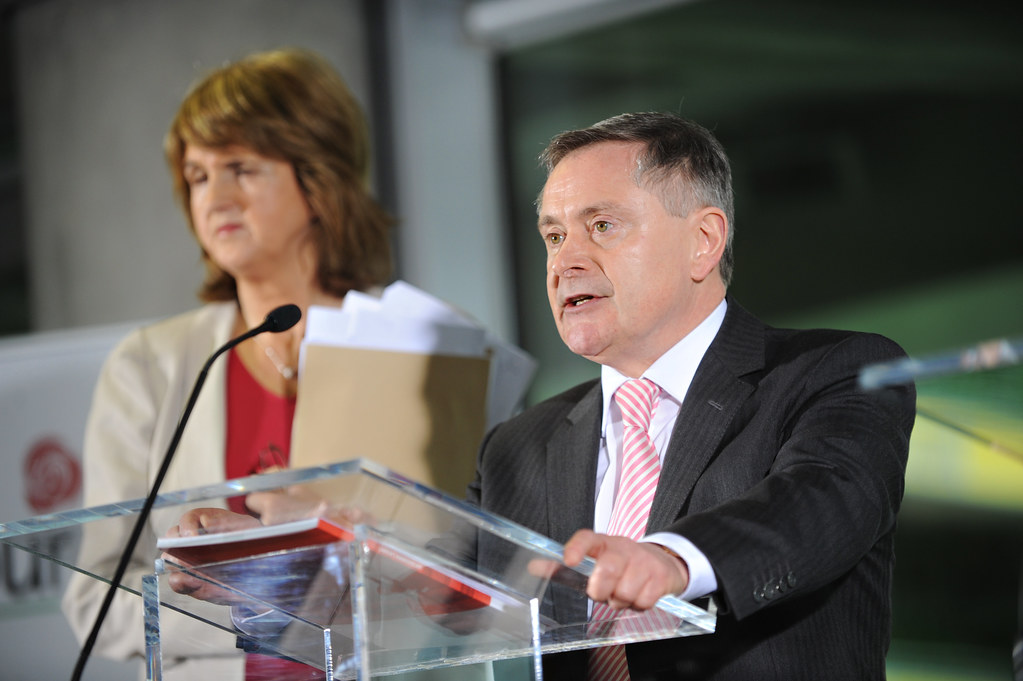
    

THE IRISH LABOUR HAS PROMISED TO REDUCE TAXES FOR WORKERS ON €25,000 BY AS MUCH AS A THIRD AS PART OF A €3BN TAX REFORM PACKAGE IF IT IS RETURNED TO POWER.

Workers on up to €50,000 would also see their taxes reduced by up to 15% under the promised reforms.
Public Expenditure Minister Brendan Howlin unveiled the tax-cut promise yesterday evening in Mullingar, ahead of Labour’s conference here today.
The plan would put more than €1,000 a year back into the pocket of a worker on €25,000. However, a high earner on €120,000 or more would not see any reductions in their tax obligations.
As part of the pre-election promise, Labour says USC would be abolished on incomes up to €72,000. Workers would also pay less PRSI once their income amounts to less than €704 a week.
Any gains under the changes for higher earners would be clawed back by adjusting their tax.
Announcing the changes, Mr Howlin said the USC was the “most draconian of the charges” introduced during the recession. However, Labour still wanted to keep a broad tax base and would limit reductions.
For more election news, analysis and general banter join us HERE
Under the proposals, a worker on €25,000 would see joint reductions in USC and PRSI result in a €1,132 saving annually, or €22 per week.
A worker on €50,000 would see €2,043 saved a year or €39 per week . Someone on a salary of €72,000 makes a saving of €3,302 or €63 per week.
Labour stressed that higher earners would see gains clawed back.
Someone on €120,000 might see USC reductions of €3,302 but these would be cancelled out by income tax-related increases.
Mr Howlin also responded to calls for the next government to have a “rainy day” fund, saying that Labour had financial plans, though this was an unallocated amount, if Ireland faced future economic challenges.
The minister would not be drawn though on what exactly these funds were, or how much.
The Irish Fiscal Advisory Council yesterday warned that the projections for increased spending by the next government were incorrect, and were several billion euro short of what was being promised by parties wanting to be in government.
With just days to go before the expected announcement of the election, Labour TDs and delegates will today discuss jobs and healthcare, among other issues, before party leader Joan Burton gives the main address at the conference tonight.

Minister Lynch rows back on inquiry into a contentious HSE sexual abuse case

CIRCUMSTANCE INVOLVES WOMAN ALLEGEDLY ABUSED IN a SOUTHEAST CARE HOME


KATHLEEN LYNCH: “THE SETTING UP OF A COMMISSION OF INQUIRY WOULD REQUIRE A GOVERNMENT DECISION AND A VOTE BY THE OIREACHTAS.”

Minister of State Kathleen Lynch has pulled back from apparently conceding that a commission of inquiry should take place into how the HSE handled allegations of serious sexual abuse at a foster home in the southeast.
In a statement last night she said serious consideration must be given before any decision was made about establishing a commission of inquiry to look at all aspects of what happened.
The Minister with responsibility for social care said a definitive judgment on this should not be made in advance of seeing a report by barrister Conor Dignam who she formally appointed on December 7th to undertake a review of two reports already completed on the matter.
“The setting up of a commission of inquiry would require a Government decision and a vote by the Oireachtas,” said Ms Lynch.
The Minister pointed out that, on first hearing of this matter in April 2014, her immediate concern was to ensure that no person was currently at risk. She received that assurance and was informed that no new admissions had been made to this private foster home since 1995, with the last resident being removed in 2009.
“The critical question of why this young vulnerable person was left in the foster home until 2009, even though the most serious concerns had been raised about her, remains the central issue.
“It is important to note that the Devine and Resilience Ireland reports, once published, may answer some of the questions that currently remain unanswered.
“The ongoing Garda investigation since 2010 has prevented publication of these two reports. It has not, however, prevented the HSE from implementing the recommendations in the Conal Devine report including a national foster care audit, which is welcome.”
In relation to the controversy about the issuing of an apology to this vulnerable person, Ms Lynch said the confusion and lack of clarity was very regrettable, and that it was important now to clearly establish the facts of what had occurred.
An in-depth investigation?
Earlier yesterday, in a radio interview, Ms Lynch said an independent inquiry into the issue might be required. She said that when she received correspondence from the Public Accounts Committee she had commissioned a “desktop review” by Mr Dignam.
Ms Lynch told RTÉ’s News at One that, after this review, Mr Dignam had suggested a more in-depth investigation take place. “I have never ruled out an independent inquiry and I do believe that’s where we are heading,” she said.
The controversy centres on how an 11-year-old girl with disabilities was placed in a foster home, despite the facility being subject to serious sex abuse allegations.
During the week the Public Accounts Committee (PAC) accused the HSE of lying to it in correspondence last December when it said a meeting had been arranged at which the alleged victim of over a decade of abuse in the foster home was to receive an apology.
HSE director general Tony O’Brien yesterday promised to give a comprehensive answer to PAC on Tuesday. Mr O’Brien said he had asked the HSE’s social care division to look very carefully at the accusations so it could “get to the bottom of it” and give a comprehensive answer to the committee.

Minister Donohoe refuses to rule out Fine Gael relying on Lowry to support a new Government

HIGH COURT FOUND TIPPERARY TD ENGAGED ‘A LITANY OF FALSIFICATION AND DECEPTION’


THE MINISTER FOR THE ENVIRONMENT ALAN KELLY SAID HE RARELY SAW THE TIPPERARY TD MICHAEL LOWRY IN EITHER THE DÁIL OR THEIR SHARED CONSTITUENCY.

Minister for Transport Paschal Donohoe has again declined to rule out the possibility of relying on Independent TD Michael Lowry for support to form a coalition government.
Speaking on Thursday, following a High Court ruling that dismissed the former minister’s appeal against a decision by the Moriarty Tribunal to only award him one-third of his legal costs, Mr Donohoe said the Government’s position was that it did not want to have to do a deal with any independents after the general election.
Reports last week suggested that initial talks had been held by Fine Gael with a number of Independents , including the TD from Tipperary, about the possibility of supporting the next government.
Taoiseach Enda Kenny has repeatedly declined to rule out the possibility of a post-election agreement with Mr Lowry.
On Wednesday, the High Court found that Mr Lowry engaged in “a litany of falsification and deception” – including the falsification of a solicitor’s files – in his failure to co-operate with the tribunal.
On Thursday Eoghan Murphy, The Fine Gael TD for Dublin South East, said he is not contemplating requesting the support of Independents. Mr Murphy said he agreed with Taoiseach’s belief that returning the Fine-Gael and LabourCoalition was the best option for the country.
Earlier in the week, Fine Gael Minister for Foreign Affairs Charlie Flanagansaid his party should not deal with any Independents, while Labour Minister for the Environment Alan Kelly launched an attack on Mr Lowry, saying he rarely saw the TD in either the Dáil or their shared constituency.
Mr Kelly said he did not believe it would be necessary to do any business with Independent TDs after the general election. “My ambition is to see this Government re-elected and I believe it will be re-elected,” he said.
Asked what his objection to Mr Lowry was, Mr Kelly said: “I don’t pay much attention to Deputy Lowry. I note I rarely ever see him in the constituency and I rarely ever see him in the Dáil, so I don’t pay much attention to him whatsoever.”
Tánaiste Joan Burton of Labour said earlier in the week that she believed Mr Lowry’s involvement in supporting the next government was “not appropriate”.

Our attitudes to ageing are impacting on our health "So says new findings"

NEGATIVITY LINKED TO POORER COGNITION.


HOW PEOPLE FEEL ABOUT AGEING APPEARS TO HAVE A DIRECT IMPACT ON THEIR HEALTH, A NEW IRISH RESEARCH HAS SHOWN.

According to the findings, those with a negative attitude to ageing have poorer mental and physical health.
The research was based on the latest data from the Irish Longitudinal Study on Ageing (TILDA) in Trinity College Dublin. TILDA is an ongoing study of people over the age of 50 in Ireland.
The study found that over a two-year period, those with a positive attitude to ageing had better cognitive abilities. However, those with a negative attitude had worse cognitive abilities and a slower walking speed.
These results stood even when others factors were taken into account, such as health changes which took place during the two years, medication, mood and other changes in life circumstances.
The study also found that a negative attitude towards ageing affected the interaction of different health conditions. The researchers pointed out that frail older adults have an increased risk of many health problems, including cognitive issues.
However, they found that among participants in this study, frail adults with a negative attitude had worse cognition compared to non-frail participants, but frail participants with a positive attitude had the same cognitive abilities as their non-frail peers.
“The way we think about, talk about and write about ageing may have direct effects on health. Everyone will grow older and if negative attitudes towards ageing are carried throughout life, they can have a detrimental, measurable effect on mental, physical and cognitive health,” commented lead researcher, Dr Deirdre Robertson.

How our plastic planet waste is the scourge of the whole World

SCIENTISTS WARN THAT THE ABILITY TO PLASTER THE PLANET IN PLASTIC IS ALARMING


HUMANS HAVE MADE ENOUGH PLASTIC SINCE THE SECOND WORLD WAR TO COAT THE EARTH ENTIRELY IN CLING FILM, AN INTERNATIONAL STUDY HAS REVEALED.

This ability to plaster the planet in plastic is alarming, say scientists – for it confirms that human activities are now having a pernicious impact on our world.
The research, published in the journal Anthropocene, shows that no part of the planet is free of the scourge of plastic waste.
Everywhere is polluted with the remains of water containers, supermarket bags, polystyrene lumps, compact discs, cigarette filter tips, nylons and other plastics. Some are in the form of microscopic grains, others in lumps. The impact is often highly damaging.
“The results came as a real surprise,” said the study’s lead author, Professor Jan Zalasiewicz, of Leicester University.
“We were aware that humans have been making increasing amounts of different kinds of plastic – from Bakelite to polyethylene bags to PVC – over the last 70 years, but we had no idea how far it had travelled round the planet. It turns out not just to have floated across the oceans, but has sunk to the deepest parts of the sea floor. This is not a sign that our planet is in a healthy condition either.”
Marker for a new epoch?
The crucial point about the study’s findings is that the appearance of plastic should now be considered as a marker for a new epoch.
Zalasiewicz is the chairman of a group of geologists assessing whether or not humanity’s activities have tipped the planet into a new geological epoch, called the Anthropocene, which ended the Holocene that began around 12,000 years ago.

HUMANS CAUSING CATASTROPHIC ECOSYSTEM SHIFTS: STUDY.

THE HOT TOPIC OF CLIMATE CHANGE.

WORLD’S OCEANS CLOGGED BY MILLIONS OF TONNES OF PLASTIC TRASH.

Most members of Zalasiewicz’s committee believe the Anthropocene has begun and this month published a paper in Science in which they argued that several postwar human activities show our species is altering geology.
In particular, radioactive isotopes released by atom bombs left a powerful signal in the ground that will tell future civilisations that something strange was going on.
In addition, increasing carbon dioxide in the oceans, the massive manufacture of concrete and the widespread use of aluminium were also highlighted as factors that indicate the birth of the Anthropocene. Lesser environmental impacts, including the rising use of plastics, were also mentioned in passing.
But Zalasiewicz argues that the humble plastic bag and plastic drink container play a far greater role in changing the planet than has been realised.
“Just consider the fish in the sea,” he said. “A vast proportion of them now have plastic in them. They think it is food and eat it, just as seabirds feed plastic to their chicks. Then some of it is released as excrement and ends up sinking on to the seabed. The planet is slowly being covered in plastic.”
In total, more than 300 million tonnes of plastic is manufactured every year, states the paper, The Geological Cycle of Plastics and Their Use as a Stratigraphic Indicator of the Anthropocene.
“In 1950, we virtually made none at all. It is an incredible rise,” added Zalasiewicz. “That annual total of 300 million tonnes is close to the weight of the entire human population of the planet. And the figure for plastic manufacture is only going to grow. The total amount of plastic produced since the Second World War is around 5 billion tonnes and is very likely to reach 30 billion by the end of the century. The impact will be colossal.”
As the paper makes clear, plastic is already on the ocean floor, remote islands, buried underground in landfill sites and in the food chain.
Even the polar regions, generally considered still to be pristine zones, are becoming affected. In 2014, researchers found “significant” amounts of plastic granules frozen in the Arctic Sea, having been swept there from the Pacific Ocean.
In some cases, wildlife adapts to the spread of plastic. For example, on islands such as Diego Garcia, hermit crabs have taken to using plastic bottles as homes. However, most of the impact on wildlife is harmful.
Creatures ranging from seabirds to turtles become entangled in plastic and drown or choke to death. “The trouble is that plastic is very slow to degrade, so we are going to be stuck with this problem for a long time,” said Zalasiewicz.

Monday, February 2, 2015

Donie's Ireland daily news BLOG update

Some 20,000 march in Dublin anti-water protest as a man is arrested & charged


Thousands march in protests across the country ahead of Irish Water deadline.

Saturday’s water charges demonstration has brought parts of Dublin to a standstill as protesters converge on the GPO.
A man arrested and charged following an anti-water charge protest in Dublin yesterday afternoon has been released.
The arrest occurred after a group of several hundred anti-water charge protesters broke away from a peaceful march in central Dublin and sought to gain entry to Leinster House.
The man in his 40s was questioned at Irishtown Garda station. He is due in court on February 26th. This was the only arrest during more than 20 anti-water charge protests around the country on Saturday, including events inCork, Limerick, Galway, Sligo and Waterford.
The demonstration in Dublin caused disruptions and led to traffic diversions around O’Connell Street and the Liffey quays as buses and Luas traffic were curtailed and roads closed to traffic.
There were reports of a flare being fired and some pushing and shoving in Dublin, but gardaí outside Leinster House said they were happy with how the demonstration proceeded.
“There was a feeble attempt to pull open the gates but there was no great assault on the place. There was a flare but there was no major incident,” a source said.
According to Garda sources, a man with a camera who had climbed on top of the Dáil gates for a panoramic view of the demonstration slipped and fell inside the railings but was not believed to have been badly hurt.
Estimates of the number of protesters vary, with organisers of the Dublin protests claiming around 20,000 people attended, while Gardaí at the scene said the number was less than half that. The Garda press office declined to give an estimate.
Protesters had assembled at various locations around Dublin city including Christ Church Cathedral, Rialto and Connolly and Heuston stations, before marching along the quays and converging on O’Connell Street from 3pm.
The crowds were addressed by various non-political anti-water charges activists, including one young man who reiterated claims made by Derek Byrne of the Dublin Says No campaign group that President Michael D Higgins was a “parasite”, along with Taoiseach Enda Kenny and the rest of the political establishment.
Several protesters sported “Je suis Derek” signs, with Greek flags also in evidence following anti-austerity party Syriza’s election victory last weekend.
It was one of a number of protests which took place across the country yesterday.
In Cork, an estimated crowd of about 3,500 took to the streets, and similar demonstrations were held in Galway, Waterford and Sligo among other locations.
Protesters unfurled a 2.5 metre flag saying “We won’t pay” above the 13th century King John’s Castle during a march which was held in Limerick earlier.

Local groups

The marches were organised by local groups, as opposed to last December’s gathering outside Government buildings which was overseen by the Right2Water central organising committee and political parties such as the Anti-Austerity Alliance and People Before Profit.
“I think it’s about the people, there shouldn’t be any political element,” said Siobhán Andrews (44) from Raheny who took part in the Dublin march.
“We’re not sure how we feel about politicians, because we’ve been let down by them a lot . . . Some of them have been supportive but, then again, we don’t know who to trust. If Sinn Féin or whoever gets in, how do we know they’re going to fix the problems?,” she added.
Arklow native Freddie Trevaskis Hoskin disagreed that a chasm is opening up between anti-Government politicians and grassroots protest movements.
“I think that’s a bit of a false dichotomy. I think people are out on the streets on a political issue, on an issue that affects them,” said 21-year-old Trevaskis Hoskin.
“It might not be a politics with a capital P, it might not be high political theory, but it’s actual, on-the-ground politics, which is far more important,” he added.
Following today’s marches, another major protest is being planned for Dublin in March.

‘People are angry’

Meanwhile, Derek Byrne, the water protester who sparked controversy with his verbal assault on President Michael D Higgins, has refused to retract his description of the head of State being a “parasite”.
Mr. Byrne, who took part in today’s protest in Dublin, said: “The people are angry and the people have every right to be angry in this country because the people of this country have been sold out by the so called political leaders,” he told RTÉ radio.
However, he refused to express any contrition for his abuse of the President at a recent protest which saw a visibly angry crowd lock horns with gardaí after his entourage had left.
“As I said, it was regrettable that he was called a ‘midget’,” Mr Byrne said of his own language.
“But I stand by everything else because at the end of the day President Higgins was a man I voted for and was someone that was very outspoken on human rights issues. We have a very serious human rights issue going on in this country at this moment in time and President Higgins has not spoken out for the people.”
The Right2Water campaign, which spearheaded the mass rally in Dublin late last year attended by more than 100,000 people, had urged members of the public to attend the latest protests. However, it distanced itself from the organiser’s.
In a statement, the campaign said: “The campaign against these unjust water charges continues. Last year, hundreds of thousands of people took to the streets all over the country, and wrung significant concessions from the Government. “But as we said at the time – people marched for abolition, not concessions.”

Leo Varadkar considers legal means to reduce cost of Ireland's medicines


Ireland pays more for its medicines that other European countries.

A spokesperson for the Minister for Health has said he may have to consider using existing legislation to achieve savings in the cost of medicines.
It follows reports in the Sunday Business Post that Leo Varadkar was considering using legislative powers to impose a price cut on pharmaceutical firms.
The newspaper carried out a sample survey of a number of prescription drugs, which found Ireland was paying more for its medicines than other European countries.
The minister’s spokesperson said Mr Varadkar was determined that the State would have the funds to ensure patient access to effective new therapies, and that to do this, savings must be achieved in the existing cost of medicines.
The spokesperson said the minister was keen to do this in cooperation with the industry.
However, the spokesperson said should this not prove possible, all alternatives, including the use of provisions of existing legislation, would have to be considered.
Discussions on a mid-term review of a pricing agreement between the Government and the Irish Pharmaceutical Healthcare Association, which represents the pharmaceutical industry in Ireland, have been taking place since the final quarter of last year.
Responding to news that the minister was willing to consider using legislative powers to impose price cuts, the IPHA said its members companies had played a major role in assisting the Government in controlling health expenditure.
In a statement, the IPHA said ten separate price reductions had been provided by its member companies in the past seven years, and that savings of €800 million had been delivered between 2006 and 2012.
The IPHA said a further €400 million in savings was set to be delivered under the current supply agreement this year.
It also said these price cuts had occurred in the context of a big increase in medical cards.

Not a bad looking woman Valerie has worst attendance record in Dail


Valerie O’Reilly absent for 37% of meetings in 2014

Valerie O’Reilly, who was described as ‘not bad looking’ by Michael Lowry TD.
Valerie O’Reilly, the “not bad looking” woman at the centre of the Michael Lowry Dail note scandal, had the worst attendance record last year on the State board she is seeking to be re-appointed to.
Ms O’Reilly, Mr Lowry’s former press adviser, received at least €55,000 in fees over five years from the National Transport Authority board to which the controversial TD lobbied Taoiseach Enda Kenny to have her re-appointed.
But the Sunday Independent has discovered that Ms O’Reilly was absent for three of the eight disclosed board meetings in 2014, or 37pc.
No other board member missed as many meetings in 2014 as Ms O’Reilly, who had a far better attendance record in 2013 and 2012. In both years, she missed two out of 12 meetings, or 16pc.
Last week the Sunday Independent revealed how Mr Lowry passed a note to Mr Kenny in the Dail seeking to have Ms O’Reilly re-appopinted to the board of the NTA, ending the note saying: “She’s not bad looking either!”
The note, published by the Sunday Independent, said: “Taoiseach, would you please consider reappointing Valerie O’Reilly to the board of the NTA. A woman, bright intelligent and not bad looking either! Michael Lowry.”
Speaking in the wake of the controversy, Transport Minister Paschal Donohoe insisted that the only basis upon which Ms O’Reilly’s request to be re-appointed will be considered based on merit.
Ms O’Reilly, managing director of Unicorn PR, turned down several requests for comment on the controversy from the Sunday Independent.
Despite Government statements that all appointments to state boards are done through the public appointments system, it has emerged that the rules allow ministers scope to appointments “other than strictly in accordance with the process”.
Guidelines issued by Minister Brendan Howlin’s department of Public Expenditure and Reform (DPER) state there are a number of specific exceptions to the rules permissible. Mr Lowry declined to comment on the ongoing controversy when contacted by the Sunday Independent this weekend.
But he has caused some tension within the Government by suggesting the note was given to the Sunday Independent by a Labour member of the coalition.
He said that the note was passed on with the “full knowledge” of Environment Minister Alan Kelly, his constituency rival. Mr Kelly has strongly denied he had anything to do with the note’s surfacing.
However, considerable efforts have been taken to reveal the identity of the person who picked up the note from the Government benches.
Ms O’Reilly has been sitting on the board of the National Transport Authority (NTA) – where members get €11,970 a year in fees – for almost five years. Mr Lowry’s comments on Ms O’Reilly’s “not bad looking” appearance has sparked anger among his female colleagues in the Dáil.
Fine Gael TD Marcella Corcoran Kennedy said she was concerned that such a “shallow view” of women still existed in Irish politics. “Handing a note over in the chamber is very peculiar and the contents, I think, didn’t do her justice,” Ms Corcoran Kennedy told the Irish Independent.
Independent TD Catherine Murphy questioned why Mr Lowry felt it was an appropriate way to lobby the Taoiseach.
“I wonder what type of a relationship he has with the Taoiseach that he can send that type of note,” Ms Murphy said.
“I think it’s done her a serious disservice and you think these type of things are over and then they crop up again.”
Former Fine Gael minister Lucinda Creighton said she believes the exchange between the Taoiseach and Michael Lowry was proof that the “nod and a wink” culture was an “attitude that still persists” throughout Government.
Ms O’Reilly has been running her business, Unicorn Public Relations, for more than a decade and clients include Clerys department store in Dublin and the Irish Heart Foundation.
Before setting up her own company, she worked with Chris Roche Publicity, where she handled various accounts including for Michael Flatley’s Lord of the Dance.
Mr Lowry is currently facing High Court action over alleged unpaid taxes to the Revenue Commissioner.
Mr Lowry personally approached Mr Donohoe about the reappointment of his former press adviser to a State board. Mr Lowry pulled Mr Donohoe aside outside the Seanad chamber last Wednesday week and informed him “out of courtesy” that he intended to “pass a note to the Taoiseach” seeking the re-appointment of Valerie O’Reilly to the board of the National Transport Authority (NTA).
Later in the Dail, the former minister handed the note to an usher who proceeded to pass it on to Enda Kenny.

NUIG appoints a leading woman as head of equality task force


A university forced to pay a lecturer €70,000 for failing to promote her because she was a woman has appointed a leading female academic to help shape its gender equality policies.

NUI Galway has asked Professor Jane Grimson of Trinity College Dublin to head up a new gender equality task force with a remit to help prevent future gender discrimination cases.
Prof Grimson, a computer engineer with a strong commitment to promoting the involvement of women in engineering and technology, is a former Dean of Engineering at TCD and helped establish that college’s Centre for Women in Science and Engineering.
President of NUI Galway Dr Jim Browne said the appointment was sanctioned by the college’s governing authority, which had stressed the need for an external, independent chairperson.
“We fully acknowledge the issues here for NUI Galway and are committed to addressing them. This appointment marks a milestone for the university in tackling gender equality.”
The move to set up a task force followed a ruling by the Equality Tribunal late last year which found in favour of a claim by now retired botany lecturer Dr Micheline Sheehy Skeffington that she had been unfairly overlooked for promotion for 20 years.
In addition to requiring that Dr Sheehy Skeffington be retrospectively promoted and compensated financially, the tribunal also made strong criticisms about the university’s promotions record and interview process.
Five other female academics who also applied unsuccessfully for promotions in 2009 announced they would be taking legal action against the university and Dr Sheehy Skeffington has donated her compensation payment to help fund their case.
Members of the university’s governing authority were greeted by a student demonstration as they gathered for their meeting yesterday. The students are calling for Dr Sheehy Skeffington’s five colleagues to be automatically promoted.

Rare protected bird shot dead in Kerry


Rare protected bird shot dead in Kerry

An investigation has been launched by the National Parks and Wildlife Service (NPWS) of the Department of Arts, Heritage and the Gaeltacht, after the young female hen harrier was discovered. The Gardaí are also investigating the incident.
A protected species
Killing a hen harrier is an offence under the Wildlife Act, as the birds are listed as a protected species. The penalties include significant fines and/or imprisonment.
The bird had been followed by thousands of people online as part of a satellite tracking project run by the NPWS and local community group IRD Duhallow.
Dr. Barry O’Donoghue of the NPWS, who oversaw the satellite tracking project, said it gave people an insight into the life of this bird and her progress.
He said the tracking system showed that the bird visited Meath, Louth, Monaghan and Armagh and rested by the shores of Lough Neagh, before making a long distance journey all the way to the Atlantic cliffs of South County Cork.
The bird stayed there for most of her first winter with a number of other harriers. From these older birds, she would have learned of good hunting places and safe places to spend each night.
In late 2014 she returned to South Kerry, back to the very site where she was born. It seems likely that she might have returned to breed there this summer, but unfortunately her life has been cut short.
A survey of breeding hen harrier reported that 128 to 172 breeding pairs were recorded in 2010. However, the breed has been in decline in recent years due to hill farming, coupled with an increase in forestry.