Pages

Showing posts with label Safety. Show all posts

Monday, February 13, 2017

Donie's Ireland daily news BLOG

The Northern Ireland peace status is at risk because of Brexit,

Image result for The Northern Ireland peace status is at risk because of Brexit,  Image result for The Northern Ireland peace status is at risk because of Brexit,  Image result for The Northern Ireland peace status is at risk because of Brexit,

THE IRISH LEADER WHO HELPED SECURE THE GOOD FRIDAY AGREEMENT SAYS HE FEARS THE CONSEQUENCES OF A BORDER DIVIDING NORTH AND SOUTH.

Bertie Ahern at a press conference in Dublin in 2008, announcing his resignation as taoiseach.
Theresa May has been accused of putting Northern Ireland’s peace process in jeopardy by the Irish leader who helped to secure the Good Friday agreement.
In a sign of growing fears about May’s vision for Brexit, Bertie Ahern took aim at the prime minister over her recent white paper, in an interview with the Observer. Ahern, who served three terms as taoiseach between 1997 and 2008 and helped to deliver power-sharing in Belfast, said that the British government appeared to have resigned itself to the establishment of a border between the north and south once the UK leaves the EU in 2019, with potentially devastating results.
“[May] seems to be switching her language,” he said. “She’s saying not that there’ll be no border, but that the border won’t be as difficult as to create problems. I worry far more about what’s going to happen with that. It will take away the calming effects [of an open border]. Any attempt to try to start putting down border posts, or to man [it] in a physical sense as used to be the case, would be very hard to maintain, and would create a lot of bad feeling.”
In its Brexit white paper published last month, the government stated its aim to have “as seamless and frictionless a border as possible between Northern Ireland and Ireland”.
The secretary of state for exiting the EU, David Davis, has suggested that the arrangements between Norway and Sweden could be a model to copy, where CCTV cameras equipped for automatic number-plate recognition are in place. However, in an interview with the Guardian on Saturday, the European parliament’s Brexit negotiator Guy Verhofstadt appeared to scorn such a model, given that there would need to be customs checks and restrictions on the free movement of people.
Ahern said he, too, was unconvinced that the current technology could do the job. There are 200 crossing points on the border between the Republic and Northern Ireland, with 177,000 crossings by lorries a month, 208,000 by vans and 1.85m by cars.
“I haven’t found anyone who can tell me what technology can actually manage this,” Ahern said, adding that he feared the furious reaction of the unionist communities in the mid-1980s when the Republic was given an advisory role in the government of Northern Ireland could be repeated on the nationalist side if controls were reinstated. “Any kind of physical border, in any shape, is bad for the peace process,” he said.
“It psychologically feeds badly into the nationalist communities. People have said that this could have the same impact on the nationalist community as the seismic shock of the 1985 Anglo-Irish agreement on unionists, and I agree with that.
“For the nationalist community in Northern Ireland, the Good Friday agreement was about removing barriers, integrating across the island, working democratically in the absence of violence and intimidation – and if you take that away, as the Brexit vote does, that has a destabilising effect.
“With so many other issues, there is a real concern … the only way [of] doing this will be a hard border. When people talk about hard borders, they’re talking about the borders of the past – but now any kind of border with checkpoints and security constitutes a hard border.”
Ahern’s comments were made as an EU document leaked to the Observer appeared to dash May’s hopes that the two states can come to a bilateral agreement. The British prime minister has repeatedly suggested that the 1923 Common Travel Area deal can be the basis for the future, although it was signed before either state joined the EU.
However, a memo from the European parliament’s legal affairs committee, which is helping shape the negotiating position of the European commission and the red lines of the European parliament, rebuffs that suggestion: “The [Good Friday] agreement makes it abundantly clear that the fact that both parts of Ireland and the UK are within the EU is a basis for the agreement. Moreover, the fact that Brexit could result in the reintroduction of border controls and controls on the free movement of persons between Ireland and Northern Ireland means this is a question for the EU, and not only Ireland the UK.”

Boom in new Irish construction jobs as figures soar to near record levels?

Image result for Boom in new construction jobs as figures soar to near record levels  Image result for Boom in new construction jobs as figures soar to near record levels

THE PMI NOTED THAT ACTIVITY IN THE IRISH CONSTRUCTION SECTOR CONTINUED TO RISE SHARPLY IN JANUARY – PROMPTED BY AN INCREASE IN NEW ORDERS.

A surge in new construction jobs reached near record levels in Ireland last month, new figures indicate.
The number of firms reporting workforce expansions (27%) in the latest Ulster Bank Construction Purchasing Managers’ Index was second highest recorded since the monthly survey was first run over 16 years ago.
The PMI noted that activity in the Irish construction sector continued to rise sharply in January.
This was prompted by an increase in new orders.
On the price front, the rate of input cost inflation quickened to the sharpest since February 2007.
The PMI provides a seasonally adjusted index that tracks changes in total construction activity.
Simon Barry, Chief Economist Republic of Ireland at Ulster Bank, said: “Irish construction activity continues to grow at a healthy pace according to the latest results of the Ulster Bank Construction PMI.
“The headline PMI index remained comfortably in expansion territory in January, albeit that the pace of growth eased for the third month running consistent with a modest loss of momentum early in 2017 after a robust end to last year.
“Very encouragingly, residential activity remains a particular bright spot with housing activity continuing to rise at a rapid pace, while commercial activity also very much remains in expansion mode, though the pace of growth has eased in recent months.
“Civil engineering continues to lag behind the other sectors, with respondents reporting a third consecutive monthly decline in activity.
“Respondents continue to judge the Irish construction outlook to be very favourable. Confidence about future activity prospects remained strongly positive in January amid further solid gains in new orders, despite some easing in the rate of increase.
“Indeed, buoyed by the ongoing increase in work volumes, last month saw a substantial and accelerated rise in staffing levels with the rate of job creation picking up to its second-fastest in the survey’s 16-and-a-half year history.
“One note of caution stems from further evidence of building cost pressures with the rate of input cost inflation picking up to its quickest in almost 10 years.
“Respondents reported higher prices for oil-related products and for items sourced from UK suppliers, the latter effect consistent with growing signs of Brexit-related price and costs increases in the UK economy.”

A motorway to Dublin should not be the only priority project for Sligo

Northwest gateway town also needs better infrastructure and regional connectivity

Image result for A motorway to Dublin should not be the only priority project for Sligo  V  Image result for A motorway to Dublin should not be the only priority project for Sligo

KNOCK AIRPORT: NEEDS MORE REGULAR FLIGHTS AND QUICKER CONNECTIONS TO SLIGO CITY.

A Sligo-Dublin motorway would support Sligo city as a hub for the growth of the wider region around it, stretching into Donegal, but there are greater priorities.
Economic development in Ireland over the past 20 years has been unbalanced. Economic activity and population growth has increasingly been concentrated in a select number of city regions.
The northwest, on the other hand, has experienced slower growth and rural decline. Regional and rural development requires a sizeable urban centre, and the northwest currently lacks such a centre.
The recently abolished National Spatial Strategy 2002-2020 recognised this. It selected Sligo as one of eight regional “gateways”, envisaging that it would be developed to such a scale that it would have the critical mass necessary to sustain strong levels of job growth in the region.
Critical mass is needed. In the new “informational economy”, the absence of a centre with sufficient scale is important. Otherwise, some businesses will not come and some workers will not stay.
One criticism repeatedly levelled at the National Spatial Strategy is that it picked too many gateways. Consequently, Sligo might lose its status in the new National Planning Framework now in gestation.
Given its strategic location, however, Sligo is likely to be accorded an important role in supporting local development. But the gateway concept is more sophisticated than the idea of a traditional growth centre.
The operative word today is “connectivity” between urban centres. A gateway requires strong connectivity not just to major centres at home and abroad, but also to smaller destinations closer to home.

A NECESSARY ELEMENT.

A motorway to Dublin is one necessary element. However, other key pieces of infrastructure are needed first. It currently takes two and a half hours to drive from Dublin to Sligo, which is not bad compared with the times to other regional centres.
However, one needs to be able to get into Sligo when one gets there. Traffic congestion there is already too heavy for a relatively small town, so other forms of connectivity might require more attention.
Rail services must be upgraded, since they are at least as important as a motorway to Dublin, both for the town, its hinterland and international visitors. Commuters, for example,must be able to get into Sligo to work.
Quality bus services to Sligo’s hinterland are crucial. Internationally, so are better flight services. Knock airport helps greatly, but it is an hour away. That connecting journey needs to be cut, and quickly.
Meanwhile, Knock airport should have regular services to London and Brussels, not just the ones that it has at present. It is important for international connectivity that Sligo must also have high-capacity broadband.
All of this, if combined with a strengthened third-level institute and a stronger Industrial Development Authority presence, will bring important investment to Sligo. If properly backed, Sligo could be the spark to set the northwest alight.

Experts warn of safety fear as patients are given the right to use medicinal cannabis

Image result for patients are given the right to use medicinal cannabis   Image result for patients are given the right to use medicinal cannabis   Related image

EXPERTS HAVE NOW STRESSED THERE ARE MANY “UNKNOWN TRUTH’S” AROUND THE SAFETY OF MEDICINAL CANNABIS DESPITE THE FACT PATIENTS WITH SPECIFIED CONDITIONS WILL BE ABLE TO ACCESS IT LATER THIS YEAR.

The Health Minister Simon Harris is to proceed with the legislation and regulations which would allow a “compassionate access” programme. Experts have stressed, however, there are still questions around the safety, quality and effectiveness of the products.

THE SPECIFIED MEDICAL CONDITIONS ARE:

  1. Spasticity associated with multiple sclerosis;
  2. Intractable nausea and vomiting associated with chemotherapy;
  3. Epilepsy which is resistant to treatments.
The breakthrough emerged following a report from the Health Products Regulatory Authority (HPRA) .
It was asked to carry out a scientific assessment of its therapeutic use by the minister.
It followed pressure from patients and personal testimonies of gaining relief from symptoms including pain and seizures.
“I understand this is a matter of great concern to many patients, to many colleagues in the Oireachtas and to members of the general public who have contacted me,” Mr Harris said.
“I believe this report marks a significant milestone in developing policy in this area. This is something I am eager to progress but I am also obligated to proceed on the basis of the best clinical advice.”
Prof Tony O’Brien, a consultant in palliative medicine who chaired the group, said that making it available for a limited number of conditions would be a significant first step that recognised patient need.
It would also provide patient protection with oversight from consultants. The legislation should also allow for a registry to be set up to collect medical information and provide insight into the future use of cannabis products for medical purposes.
Cannabis has potential therapeutic benefits, but there is a need for robust evidence to be generated through clinical research in patients.
The group looked at the relevant scientific reviews and publications available worldwide, as well as the international approaches to cannabis for medical use.
There is limited scientific data available, the report has added.
“The safety of cannabis as a medical treatment is also not well characterised. For these reasons, and because most cannabis products available under international access schemes do not meet pharmaceutical quality standards, it is not possible to authorise such products as medicines,” it said.

NASA picks three potential drill sites for Mars 2020

ALL THREE COULD HAVE SUPPORTED LIFE IN ANCIENT MARS.

Image result for NASA picks three potential drill sites for Mars 2020   Image result for NASA picks Jezero crater, which got the most votes, was once an ancient lake comparable to Lake Tahoe  Image result for Northeast Syrtis, which got the second highest number of votes
When the Mars 2020 rover reaches the red planet, it will quickly begin drilling for samples from its surface. NASA hasn’t picked the exact drill site yet, but it has narrowed its choices down to three during a workshop with scientists in Monrovia, California.
The group consulted images and data sent by the Mars Reconnaissance Orbiter before voting for easily accessible locations they believe could have supported life. Jezero crater, which got the most votes, was once an ancient lake comparable to Lake Tahoe. It was connected to a large river that fed it water and sediments, making it an ideal site for the rover’s search for signs of life.
Northeast Syrtis, which got the second highest number of votes, used to have hot water circulating under its crust. Finally, there’s Columbia Hills — the group’s third and most controversial choice where the Spirit rover used to roam. Spirit found silica rocks in the site resembling hydrothermal mineral deposits on Earth. Some of the people who attended the workshop didn’t think Mars 2020 would be able to shed light on whether the rocks could truly be linked to life.             

Sunday, September 18, 2016

Donie's Ireland daily news BLOG update

Why Nama is in such deep trouble over Project Eagle

STATE AGENCY SHOULD HAVE BLOWN THE WHISTLE ON NORTHERN IRELAND SALE BUT CHOSE NOT TO

Image result for Why Nama is in such deep trouble over Project Eagle   Image result for Why Nama is in such deep trouble over Project Eagle   Image result for Why Nama is in such deep trouble over Project Eagle

WHAT REALLY MATTERS IS THAT NAMA CHOSE TO IGNORE THE BIG RED FLAG RAISED BY PIMCO AND PROCEEDED TO SELL THE NORTHERN IRELAND PROPERTY LOAN BOOK TO CERBERUS.

Here is a question that might help you understand why Nama is in such a lot of trouble.
Imagine you are selling your house and have agreed a deal with someone. They then come along to you and say they are pulling out of the sale because they don’t like the way their solicitor is behaving. They suspect that things are not being done properly. They tell you their conscience will not let them be a party to what is going on.
A week later another buyer comes along and offers you much the same price but crucially they are using the same solicitor as the previous bidder.
You have two options:
  1. Ask the solicitor if something dodgy is going on and when he tells you he is as pure as the driven snow, you proceed to sell your house, get your money and move on. Your behaviour is legal and commercially sound.
B . Decide that you too cannot be party to something potentially dodgy. You pull out of the sale. You ring the gardaí and end up being involved in a long investigation. Other buyers start to think you are messing and that something is wrong with your house. The price falls.
Which option would you take? A? If so, then you are Nama.
Only it is not your house you are selling, it is a portfolio of properties inNorthern Ireland that is worth €1.5 billion. It is Project Eagle.
The first buyer is the US investment fund Pimco and the second is one of their peers, Cerberus.
Replace the first buyer’s conscience with Pimco’s compliance department – the people that make sure they don’t inadvertently break the law.
Replace the anonymous solicitor with law firms Brown Rudnick and Tughan and a number of prominent Northern Irish figures.
Moral dilemma
Now. Change the question to: which option should you take? And you start to see Nama’s problem. It’s more than likely that you would say B. You know you have a duty as citizen to help uphold the law and all that even if it comes at a personal cost.
And this is the problem Nama now faces. It chose A when it should have chosen B.
An individual that takes option A has only to answer to their conscience. Nama, however, is answerable to us all.
It is a State agency. It may have a commercial mandate and a very, very difficult job to do but it is ultimately an arm of the State. And the Government must be held to the highest standard. It must aspire to do what it should do in any situation, not what makes commercial sense. It’s simplistic and it’s naive but it is true none the less.
When Nama chose to sell Project Eagle to Cerberus after Pimco pulled out it lost sight of this simple fact.
It chose to overlook the obvious possibility that something suspicious was going on in the background in Northern Ireland that it should really have blown the whistle on. Right now it probably wishes it had.
For the last week, we have been subjected to the unedifying sight of two State agencies having a public squabble.
Nama and the Comptroller and Auditor General have been arguing about what the Project Eagle portfolio was really worth.
It is essentially an argument about the length of a piece of string. The price is irrelevant.
What really matters is that Nama chose to ignore the big red flag raised by Pimco and proceeded to sell the portfolio to Cerberus.
We know that it shouldn’t have and we now need to know why it did.
Temporary blindness
Was it simply a case of Nama’s commercial imperative blinding it to the bigger picture?
Nama has succeeded on its own terms and will return a profit of €2 billion to the State that will offset some of the billions poured into the banks following the crash and bailout.
But it is easy to forget that this was not a certainty in 2013 and 2014.
It also has to be remembered that there was a great deal of political pressure on the agency to sell its assets and disappear.
And this raises perhaps the most interesting question of all.
To what extent did this pressure on Nama from the government of the day drive the agency on – directly or indirectly – to do something that no government could really stand over? Turning a blind eye to possible criminal activity.
Actually, that is not the most interesting question when you think about it.
The most interesting question is: to what extent was the Irish government influenced by Northern politicians whose links to the intermediaries advising Cerberus are the focus of several investigations?

Young teachers in ASTI are €6,000 a year worse off after new pay deal

Image result for Young teachers in ASTI are €6,000 a year worse off after new pay deal   Image result for Young teachers in ASTI are €6,000 a year worse off after new pay deal

THOUSANDS OF YOUNG TEACHERS IN THE ASTI WILL BE €6,000 A YEAR WORSE OFF IF THE UNION CONTINUES ITS WAR WITH GOVERNMENT.

They are already on €796 a year less and, by January, the gap will rise to almost €1,800, and continue widening over 15 months.
By January 2018, the pay differential between young teachers will have grown to 20pc – depending on the union they are in.
An agreement announced yesterday gives newly-qualified teachers an increase of up to €2,000 a year, on top of pay restoration measures in the Lansdowne Road Agreement (LRA), which are being rolled out from this month.
But, only members of teacher unions that have signed up to the LRA – currently, the Irish National Teachers’ Organisation (INTO) and the Teachers’ Union of Ireland (TUI) – will receive the increases.
The 18,0000-member Association of Secondary Teachers Ireland (ASTI) has rejected the LRA, and as a result is also excluded from the new deal, which eliminates a key contributor to two-tier pay scales.
A teacher recruited this month, who is a member of the ASTI, is on a starting salary of €31,009, which remains frozen while they are outside the LRA.
Meanwhile, INTO and TUI members are on €31,805 – including restoration this month of €796, half an allowance for supervision and substitution duties – which will rise to €37,059 by January 2018,
There are corresponding increases for all new teachers recruited since 2012 – who suffered the most severe pay cuts – who are members of unions that have signed up to the LRA.
There is still an outstanding issue on pay equality for teachers and other pubic servants recruited in recent years, which is the general 10pc cut in pay scales implemented in 2011.
INTO general secretary Sheila Nunan said yesterday’s deal represented “significant progress” and that “for the first time, teachers who began since 2012 will have the same earnings path as all other teachers and will reach the same maximum point of salary scale.”
TUI president Joanne Irwin said it was a very significant step in the right direction in addressing the pay inequality suffered by teachers.
But the ASTI remains determined to continue its campaign on a number of pay-related fronts, which could close more than half the country’s second-level schools by end of October/early November.
The ASTI is conducting two ballots later this month, one seeking a mandate for strike action on the issue of pay for newly-qualified teachers.
The second ballot is seeking support for withdrawal from supervision and substitution duties, which would force schools to close because of lack of cover.
Powerful union.
The union’s powerful Standing Committee met yesterday and, in a statement afterwards, the ASTI said it was “campaigning for the full restoration of new teachers’ pay.”
The ASTI said that it was not party to the LRA and had received no offer on the restoration of new teachers’ pay.
“We will continue to pursue a resolution through talks. We want equal pay for equal work. ASTI members have rejected the LRA for a number of reasons, including its failure to deliver pay equalisation for new teachers,” said ASTI president Ed Byrne.

PTSB to raise mortgage extra cash in bond market for new Irish loans

Image result for PTSB to raise mortgage extra cash in bond market for new Irish loans    Image result for PTSB to raise mortgage extra cash in bond market for new Irish loans

THE PERMANENT TSB IS PLANNING TO BORROW €690M IN BOND DEBT BACKED BY IRISH HOME LOANS.

The bank has mandated Morgan Stanley as sole arranger for the transaction with Citibank, and Deutsche Bank acting along side the US giant as joint lead managers.
A road show is being held to market the bonds to potential investors.
The new bonds will be backed by a bundle of performing Irish home loans, none of which is more than one month in arrears.
The home loans behind the bond are low risk, all are owner occupier loans and the average loan to value ratio is 60pc.
Mortgage securitisation deals allow banks to access extra cash for new loans, by borrowing against loans already made. Before the crash such deals were a mainstay of the market, but they have slowed to a trickle.
Permanent tsb has not issued a deal since 2013 and no Irish bank has placed residential mortgage backed bonds with investors since May 2015.

Eye-level signs make perfect sense for dangerous beach at Strandhill Sligo

Image result for dangerous beach for swimming at Strandhill Sligo   Image result for dangerous beach for swimming at Strandhill Sligo  Image result for dangerous beach for swimming at Strandhill Sligo

A MOTHER WHO HAD ALLOWED HER FOUR CHILDREN TO SWIM AT STRANDHILL IS ONE OF THE LATEST PEOPLE TO CLAIM THEY DIDN’T SEE ANY PROHIBITING BATHING SIGNS ON THEIR WAY DOWN TO THE BEACH.

That’s according to Councillor Rosaleen O’Grady who told the meeting that she had never seen as many people in bathing there as she had this year.
“I saw a woman whose four children, aged 5-9 years were in the water. When I told her about it being prohibited, she said she didn’t see signage,” said Cllr O’Grady.
Image result for children swimming at Strandhill Sligo  She added that the woman suggested that if the signs were at eye-level she might have seen them. “I suppose she might have had a point. Signage could be put at the slip-way. I have a huge concern, people don’t seem to be heeding,” she said.
Director of Services Tom Kilfeather told members that new signs had been installed at either end of the beach after consulting with the RNLI. He also said that Irish Water Safety were currently carrying out a risk assessment on Strandhill beach. “The appropriateness level of signage and their location will be considered in that review,” he said.
Cllr O’Grady said that a risk assessment was “the way forward”. “Whatever is wrong, people are using it for bathing more and more. As people enter the water via the slipway, if there was something there at eye-level it might help,” she said.
Cathaoirleach of the County Council Cllr Hubert Keaney said it was The Sligo Champion’s recent coverage of the issue that drew his attention to the matter.
“To see people swimming there the same week as five people drowned in the UK…I was horrified because there were young children in the photo,” he said.
Cllr Sean MacManus said that he also spoke to people who didn’t see the signs. “There’s a school of thought out there that there were too many signs. What Cllr O’Grady says about signs at eye-level makes a lot of sense,” he added.

The Pacific Ocean has hidden wonders revealed on dive to underwater volcano

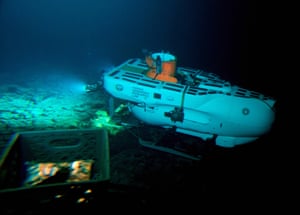
The Pisces IV submersible sits on the summit of Cook seamount, as seen from the Pisces V craft, during a dive to the previously unexplored underwater volcano off the coast of Hawaii’s Big Island.  Researcher Sonia Rowley logs coral samples taken from the Cook seamount expedition.   Image result for The Pacific Ocean has hidden wonders revealed on dive to underwater volcano

US SCIENTISTS FIND POSSIBLE NEW CORAL SPECIES AND RARE DUMBO OCTOPUS ON EXPEDITION TO PREVIOUSLY UNEXPLORED EXTINCT VOLCANO OFF HAWAII

Deep sea coral at the summit of the Cook seamount. ‘It won’t be any surprise to me [if this is] a new species,’ said researcher Sonia Rowley.
Image result for Scientists believe they have identified a new species of coral and found a rare Dumbo octopus Scientists believe they have identified a new species of coral and found a rare Dumbo octopus during an expedition 3,000ft (900m) down in the Pacific Ocean.
Diving in a submersible to the previously unexplored Cook seamount, an extinct volcano at the bottom of the sea 100 miles south-west of Hawaii’s Big Island, the three-person team was hoping to examine the rich variety of marine life that collects around the nutrient-rich volcanic waters.
Among other things, the researchers from the University of Hawaii and the nonprofit group Conservation International spotted such wonders as a rare type of octopus with big fins that look like Dumbo’s ears, and a potentially new species of violet-hued coral they dubbed Purple Haze.
Conservation International hopes to study 50 seamounts, or undersea volcanoes, over the next five years.
“We don’t know anything about the ocean floor,” said Peter Seligmann, chairman, CEO and co-founder of Conservation International. “What we know is that each one of those seamounts is a refuge for new species, but we don’t know what they are. We don’t know how they’ve evolved. We don’t know what lessons they have for us.”
“We don’t know what we’re going to find,” Conservation International’s Greg Stone told the Associated Press reporter on board the submersible. “There will always be the unexpected when you go into the deep ocean.”
Halfway down to the volcano, which rises 13,000ft-high (4,000m)from the ocean floor, no sunlight penetrated. The only light that could be seen from the submarine’s face-sized windows was the bluish glow of the vessel’s own bright lights. Occasionally, bioluminescent creatures drifted past in the darkness.
Stone and subpilot Terry Kerby, who helps run the Hawaii undersea research laboratory at the University of Hawaii, watched as the volcano and its rugged basalt walls came into view.
Seamounts are either active or dormant volcanoes that rise from the bottom of the ocean and never reach the surface. They are hotspots for marine life because they carry nutrient-rich water upward from the sea floor. Seamounts are believed to cover about 18 million square miles of the planet.
Cook seamount is part of a group of undersea volcanoes known as the Geologist Seamounts that are about 80 million years old and could hold many new animal species, as well as elements such as nickel and cobalt that mining companies could extract.
“My goal today is to … find out what’s living on them, find out how they support ocean life, what their effect is from ocean currents and essentially what drives the ocean, what makes the ocean what it is,” said Stone. “Seamounts are a key part of that, and something which humanity knows very little about.”
The Pisces IV submersible sits on the summit of Cook seamount, as seen from the Pisces V craft, during a dive to the previously unexplored underwater volcano off the coast of Hawaii’s Big Island.
Within minutes of the vessel’s arrival at the summit, life began to appear — a starfish clinging to a rock, joined shortly after by eels, sharks, chimaera (also known as “ghost sharks”), shrimp, crabs and two rare Dumbo octopuses. One of the octopuses changed color from white to pink to reddish brown as it swam by.
Several types of deep-sea corals were found along the seamount’s cliffs, including a vibrant purple one.
“I need to go home, look through the literature … and also go and run some genetic analyses,” said Sonia Rowley, a postdoctoral researcher at the University of Hawaii who is taking part in the project. “But as this is a new seamount … that no one had dived on before, it won’t be any surprise to me whether this is going to be a new species.”
Two other seamounts were studied over three days of expeditions: McCall, home to a large number of small deep-sea sharks, and Lo’ihi, an active volcano.
Lo’Ihi has been extensively surveyed by manned submersibles over the past 30 years. The past few times Kerby was there, he saw a large Pacific sleeper shark lurking about the volcano’s crater.
As hot vents shot out volcanic gases around them, the team released bait in the water and the 7-foot shark appeared in front of the submarine. Kerby was delighted to see his “old friend.”
The team also saw 6-foot eels and a number of new geological formations around the crater. Scientists say Lo’ihi is likely to someday become the newest island in the Hawaii chain as volcanic activity pushes the summit upward.     

Saturday, August 29, 2015

Donie's Ireland daily news BLOG

Suspicious package sent to Alan Kelly’s office declared a hoax


The package was sent to Alan Kelly’s constituency office in Nenagh, Co Tipperary

A package containing white powder which was sent to Environment Minister Alan Kelly’s constituency office has been declared a hoax.
The alarm was raised after a letter sent to the building on Summerhill in Nenagh, Co Tipperary, was opened by a member of staff.
The Defence Forces’ bomb squad was called in by gardai and declared the scene safe within an hour of arriving.
“The Explosive Ordnance Disposal (EOD) Team was called to deal with what is described as a letter containing suspicious material. The EOD team arrived on scene at 12.40 pm and following an examination declared the letter and material a hoax,” they said.
Mr Kelly was not in the office at the time and it was closed during the scare.
He has spoken openly about threats made against him personally since he took over the environment portfolio and pressed ahead with the roll-out of controversial water charges.
A bomb scare threat was phoned in to his constituency office last year and a death threat was also made against him, while the minister has said other threats have been made against his wife, family and staff.
Mr Kelly said sending the white powder was a deplorable act.
“It is not something any office of any occupation should have to deal with at any time,” he said.
“I will not be making any further comment other than to acknowledge the hard work and dedication of the constituency office staff who regrettably have to encounter such instances. My primary concern is for their health and safety.”
The alarm was raised at 9.05am and the bomb squad declared it safe at 1.30pm after spending under an hour at the office.

Cars, bars and home decor drive Irish economy recovery in retail

Retail sales jump by a record 11.6% in July


Retail sales jumped 11.6% in July, the largest monthly rise in 10 years, as new car sales benefitted from the introduction of 152 number plates and consumers spent more in bars and on home decor.

The latest figures from the Central Statistics Office (CSO) indicate retail sales have risen by 9.9% year-on-year.
When motor trades are excluded, the monthly rise was 0.6and 6.6%on an annual basis.
The sector with the largest monthly increases was motor trades, which saw sales rise 22.9%. New car sales peak due to the dual registration system, which saw the 152 number plates from July 1st.
However, there were also increases in sales of furniture and lighting (+6.7%) and bars (+4.4%).
The sectors with the largest monthly decreases were hardware, paints and glass (-3.5 per cent), books, newspapers and stationery (-2.4%) and food, beverages and tobacco (-1.4%).
On an annual basis, sale in most of the 13 business sectors covered by the survey grew, with car sales (+18.9%), furniture and lighting (+13.8%), and electrical goods (+14.4%) leading the charge.
Only food and beverages recorded a year-on-year decline, falling by 2%.
“Following on from the positive employment and earnings trends, it is little surprise the Irish consumer spending recovery is continuing,” Goodbody economist Dermot O’Leary said.
Noting the jump in car sales, he said the growth in big ticket items was a confirmation of the improvement in consumer confidence and belief about the sustainability of the recovery in the labour market.
He also said the renewed buoyancy in bar sales was “a sign that discretionary spending is also on the up”.
Isme, the Irish Small and Medium Enterprises Association, acknowledged the figures reflected a broad-based recovery.
However, chief executive Mark Fielding said the continuing pressure on margins and the increase in business costs were crippling the sector.
“Irish consumers are holding back a certain amount of spend. However, they are willing to buy when they can see value. Unfortunately for our retailers, that means more sales at higher costs leading to lower profit margins”.
“The Budget could rectify this through a reduction in the tax burden for consumers and a reinstatement of the 4.25employer’s PRSI”.

HSE investigates Lloyds pharmacy prescription payments

Lloyds denies fraud over boosting income by claiming multiple medical card prescription fees


Lawyers for Lloyds Pharmacy criticised the HSE for alleging fraud and breach of contract in a letter sent to managing director Goretti Brady (pictured) earlier this month.

The HSE is investigating the way Lloyds, the largest pharmacy chain in Ireland, has significantly boosted its dispensing fee income by claiming multiple payments from the State for single prescriptions presented by medical card holders.
Individual pharmacies in the LloydsPharmacyIreland chain could boost their fee income by 66 per cent by using a system developed within the company, branch managers were advised in an internal memo.
Lloyds has denied there was any fraud in its practice of claiming up to four fees in a month in respect of a single prescription dispensed in one visit and said its approach was no different to any other pharmacy.
Lawyers for the company criticised the HSE for alleging fraud and breach of contract in a letter sent to Lloyds managing director Goretti Brady earlier this month.
In its replying letter, Lloyds’ lawyers called on the HSE to withdraw the “entirely unfounded” allegation for which no substantiation had been offered.
LloydsPharmacyIreland operates a system known as MyMed, which, in the case of a four-week drug supply, involves putting a patient’s medication into four separate compartmentalised trays, one for each seven-day period. The drugs are all supplied to a patient in a single visit to the pharmacy.
Lloyds claims it is entitled in such a case to both the first dispensation fee of €5 and three additional phased dispensing fees of €3.27 each.
The HSE, however, contends that when all medication is dispensed to a patient on the same date, Lloyds is entitled only to the €5 dispensing fee per prescription item.
Concerns within the HSE were raised when it became aware of a notice from Lloyds head office to its pharmacies, entitled “MyMed Profitability”. The notice said: “Wondering why we’re obsessed with MyMedding?!” and included a graphic which it said “should show you why it’s so important to hit your target. And why it’s even better to hit your target early so you can make a real dent on your overall profitability for the year.”
The notice said the graphic illustrated “the difference in fees between a MyMed and normal dispensing”.
The graphic showed that for five items dispensed for the “regular fee” of €5 each, the total fees would be €25. On another line, the graphic showed that the regular fee of €5 for five items, plus 15 phased fees of €3.27, would result in total fees of €74.05. This would result in an additional €588.60 in dispensing fees for such a MyMed patient in a year, it stated.
Elsewhere, under the graphic, the notice stated: “MyMed increases our dispensing fees by 66%!”
When the HSE wrote to Lloyds about the issue, the pharmacist’s solicitors said they were instructed the MyMed system involved considerable resources and “dramatically increases the time it takes to prepare the prescribed medication for dispensing to patients”. They said Lloyds took the view the process “clearly involves the assembly of four separate weeks’ supply of medication, each of which require to be checked individually and amounts to the dispensing of medication on a phased basis, notwithstanding that all four trays may be supplied to the patient at the one time”.
They added: “It is on this basis that our client claims the additional phased dispensing fees.”
The HSE wrote to Lloyds earlier this month after receiving allegations from a whistleblower and after an inspection last July of certain pharmacies.
The HSE declined to comment on the matter as there was an investigation underway.
A spokeswoman said pharmacists were entitle to claim a fee for each tranche of medicines dispensed. They could claim an additional fee for phased dispensing “in certain narrow circumstances” relating to patient safety or the shelf-life of medicines.

25% of parents leave children alone in the car despite huge risk research reveals

   
A shocking new study has revealed that a quarter of parents regularly leave their children in the car alone, sometimes for up to a half an hour.
More than 25% of parents admitted leaving children as young as four unattended in a parked vehicle for an average of 22 minutes despite the serious risks involved.
Younger couples were found to take this risk more than older parents as 42pc of parents between the age of 18 and 34 confessed to doing this at least once.
Choosing to leave children in a parked vehicle without supervision poses huge risk of endangerment particularly if they should they release the handbrake.
Mothers were found to be more conscious of the risks involved than dads, leaving children in the car for an average of 17 minutes compared to a dad’s 27 minute average.
The research, carried out by UK company Kwik Fit Insurance, found that parents often return to the car to find the interior has been damaged and alarms have been set off. Children are also found to be bickering upon their parents return.
Parenting expert Richard Curtis revealed that the study’s findings are hugely concerning.
“There are a number of hazards that could pose a risk to children left in an unattended car.

The World Is ‘Locked Into At Least 3 Feet of Sea Level Rise, And Probably More’

   
The world has seen three inches of sea level rise since the early 1990s and we should expect “at least three feet” more by roughly the end of the century, NASA scientists said in a press briefing Wednesday, as global warming accelerates the melting of the planet’s ice sheets and the slow but steady expansion of the oceans.
“Given what we know now about how the ocean expands as it warms and how ice sheets and glaciers are adding water to the seas, it’s pretty certain we are locked into at least three feet of sea level rise, and probably more,” said Dr. Steve Nerem, a professor at the University of Colorado-Boulder and the head of NASA’s Sea Level Change Team. “But we don’t know whether it will happen within a century or somewhat longer.”
NASA released a series of visualizations at Wednesday’s briefing that show just how much sea level rise has varied around the world over the past 23 years, based on satellite data.
While some parts of the world have actually seen sea levels drop thanks to long-term processes like the retreat of ancient glaciers, others (like some Southeast Asian nations) have seen sea levels rise by as much as 9 inches, thanks to periodic ocean cycles like the Pacific Decadal Oscillation.
“Sea level along the west coast of the United States has actually fallen over the past 20 years because long-term natural cycles there are hiding the impact of global warming,” Josh Willis, an oceanographer at NASA’s Jet Propulsion Laboratory (JPL) said in a press release.
“However, there are signs this pattern is changing,” he added. “We can expect accelerated rates of sea level rise along this coast over the next decade as the region recovers from its temporary sea level ‘deficit.'”
Global sea level has been measured accurately and continuously by satellites since 1993. (NASA/Steve Nerem, University of Colorado)
Scientists say the sea level rise we’re experiencing today is due to three culprits:
  • The expansion of the oceans as their water warms up. “We know this from basic physics,” NASA points out in this explainer. “When water heats up, it expands. So when the ocean warms, sea level rises.”
  • The loss of ice from the massive Greenland and Antarctica ice sheets
  • The melting of mountain glaciers around the world, such as in Central Asia
The melting of the Greenland ice sheet offers up one of the starkest scenarios of how far sea levels might rise in the future. Spanning some 660,000 square miles – nearly the size of Alaska – and with ice nearly two miles deep at its thickest point, the island’s ice holds the potential to raise global sea levels by about 20 feet.
Though it would take centuries for Greenland’s ice to melt away completely, its melting is accelerating thanks to its location in the Arctic, which is warming up at roughly twice the rate of the rest of the planet. The island’s pattern of losing ice in summer and gaining it back in winter “fell out of balance in the 1990s, and is now shedding more and more ice in the summer than it gains back in the winter,” NASA says.
What’s more, the rest of the world’s glaciers are melting faster than ever today too. Meanwhile, big changes are occurring also at the southern end of the world, where Antarctica’s two major regions have begun to experience big changes over the past decade.
The 2002 breakup of the Larsen B ice shelf on the Antarctic Peninsula served as an omnious sign of things to come. Made up of some 1,250 square miles of floating ice just off the peninsula and stable for more than 10,000 years, the ice shelf broke up that year thanks to warming air and ocean temperatures, and is now gone forever.
That loss has been followed by the breakup of additional ice on the peninsula, which has in turn sped up the flow of glaciers into the ocean. And while the complete melting away of all of Antarctica’s ice would take thousands of years, the continent contains enough ice to raise the world’s oceans by 190 feet.
It’s enough to prompt scientists to ask what could happen in the meantime – especially for the world’s coastal cities –  in the meantime. “We’ve seen from the paleoclimate record that sea level rise of as much as 10 feet in a century or two is possible, if the ice sheets fall apart rapidly,” Tom Wagner, the cryosphere program scientist at NASA Headquarters in Washington, said in a press release.
“We’re seeing evidence that the ice sheets are waking up, but we need to understand them better before we can say we’re in a new era of rapid ice loss.”
While the prevailing view among scientists who specialize in this area has been that much of Antarctica remains stable, “we don’t really know,” said Eric Rignot, a glaciologist at University of California-Irvine.
“Some of the signs we see in the satellite data right now are red flags that these glaciers might not be as stable as we once thought,” Rignot added. “There’s always a lot of attention on the changes we see now, but as scientists our priority needs to be on what the changes could be tomorrow.”