Pages

Showing posts with label Irish Tax defaulters. Show all posts

Wednesday, December 10, 2014

Donie's Ireland daily news BLOG update

New Irish homeless plan sees extra beds, a night cafe and transport to hostels


Alan Kelly says Nama-owned hotel will be purchased and used to house the homeless.

The Minister for the Environment Alan Kelly has published a €25 million Government plan to tackle homelessness on this Tuesday.
A €25 million Government million plan to tackle homelessness pledges to provide additional emergency beds by the end of the year and set up a night cafe for homeless people; and provide free transport to available hostels.
The 20-point plan was announced by Minister for the Environment Alan Kelly after being approved by Cabinet on Tuesday morning.
A Cabinet sub-committee discussed the policy paper on Monday ahead of the weekly meeting of Ministers.
Other major points of the plan include a commitment to purchase a hotel under the control of the National Assets Management Agency (NAMA) and use it to provide accommodation and an assessment centre for homeless families.
It is expected the hotel, which has yet to be identified, will be available by April of next year.
Mr Kelly is also to issue a direction to the four Dublin housing authorities to allocate 50 per cent of all housing allocations to homeless households and other vulnerable groups for the next six months.
This will provide homes for approximately 500 people, according to the Minister.
The plan was published during a visit by Mr Kelly and Minister of State Paudie Coffey to the Dublin Region Homeless Executive’s ‘one-stop-shop’ advice office in Parkgate Street, Dublin.
It was also attended by Lord Mayor of Dublin Christy Burke as well as representatives from the HSE, homeless services, local authorities, and non-government agencies working with homeless people.
Mr Coffey said solutions to the issue of homelessness would only be found by pooling resources.
“Many deficits and gaps have been identified that we now need to address. There has been a real debate in Government.”
Mr Kelly said he had made a commitment that every homeless person in Dublin who needed a bed or emergency accommodation will be provided for before Christmas.
He said those who choose to stay on the streets will have access to the night cafe. That will be a contact point as well as providing food, a rest area, and access to showers, he said. It will facilitate up to 50 people and will operate throughout the night on a seven days basis.
The cafe will open next week and will become fully operational from January 2015.
Mr Kelly said the plan delivered on the commitments he made at the homeless forum last week.
“It also puts in place medium and longer term measures in response to issues highlighted by the special forum.
“For example, we must also cater for families with children whose urgent need is for emergency accommodation and for people who are currently in private rented homes but are in danger of becoming homeless.
“Our long term ambition is by the end of 2016 we will end the scourge of involuntary long term homelessness,” he said.
“It’s not about money, it never was. It’s about making sure that we end homelessness,” Mr. Kelly added.
He said the 260 emergency beds were scattered all over Dublin and the authorities were working on plans for Cork, Limerick and Galway. He said he was confident that the number of emergency spaces available in January.
Other major actions include:
Stay in Your Home: A campaign to make tenants aware of their rights and provide assistance to families in danger of their homes.
A total of 1,046 vacant properties will be brought back into use to utilise as housing on an emergency basis.
Dublin City Council has also been asked to look at the 657 vacant properties currently due for demolition to see if any of them might be suitable for temporary accommodation
Banks will be asked to discuss the ‘buy to let’ sector with the Department to see if there is possibility of finding solutions for those in hardship.

Sinead O’Connor joins Sinn Fein and calls for its leadership to stand down

‘same way as the last Pope did she says’


“For anyone who is confused, Sinn Fein is no longer associated with the use of violence.” Now Irish singer Sinead O’Connor has joined the Sinn Fein party.

The entertainment star took to Facebook last night, to share the news with her fans, on what was her 48th birthday.
Homeless plan sees extra beds, a night cafe and transport to hostels
Alan Kelly says Nama-owned hotel will be purchased and used to house the homeless
The Minister for the Environment Alan Kelly has published a €25 million Government plan to tackle homelessness this Tuesday.
A €25 million Government million plan to tackle homelessness pledges to provide additional emergency beds by the end of the year; set up a night cafe for homeless people; and provide free transport to available hostels.
The 20-point plan was announced by Minister for the Environment Alan Kelly after being approved by Cabinet on Tuesday morning.
A Cabinet sub-committee discussed the policy paper on Monday ahead of the weekly meeting of Ministers.
Other major points of the plan include a commitment to purchase a hotel under the control of the National Assets Management Agency (NAMA) and use it to provide accommodation and an assessment centre for homeless families.
It is expected the hotel, which has yet to be identified, will be available by April of next year.
Mr Kelly is also to issue a direction to the four Dublin housing authorities to allocate 50 per cent of all housing allocations to homeless households and other vulnerable groups for the next six months.
This will provide homes for approximately 500 people, according to the Minister.
The plan was published during a visit by Mr Kelly and Minister of State Paudie Coffey to the Dublin Region Homeless Executive’s ‘one-stop-shop’ advice office in Parkgate Street, Dublin.
It was also attended by Lord Mayor of Dublin Christy Burke as well as representatives from the HSE, homeless services, local authorities, and non-government agencies working with homeless people.
Mr Coffey said solutions to the issue of homelessness would only be found by pooling resources.
“Many deficits and gaps have been identified that we now need to address. There has been a real debate in Government.”
Mr Kelly said he had made a commitment that every homeless person in Dublin who needed a bed or emergency accommodation will be provided for before Christmas.
He said those who choose to stay on the streets will have access to the night cafe. That will be a contact point as well as providing food, a rest area, and access to showers, he said. It will facilitate up to 50 people and will operate throughout the night on a seven days basis.
The cafe will open next week and will become fully operational from January 2015.
Mr. Kelly said the plan delivered on the commitments he made at the homeless forum last week.
“It also puts in place medium and longer term measures in response to issues highlighted by the special forum.
“For example, we must also cater for families with children whose urgent need is for emergency accommodation and for people who are currently in private rented homes but are in danger of becoming homeless.
“Our long term ambition is by the end of 2016 we will end the scourge of involuntary long term homelessness,” he said.
“It’s not about money, it never was. It’s about making sure that we end homelessness,” Mr Kelly added.
He said the 260 emergency beds were scattered all over Dublin and the authorities were working on plans for Cork, Limerick and Galway. He said he was confident that the number of emergency spaces available in January.

Other major actions include:

Stay in Your Home: A campaign to make tenants aware of their rights and provide assistance to families in danger of their homes.
A total of 1,046 vacant properties will be brought back into use to utilise as housing on an emergency basis.
Dublin City Council has also been asked to look at the 657 vacant properties currently due for demolition to see if any of them might be suitable for temporary accommodation
Banks will be asked to discuss the ‘buy to let’ sector with the Department to see if there is possibility of finding solutions for those in hardship.
“I joined Sinn Fein today,” she wrote.
“Because resolving issue number one is the way to resolve all current issues.
“Issue number one is we don’t own our country.
“I might not even be the kind of person they want, because I’m gonna write here that I feel the elders of Sinn Fein are going to have to make ‘the supreme sacrifice’ and step down shortly in the same way the last Pope did.
“It was the smart thing for him to do because his association in people’s minds with frightful things meant the church were losing bums on seats, if I may use a showbiz term.
“And now they have barely a seat to spare. “Pure cold business.
“There’d be a zillion per cent increase in membership of Sinn Fein if the leadership were handed over to those born from 1983/1985 onward and no one associated in people’s minds with frightful things.
“Frightful things belong where they are now, in the past.
“That increase would resolve issue number one.
“Ergo all current issues would be resolved .
“People are open to it now.
“A brand new country.
“Run by everyone of every nationality who lives in all of it.”
Following some colourful responses to the decision she later added on Facebook: “For anyone who is confused, Sinn Fein is no longer associated with the use of violence.”
A Sinn Fein spokesperson said the party welcomed Ms. O’Connor’s membership application and that it was being processed.

Arcade operator, a farmer and a company director top list of “Irish tax defaulters”
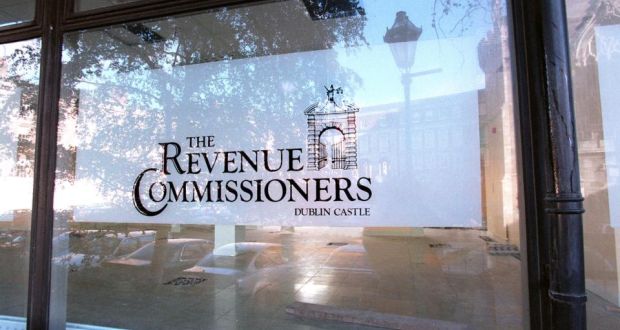
 

The Irish Revenue Commissioners’ 107-strong list made settlements totaling some €19.64 million

A Dublin-based amusement park operator, a Co Sligo farmer and a Dublin company director topped the latest list of tax defaulters.
The 107-strong list, published by the Revenue Commissioners, made settlements totalling €19.64 million.
The largest settlement was made by fair and amusement arcade operators Groundview Limited, of 15 Lower Mount Street, Dublin 2, which used to operate Dawson’s amusement arcade on the Bray seafront before it was demolished.
The company, whose directors are listed as Peter Courtney and Fergal Fogarty both with addresses in Howth, made a settlement of €2.39 million that related to the under-declaration of income tax.
This was followed by farmer Joseph P Clarke, from Carrowkeel, Beltra in Co Sligo , who made a settlement of €1.38 million for the under-declaration of capital gains tax following a Revenue audit.
In third place was Dublin company director Frank O’Reilly, from Charlestown Complex, St Margaret’s Road in Finglas, who settled for €1.35 million again relating to the under-declaration of income.
Mr O’Reilly is a director of car maintenance and repair firm Multipart Automotive Limited, which is based in Ballybough in Dublin.
The rest of the list, which covers the three-month period to the end of September, included building contractors, restaurateurs, medical practitioners and company directors.
Of the 107 published cases, 33 were for amounts exceeding €100,000; of which 10 exceeded €500,000. In total, there were five settlements which exceeded €1 million.
The Revenue said nine of the 107 settlements, yielding €3.89 million, related to its investigation into offshore assets and funds.
A total of seven landlords were on the list but the Revenue said there was no particular focus to its ongoing tax investigations.
A spokeswoman confirmed there had been a greater concentration on cash businesses and the rental sector in the years since the financial crash.
Sablecross, a company involved in the supply of security services with an address in Santry, north Dublin, made a settlement for €1.15 million for the under-declaration of PAYE, PRSI and VAT.
Colm Kearins, a cattle dealer also from Co Sligo, also made a settlement from €1.06 million for the under-declaration of tax and capital gains tax following an audit.
Another sizeable settlement was made by Dublin company director James Moran from Dalkey Avenue, Dalkey.
Mr Moran, who is a director of Access Control Technology Limited – a Dublin-based company involved in the supply of control products for the security industry, made a settlement for €926,000 again for the under-declaration of income tax and for offshore assets.
Another notable was the publican and restaurateur Frank Gill, associated with the well-known Monks restaurant inBallyvaughan, Co Clare, who settled for an amount of €73,000 related to the under-declaration of income tax and VAT.

Leo Varadkar say's he will seek 3 to 4% health spending increase if Irish economy grows


The health Minister says Ireland were asked to pay more than other countries for the exact same drugs

Minister for health Leo Varadkar: said there was little point in economic recovery if it did not mean more money in people’s pockets or in improved services.
If the economy is growing by 3 or 4% annually, then the health service should be seeking increases in its budget of the same amount, the Minister for Health has said.
Leo Varadkar said there was little point in economic recovery if it did not mean more money in people’s pockets or in improved services. However, in the past the provision of increased resources had not always resulted in better services.
“We saw that particularly in boom years when increases in spending went largely into more staff and more pay for staff.”
While there had been improvements in some areas and in some specialties, in relation to “intractables” such as emergency department over-crowding and hospital waiting lists, the problems were the same or even worse when the budget was much higher. “The challenge is to ensure that additional spending benefits patients and patient services.”
Mr Varadkar said the Oireachtas should unite to put pressure on the pharmaceutical industry to come up with fair prices. “So often it is the case that Ireland is asked to pay more than other jurisdictions for the exact same medicines. I think we would do better for patients and the taxpayer if we all united to put pressure on industry and not on the HSE or the Government to overpay for certain medicines.”
The Oireachtas committee on health and children approved a €680 million supplementary budget for the health service for this year.
Mr Varadkar said at the committee hearing that the HSE would start 2015 with a clean slate financially, although some voluntary hospitals would carry forward a deficit. He said there were “upside risks and downside risks” associated with the health budget for next year. On the plus side, “we could do better on drug savings or receive more income from health insurers”. However on the downside demand for services could increase while assessing the cost of dealing with negligence claims was unpredictable.
The Minister added that he believed he had succeeded in his objective of securing a “realistic” health budget for next year. However he would be “insisting that in return, those who hold budget responsibility must plan and deliver services within the resources available”.

Next year could be most exciting one for butterflies in a generation


Conservationists hope rare butterflies in Britain such as the scarce tortoiseshell can survive their winter hibernation to emerge in 2015.

Next year could be the most exciting for butterflies for a generation following the appearance of a rare species for the first time in more than 60 years, experts have said.
Conservationists disclosed that there were around 30 sightings of the scarce tortoiseshell in 2014, with many more thought to have arrived in Britain “undetected”.
The butterfly has been spotted in areas as far apart as Devon, the West Midlands and Tyneside. Its only previous sighting in this country was in 1953, when it was seen in Sevenoaks, Kent.
Butterfly Conservation, a wildlife charity, said that, with the help of a cold spell, the insects could survive their winter hibernation to emerge in 2015.
They would be the first of their species to do so since records began more than 300 years ago.
Conservationists also hope that the large tortoiseshell and continental swallowtail — both of which are very rare in Britain — could survive the winter and emerge next year after several sightings over the summer.
The first scarce tortoiseshells to be seen since 1953 were reported in July in Norfolk, Suffolk, Kent and Lincolnshire.
Although experts are still verifying the overall number of sightings, the total reached around 30 across the country, a spokesman for Butterfly Conservation said.
The large butterfly, also known as the yellow-legged tortoiseshell, is generally found in central and eastern Europe and as far afield as China and Japan. It prefers very cold conditions, meaning that a particularly chilly winter would increase the likelihood that it would successfully hibernate over the winter and emerge in March or April next year.
It is believed to have flown on easterly winds across Europe before arriving in Britain in July. Before being seen in this country, sightings were reported in Holland for the first time. Dr Tom Brereton, the head of monitoring at Butterfly Conservation, said: “Suddenly to go from one previous record 60 years ago to a good scattering of sightings is pretty amazing.”
Meanwhile, continental swallowtail butterflies, which hibernate as chrysalises, emerged as adults along the coast from Suffolk to Dorset. They were the offspring of an influx of the species in 2013 — the largest in the UK since 1945 — as a result of the warm, sunny summer.
Their yellow and black markings and streamer-shaped tails give them a tropical appearance and make them particularly distinct from the most common species in Britain. They are slightly larger than domestic swallowtails, which are restricted to the Norfolk Broads.
Butterfly Conservation said that if the species managed to “overwinter” for a second time and emerge again in southern England next year it would appear that it was attempting to establish colonies in Britain.
The continental swallowtail has the potential to become “a regular visitor to our gardens” within two decades, the charity said.
The large tortoiseshell, which stopped breeding in the UK more than 40 years ago, was also seen regularly in southern England during the summer.
There was a spate of sightings of the clouded yellow, a visitor from mainland Europe, last month, raising the prospect that it too could survive into next year.
Dr Brereton added: “The emergence and immigration of continental swallowtails and scarce tortoiseshells has made 2014 a truly remarkable butterfly year and, with a bit of luck, 2015 could shape up to be even more memorable.
“There have been lots of exciting stories recently of birds, dragonflies, moths and other insects colonising the UK as the climate has warmed up.
“This year’s events show that butterflies are finally getting in on the action, giving a much-needed boost to our depleted butterfly fauna.”     

Saturday, March 15, 2014

Donie's Ireland daily news BLOG Friday

A second Irish woman challenges Ireland’s abortion laws at the United Nations


Siobhán Whelan says she felt demeaned asking hospital staff about termination after learning baby had fatal foetal abnormality. 

Pro-choice supporters demonstrate outside the Irish parliament in Dublin last July ahead of a vote to introduce limited abortion.
An Irish woman who claims to have been demeaned by doctors when she asked for an emergency abortion is to take her case against the Republic to the United Nations.
Siobhán Whelan said she was made feel as if it “was illegal” to ask Irish medical staff if she could have the option of an abortion after learning in September 2009 that her baby would die.
On Thursday, backed by the New York-based Centre For Reproductive Rights, Whelan became the second Irish woman to file a challenge at the UN against the ban on abortions for medical reasons.
The centre has filed a petition with the UN human rights committee to hold Ireland accountable for subjecting Whelan to inhuman and degrading treatment, interfering with her privacy and discrimination on the basis of her gender.
The committee cannot impose a sanction on Ireland but the centre hopes to keep global pressure on its legislators.
Although limited abortion was introduced in the Republic last year, women cannot get terminations in Irish hospitals if they discover they are suffering from fatal foetal abnormalities when pregnant.
After about 21 weeks into her pregnancy Whelan was told by medics at Dublin’s National Maternity hospital that her baby had a fatal anomaly, called Trisomy 13.
She said one doctor told her she would be have been offered a termination in another jurisdiction, but that this was not possible in Ireland.
Whelan said another doctor handed her a report of the scan suggesting she would need it if she decided to travel overseas to have a termination.
But she claimed that staff did not do anything to enable her to contact a UK hospital and did not explain what a termination entailed. Additionally, the medics never mentioned what support she could expect post-diagnosis, she said.
Whelan decided that ending the pregnancy was the best choice for her and her family. She added that her husband had to arrange for time off work and for childcare, as well as find the necessary funds to pay for travel, accommodation and the procedure at the Fetal Assessment Centre at Liverpool Women’s hospital.
Johanna Westeson, regional director for Europe at the Centre For Reproductive Rights, said: “Ireland’s harsh policies made Siobhán fearful to even ask about her options and allowed her healthcare providers to give up on her once she made the decision to end her pregnancy. The UN human rights committee should act swiftly and call on Ireland to expand woman’s access to abortion care as demanded under human rights law.”
Whelan said on Thursday: “The Irish doctors made me feel like it was illegal to discuss the option of termination for fear of having the door slammed in my face or of not receiving any help whatsoever.
“I will never understand why I had to pack my bags and leave Ireland so I could access the medical care I needed. It is truly demeaning and I will never forget it.”

A clairvoyant, a stone crusher and a tax specialist on Tax defaulters list


Revenue Commissioners top 100-strong list defaulters made settlements totalling a whopping €13.77 million. 

A clairvoyant, a stone crusher and a taxation service provider were just some of the unusual or unlikely professions to feature on the latest tax defaulters’ list.
The 100-strong list, published today by the Revenue Commissioners, made settlements totalling €13.77 million.
Carol Byrne, a clairvoyant based in Co Wexford, made a settlement of €163,000 with Revenue for the under declaration of VAT and income tax.
Michael Reidy, a stone crusher from Co Tipperary, made a settlement of €122,000 also for the under declaration of VAT.
Accountant and taxation service provider Yaw Dankwa of Unit 4, Drogheda Business Park, Donore Road in Drogheda made a settlement for €38,359 which related to a penalty determination by the courts for the under declaration of VAT and income tax.
The rest of the list, which covers the three-month period to the end of December, was dominated by medical practitioners, restaurateurs, nursing home operators and building contractors.
The biggest settlement on the list was by Cork heating and plumbing contractor Barry Murphy for €991,000, which included just under €495,000 in interest and penalties, arising out of the under declaration of income tax and VAT.
The second highest settlement was made by Mulleady Civil Engineering Limited in Co Longford for €762,125, which included €458,000 in interest and penalties, arising out of the under-declaration of VAT and relevant contracts tax.
A Co Wicklow motor dealer trading as Fargo LeisureLimited made a settlement for €559,000 arising out of the under-declation of VAT, PAYE and PRSI.
Of the 100 published cases, five exceeded €500,000 and 38 were for amounts exceeding €100,000.
Four cases, yielding €0.47 million, related to the Revenue’s investigation into offshore funds.

Euro small copper to face the axe as one and two cent coins successful trial shows


Group recommends doing away with coppers after successful trial. 

Could we be about to see the end of the one and two cent coins?
A new trial by the National Payments Plan suggests their days are numbered.
A trial run for rounding cash transactions to the nearest five cent amount took place last year in Wexford between September and November in Wexford. According to the National Payments Plan, the trial revealed widespread support among both consumers and retailers for the scheme, and the steering committee has recommended to the Minister of Finance that symmetrical rounding is rolled out nationally on a voluntary basis for both consumers and retailers.
“The results of the trial were clear. The answer from Wexford was a resounding ‘yes’. When ‘don’t knows’ are excluded, 85 per cent of consumers and 100 per cent of retailers surveyed believe rounding should be applied nationally,” said NPP programme manager Ronnie O’Toole.
He moved to reassure consumers worried that the move would lead to a rise in prices.
“Rounding only applies to total bills, not to the prices of individual goods. Quite simply, the price of almost all goods tracked over the nine weeks of the trial remained unchanged,” he said.
If Ireland chooses to adopt the rounding system, we will join five other EU member states, including theNetherlands, Sweden, Finland, Denmark and Hungary, who have already put a similar system in place. Belgium, meanwhile, is currently in the process of adopting it.
The small denomination coins cost more to mint than their face value, and carry a higher cost to the Central Bank due to transport and storage. They also go out of circulation quickly due to stockpiling.

22 year old Woman with anorexia will continue to be fed through tube after gaining some weight


The President of the High Court made the decision after hearing the 22-year-old had gained weight. 

A young woman who suffers from the eating disorder anorexia nervosa is to be fed through a tube in hospital for another period, the President of the High Court has decided after being told she has gained weight.
The 22-year-old woman has reached a weight of 37.9kg and may be in a position to proceed to a new weight maintenance programme once she reaches her 40kg target, Mr Justice Nicholas Kearns was told.
Peter Finlay SC, for the HSE, said it was agreed that the court order permitting tube feeding, first granted last January, was a “life-saving” exercise.
The multi-disciplinary team looking after the woman plan, once she reaches 40kg and her BMI is 15, to put a programmme in place for weight maintenance, he said.
That programme would last eight to ten weeks after which the HSE wished the court to reassess the situation in relation to whether the feeding order should stay in place. The order remains in place pending further court order.
Michael Ramsey SC, for the woman, said there was no doubt the progress made had been excellent and the woman believed the court order and the work of the multi-disciplinary team had saved her life.
However, counsel added, the woman felt “voiceless” at each court hearing to assess her progress and wanted the court to consider suspending the feeding order for seven days to allow her proceed to the weight maintenance programme.
In light of that application, Mr Justice Kearns asked the consultant psychiatrist treating the woman to outline her opinion as to whether the woman was ready for the maintenance programme.
The psychiatrist said the woman has become distressed in the last few weeks by her weight gain and her blood pressure and glucose levels were also not yet stable. In her view, the woman’s body was not ready for the maintenance progeramme and it was too early to consider it at this stage, the psychiatrist said.
Prior to the granting of the court order, the woman did not believe she was going to die but she has now learned the feeding process is essential to live, the psychiatrist added.
Mr Justice Kearns said he would continue the order and will review the case on May 9th. The judge also asked the psychiatrist to pass on words of encouragement to the woman to the effect, if she achieves the weight gain target, the team will work with her in the maintenance programme.
The judge added he would read the corerespondence handed into the court from the woman which, her counsel said, was written in sequence through the feeding programme and showed how her insight into her condition has improved.
The court made the tube-feeding order in January after it heard the woman had refused four out of seven oral nutritional supplements in one 24 hour period. Due to her low body weight, which in January stood at 32.8kg with a BMI of 12.2, she ran the risk of collapse, it was stated.

Half of fixed broadband homes in Ireland now have speeds greater than 10 Mbps


Half of fixed broadband homes in Ireland now at speeds greater than 10Mbps. 

Average broadband speeds in Ireland have increased, with 53.4% of all fixed broadband subscriptions over 10Mbps at the end of last year, ComReg said in its latest quarterly review.
This is up from 31.5% in the fourth quarter of 2012.
ComReg says that around a third of all fixed broadband connections in Ireland are now up over 30Mbps.
In terms of average broadband penetration in Ireland, ComReg reports Ireland is now at 67% fixed and mobile penetration.
Looking at next-generation technologies, like fibre-to-the-cabinet (VDSL), ComReg claims there are now 74,540 VDSL broadband subscriptions in Ireland. Eircom aims to pass 1m homes by this summer with VDSL capable of reaching speeds of up to 100Mbps.

MOBILE PENETRATION NOW AT 122%

The mobile market accounted for about 74.1% of all voice and internet subscriptions (fixed and mobile), with fixed market subscriptions (voice and internet) representing the remaining 25.9%.
The number of texts sent continues to decline as consumers’ mobile data usage intensifies.
The total number of SMS messages sent by mobile users in Ireland was more than 2.15bn in Q4 2013, down 27.6% on Q4 2012. Data volumes continue to rise, increasing by 43.7% in the year to Q4 2013 to reach just over 12,273 terabytes.
ComReg estimates that industry retail revenues in Q4 2013 were €788.4m, which was a 0.1% decrease since Q3 2013.
Total industry retail revenues in the 12 months to December 2013 at €3.15bn were down from more than €3.24bn over the previous 12 months.
In Q4 2013, Average Revenue Per User (ARPU) in the mobile sector was €27 per month, down from €29 compared to Q4 2012.
ComReg says the drop in ARPU is due, in part, to lower-priced mobile plans and increased sales of bundled products, combined reductions in mobile roaming and termination rates.
There were 5,626,398 mobile phone subscriptions at the end of December, which was an increase of 0.2pc on the previous quarter. Ireland’s mobile penetration rate for the quarter was 122.2%.

ESO’s Very Large Telescope spots a hypergiant yellow star

Artist's impression of HR 5171 A [1] (Image: ESO)    HR 5171 A [1] is over 1,300 times larger than our Sun (Photo: ESO/Digitized Sky Survey 2)
The European Space Observatory’s Very Large Telescope (VLT) has spotted a massive yellow star with a diameter of more than 1,300 times the size of the Sun. The star is also a part of a binary system, with a companion star orbiting so close that it is actually in physical contact with the giant.
The truly massive nature of the stellar behemoth, imaginatively named HR 5171 A [1], was discovered due to detailed imaging by the ESO’s Very Large Telescope Interferometer (VLTI).
The VLT itself is not a single telescope, but comprises four Unit Telescopes, each boasting an impressive 8.2 m (26 ft) diameter main mirror. In addition to this, the VLT has four mobile 1.8 m (5.9 ft) auxiliary telescopes. Interferometry essentially allows the light collected from all four main telescopes as well as the auxiliaries, to be combined, creating one giant 140 m (459 ft) telescope.
HR 5171 A [1] is the largest of a very rare category of star known as a yellow hypergiant. These stars are generally extremely unstable and represent some of the brightest stars that we know of. The unstable nature of the star manifests physically with the regular expulsion of massive amounts of stellar material, causing the star to have a large extended atmosphere.
HR 5171 A [1] is roughly 50 percent larger than the red supergiantBetelgeuse. Sitting 12,000 light-years away from earth, HR 5171 A [1] has an astonishing diameter of more than 1,300 times our own star, and is over a million times brighter.
However, even with the yellow hypergiant’s incredible size making it one of the top ten largest stars ever discovered, it cannot compare to some of the biggest stars on record. For example, the red supergiant UY Scuti is a veritable leviathan with a diameter of 1,708 times that of our Sun.
It must be noted that references to the size of these monster stars are subject to significant margins of error. This is due to the fact that the size of the stars cannot be discovered via direct observation and must instead be inferred with measurements of brightness, temperature and distance.
It is not just the sheer size of HR 5171 A [1] that makes it such a rare and beautiful find. Regarding the unique nature of the star, Olivier Chesneau of the Observatoire de la Côte d’Azur, Nice, France, said that “The new observations also showed that this star has a very close binary partner, which was a real surprise,” going on to say that, “The two stars are so close that they touch and the whole system resembles a gigantic peanut.”
The existence of the companion star was verified with observations from other observatories, with data suggesting that the small star orbits its massive parent once every 1,300 days.
HR 5171 A [1] has actually been observed for around 60 years prior to being imaged by the VLTI, but no-one had previously known how truly massive it was. It’s also been growing over the last 40 years, with the star cooling as it enlarges. Further observations of the changing star will undoubtedly grant a fascinating insight into the evolution of these stellar giants.  

Thursday, September 12, 2013

Donie's news Ireland daily BLOG update

Irish Tax defaulters pay Revenue Commissioners a total of €127m for 2nd Quarter 2013

    
Just under €22.62m worth of tax settlements were paid to Revenue during the second quarter of the year; a rise of just over 10% on the preceding three months.
The latest quarterly tax defaulters list — published yesterday — also shows that the number of individual settlements totalled 136 in the three months to the end of June; 10 more than were published in the first list of the year.
Of the latest batch, 59 were for amounts exceeding €100,000 — of which seven topped €500,000. Four cases involved settlements of more than €1m.
Brendan O’Connor, a company director and landlord, with an address in Enniscorthy — settled for just over €1.2m in a case regarding under-declaration of income tax and Vat. Dublin-based landlords, Barry & Sons paid just over €1m after under-declaring for corporation tax and Carrick-on-Shannon-based furniture suppliers, the Orthopaedic Bed Company was charged €1.23m for under-declaring for income tax, Vat, PAYE and PRSI.
The largest single settlement concerned Co Meath- based building company, Midland Contractors.
The Kells-based firm, which is in liquidation, settled for nearly €2.18m, regarding the under-declaration of Vat.
In its commentary, regarding the second quarter list, Revenue said that of the overall 136 cases, four settlements — totalling €1.28m — related to its Single Premium Insurance Products Investigation cases.
Other settlements include the Commons Bar, Commons Road, Cork, trading as Kenroode Investments for €275,820.34. William Cashman, a turf accountant based in Douglas in Cork settled for €405,399. And Gerald Mackay, a publican based in Youghal settled for €275,820.34.
Revenue added that the published settlements only reflect “a portion” of all of its audits and investigations during the three months under review.
“Settlements are only published when the extensive voluntary disclosure options are not availed of and the default is as a result of careless or deliberate behaviour,” Revenue said.
Yesterday’s data showed that a total of 2,151 audit and investigations — together with 16,440 risk management interventions — were settled between the beginning of April and the end of June, resulting in a total yield of €127m.

Criminals convicted of serious offences in Ireland to have DNA info. entered into a database


DATABASE TO CONTAIN GENETIC PROFILES OF PEOPLE CONVICTED OF OFFENCES THAT ATTRACT PRISON SENTENCES OF 5 YEARS OR MORE

Criminals convicted of serious offences and most suspects detained in connection with serious criminal investigations are to have their DNA profile added to a new national database.
Under a draft law published today, gardaí will be empowered to take biological samples in the form of mouth swabs or hair follicles from offenders convicted of a serious crimes and suspects held in relation to offences that carry a sentence of five years or more.
The database will include the genetic profiles of offenders entered on the sex offenders register on or after the day the law comes into effect, as well as crime scene profiles from unsolved crimes.
The facility is designed to enable the authorities to match a DNA profile from an individual to an unidentified crime scene profile obtained in the course of a criminal investigation, and to match crime scene profiles from different crime scenes. It will also assist in identifying missing and unknown persons, including unidentified human remains.
It will be operated by the Forensic Science Laboratory at Garda Headquarters in Dublin, which already routinely does DNA testing for the force. Minister for Justice Alan Shatter said the data would be held on purpose-built software supplied by the FBI to agencies around the world.
The software, called Combined DNA Index System (CODIS), is used in 40 countries, including 18 EU member states, and was installed in the Forensic Science Laboratory in 2012.
“The intelligence generated will be invaluable to the Gardaí in relation to identifying prolific offenders involved in volume crime such as burglary but also in relation to serious offences against the person, such as homicide and sexual offences,” Mr Shatter said.
“It will contribute to the move towards more effective, targeted and smarter policing and will also facilitate cooperation with other police forces in relation to mobile criminals.” He also pointed out that the database would be of benefit in establishing the innocence of individuals suspected or wrongly convicted of offences.
The Bill states that suspects under 14 years may not be sampled for the database. Neither can “protected persons”, defined as those who do not have the capacity by reason of a disability to understand the nature or effect of the taking of a sample, or who cannot indicate their consent. However, both groups may be sampled where this is necessary to prove or disprove their involvement in a particular offence.
The Bill states that samples taken from individuals will be destroyed as soon as the profile has been generated or within six months – whichever is the later.
In relation to people who are not proceeded against or are not convicted, the Bill includes a presumption in favour of the removal from the database of their DNA profiles, subject to the Garda Commissioner having the power to authorise retention on the database where he is satisfied that this is necessary.
A statutory test is set out by which the commissioner will make this decision, which can be appealed. The retention periods allowed will be 6 years in the case of adults and 3 years for children.
The arrangements governing the retention of samples taken for evidential purposes include a presumption in favour of destruction of the samples relating to suspects who are not convicted, subject to the Garda Commissioner having the power to authorise retention for 12 months (which will be renewable) where he is satisfied that this is necessary. Again, this decision will be appealable.
The DNA profiles of people convicted of serious offences will continue to be held on the database indefinitely.
The Bill includes a number of safeguards in relation to the taking of samples. For example, the procedure is to take place “in reasonable privacy” and must be explained to an individual before it is carried out.
Where reasonable force may be used to take a sample, it requires prior authorisation of an officer of at least Superintendent rank. Its use must also be observed by a senior person who has responsibility for determining how many officers are required, and must be electronically recorded.
Mr Shatter said he was determined to ensure that the database would be ready for use as soon as the legislation was enacted. To make this happen, the laboratory has been given funding for new specialist staff and to allow for the purchase and installation of new equipment.

Irish Shipping activity surges to its highest level since 2008


Increased imports of animal feed coincides with fodder crisis

Increased imports of animal feed and fertilisers saw shipping and port activity increase by 11 per cent during the second quarter.
The latest iShip index, published today by the Irish Maritme Development Office, showed activity for the three months to the end of June was at its highest level since 2008.
The index indicated that four of the five principal domestic freight segments grew during the quarter.
The growth was largely driven by a surge in demand in the dry bulk sector which includes grain, agricultural products, coal, animal feed and fertilisers.
The increased volume of feed and grain imports coincided withthe country’s fodder crisis earlier this year, which forced farmers to import greater amounts of animal feed to make up for the shortage of silage.
The dry bulk sector has been the strongest performing freight segment over the last three quarters, growing by 26 per cent to 4.08 million tonnes in the second quarter.
Roll on-roll off trailer volumes increased by 8 per cent to 229,772 units, the index showed.
The majority of roll on-roll off traffic moves betweenIreland and Great Britain, our largest trading partner, and this trade grew by 6 per cent as demand conditions in the UK improved.
Exports were flat as global economic conditions continued to impinge on demand, the report said.

Parking charges in Ireland generate totals of €360 million a year


Local authorities in Ireland make most from car park charges
Car parking charges generate more than €360 million a year for local authorities and private industry in Ireland, a European parking conference in Dublin will hear today.

Irish cities and towns have more than 350,000 paid parking spaces but most are off-street in car parks, a Europe-wide survey has found.
It identified that there was potential to generate far more income from parking if more on-street or “kerbside” spaces were to be metered.
Local authorities do best from parking charges with revenues of some €115 million, according to the Irish Parking Association, the private and public sector representative body which is hosting the conference.
Private car parks have revenues of €80 million and car parks at railway stations and other transport hubs generate €70 million.
Shopping centre car parks have revenues of €50 million; parking at hotels and hospitals have combined revenues of €25 million; and equipment suppliers have revenues of €15 million.
Miscellaneous associated services produce a combined total of €5 million.
Kerbside potential
The industry as a whole contributes more than €100 million to the exchequer, and directly employs more than 1,500 people in Ireland, the association said.
Across Europe the industry is estimated to be worth more than €20 billion and employs 500,000 people.
Most of Ireland’s paid parking is off-street in car parks with about 270,000 spaces, compared with 85,000 on-streets paid parking spaces.
Across Europe the ratio of off-street to on-street is far closer with almost 22 million off-street spaces compared to 12 million on-street paid parking spaces.
However, the European Parking Association estimates that far more “kerbside” spaces in city centres could be made to pay.
Free spaces
The association will tell the conference that its survey of the scope of the industry across Europe shows there are more than 190 million currently free spaces which represent a potential source of revenue.
The conference is being held at the National Convention Centre and will be opened by Minister for Transport  Leo Varadkar.
It will be attended by almost 500 delegates and will hear from Irish and international experts .
Speakers include the secretary general from the Department of Transport Tom O’Mahony, Dublin city engineer Michael Phillips and Transport for London director of traffic Alan Bristow.
Topics are set to include innovative parking solutions in a Georgian city, cashless on-street parking, whether paid parking is killing the high street, lessons in parking from the London Olympics 2012, and a wireless parking experiment in San Francisco.

The key to preventing suicide lies within Ireland’s communities


There are plenty of charities and support groups aimed at suicide prevention, but do they offer the right help?

About 500 people die by suicide every year in Ireland. Those working on the coalface of the problem say it’s closer to 10 deaths a week – eight of which are men. Today, on World Suicide Prevention Day, these people and others who have attempted suicide will be remembered.
In Ireland, we are no longer afraid to talk about suicide and there are now many charities supporting people through periods of extreme psychological distress who might otherwise have taken their own lives.
More help. 
There is also more help for families and friends trying to understand and cope with the loss of a loved one through suicide these days.
But, do we really know what best helps people in acute emotional crisis? And do we have the psychological maturity to give people the support they need to prevent them from taking their own lives?
Caroline McGuigan is a psychotherapist with Suicide or Survive (SoS) and a former user of the psychiatric services.
She firmly believes that the keys to suicide prevention are within the community. “There isn’t one answer or one organisation. What works for you won’t work for me but if we invest in community, it can heal itself,” says McGuigan.
Struggles and vulnerabilities
She says that while we are talking more about suicide, we don’t talk about our own vulnerabilities and struggles.
“Part of life is struggle and we need to challenge the idea that if you feel low or anxious that you are a lesser person because of it and that it’s something to feel ashamed or embarrassed about.
“I’ve learned time and time again that listening is the key and asking questions like, have you experienced this before? What did you do to help you through then? Don’t decide you know what’s best for the person. Don’t judge them. A paternalistic approach doesn’t work.”
According to McGuigan, what’s really important is to hold hope.
“The stressful thoughts and emotions do pass. It’s also very important to use the word ‘we’ when talking about getting support and remind the person that he/she is a valued and capable human being.
“Even in distress, a person can tap into the resources that got him/her through so far.”
The standard advice for anyone who is suicidal is to seek help from their GP, at their nearest A&E department or to phone a helpline.
Joan Freeman from Pieta House, the suicide and self-harm crisis centres, points out that if someone in acute distress arrives at their GP or A&E department, he/she needs to be seen “quickly, compassionately and efficiently”.
“People can be waiting for hours among people who are physically ill and [when A&E departments are busy] many of those in acute emotional distress will leave the hospital without being seen,” she says.
She acknowledges, however, current HSE plans to put in place emergency care nurses who will fast-track individuals in acute emotional distress and/or with a history of self-harming.

Ireland’s Mothers to-be are the ‘biggest drinkers’ of six countries in the world


Irish mothers-to-be are drinking significantly more during pregnancy than women in other countries.
But they are not increasing their odds of having a smaller baby, high blood pressure or a premature birth.
However, crucially, new research did not look at the effects of alcohol on the developing baby’s brain and whether it increases the risk of hyperactivity and slow learning.
An international study looked at the drinking patterns of 5,628 women during the first 15 weeks of pregnancy, including consumption by 1,774 pregnant women in Ireland.
Irish women were the biggest drinkers, but it found alcohol consumption in early pregnancy did not appear to adversely affect some conditions.
These include the baby’s weight, pre-eclampsia – a condition that can be life-threatening for the mother if left untreated – or spontaneous pre-term birth.
The Department of Health warns pregnant women to avoid alcohol completely during pregnancy because of the potential brain damage it can cause the unborn baby, leading to a condition known as foetal alcohol syndrome.
The newly published study was conducted by researchers funded by the Health Research Board and led by the College of Medicine and Health in University College Cork (UCC).
Lead researcher Louise Kenny, Professor of Obstetrics in UCC, stressed the potential for damaging the baby’s brain remains one of the single most important reasons for pregnant women to avoid alcohol intake.
She said the research was conducted with the principal aim of developing screening tests to predict which babies would be small for their gestational age, would develop pre-eclampsia in the mother and to determine the risk of spontaneous pre-term birth.
However, the findings unearthed worrying levels of drinking among pregnant Irish women when compared with their counterparts in Australia and New Zealand.
Eight in 10 of the 1,774 women recruited in Ireland had drank some alcohol in the first 15 weeks of pregnancy.
And one in five reported drinking moderate to heavy amounts of alcohol during that time.
Around 31pc admitted two or more episodes of binge drinking, compared to 4pc in New Zealand.
Overall 65pc-80pc of women in the UK and Ireland consumed some alcohol in pregnancy, compared with 38pc in Australia and 53pc in New Zealand.
The 5,628 women were surveyed in Cork, Auckland, Adelaide, London, Leeds and Manchester.

DNA study suggests hunting did not kill off mammoth


RESEARCHERS HAVE FOUND EVIDENCE TO SUGGEST THAT CLIMATE CHANGE, RATHER THAN HUMANS, WAS THE MAIN FACTOR THAT DROVE THE WOOLLY MAMMOTH TO EXTINCTION.

A DNA analysis shows that the number of creatures began to decrease much earlier than previously thought as the world’s climate changed.
It also shows that there was a distinct population of mammoth in Europe that died out around 30,000 years ago.
The results have published in the Proceedings of the Royal Society B.
The view many researchers had about woolly mammoths is that they were a hardy, abundant species that thrived during their time on the planet.
But according to the scientist who led the research, Dr Love Dalen of the Swedish Museum of Natural History, the study shifts that view.
“The picture that seems to be emerging is that they were a fairly dynamic species that went through local extinctions, expansions and migrations. It is quite exciting that so much was going on,” he told BBC News.
Dr Dalen worked with researchers in London to analyse DNA samples from 300 specimens from woolly mammoths collected by themselves and other groups in earlier studies
The scientists were able to work out how many mammoths existed at any given time from the samples as well as tracing their migration patterns. They looked at the genetic diversity in their samples – the less diverse the lower the population
They found that the species nearly went extinct 120,000 years ago when the world warmed up for a while. Numbers are thought to have dropped from several million to tens of thousands but numbers recovered as the planet entered another ice age.
The researchers also found that the decline that led to their eventual extinction began 20,000 years ago when the Ice Age was at its height, rather than 14,000 years ago when the world began to warm again as previously thought.
They speculate that it was so cold that the grass on which they fed became scarce. The decline was spurred on as the Ice Age ended, possibly because the grassland on which the creatures thrived was replaced by forests in the south and tundra in the north.
The reason they died out has been a matter of considerable scientific debate. Some have argued that humans hunted them to extinction while others have said that changes in the climate was the main factor.
A criticism of the climate extinction argument is that the world warmed well before the creatures became extinct and so that could not have been the cause.
Any role of humans in the process has yet to be demonstrated”
Prof Adrian ListerNatural History Museum London
The new results show that mammoths did indeed nearly go extinct between Ice Ages and so backs the view that climate change was the principal cause for their demise.
These results back a computer simulation of conditions at the time carried out by researchers at Durham University in 2010.
And of course other animals, including humans, became more active after the Ice Age and so competition with other species and hunting may also have been a factor in their extinction, though not the principle cause, argues Prof Adrian Lister of the NHM.
“During the last ice age, between about 50,000 and 20,000 years ago, there were substantial movements of mammoth populations – European populations being replaced by waves of migration from the east, for example,” he said.
“But from about 20,000 years ago onwards, the population started the dramatic decline that led to its extinction, first on the mainland about 10,000 years ago, and finally on some outlying Arctic islands. The pattern seems to fit forcing by natural climate change: any role of humans in the process has yet to be demonstrated”.’