New Irish homeless plan sees extra beds, a night cafe and transport to hostels


Alan Kelly says Nama-owned hotel will be purchased and used to house the homeless.
The Minister for the Environment Alan Kelly has published a €25 million Government plan to tackle homelessness on this Tuesday.
A €25 million Government million plan to tackle homelessness pledges to provide additional emergency beds by the end of the year and set up a night cafe for homeless people; and provide free transport to available hostels.
The 20-point plan was announced by Minister for the Environment Alan Kelly after being approved by Cabinet on Tuesday morning.
A Cabinet sub-committee discussed the policy paper on Monday ahead of the weekly meeting of Ministers.
Other major points of the plan include a commitment to purchase a hotel under the control of the National Assets Management Agency (NAMA) and use it to provide accommodation and an assessment centre for homeless families.
It is expected the hotel, which has yet to be identified, will be available by April of next year.
Mr Kelly is also to issue a direction to the four Dublin housing authorities to allocate 50 per cent of all housing allocations to homeless households and other vulnerable groups for the next six months.
This will provide homes for approximately 500 people, according to the Minister.
The plan was published during a visit by Mr Kelly and Minister of State Paudie Coffey to the Dublin Region Homeless Executive’s ‘one-stop-shop’ advice office in Parkgate Street, Dublin.
It was also attended by Lord Mayor of Dublin Christy Burke as well as representatives from the HSE, homeless services, local authorities, and non-government agencies working with homeless people.
Mr Coffey said solutions to the issue of homelessness would only be found by pooling resources.
“Many deficits and gaps have been identified that we now need to address. There has been a real debate in Government.”
Mr Kelly said he had made a commitment that every homeless person in Dublin who needed a bed or emergency accommodation will be provided for before Christmas.
He said those who choose to stay on the streets will have access to the night cafe. That will be a contact point as well as providing food, a rest area, and access to showers, he said. It will facilitate up to 50 people and will operate throughout the night on a seven days basis.
The cafe will open next week and will become fully operational from January 2015.
Mr Kelly said the plan delivered on the commitments he made at the homeless forum last week.
“It also puts in place medium and longer term measures in response to issues highlighted by the special forum.
“For example, we must also cater for families with children whose urgent need is for emergency accommodation and for people who are currently in private rented homes but are in danger of becoming homeless.
“Our long term ambition is by the end of 2016 we will end the scourge of involuntary long term homelessness,” he said.
“It’s not about money, it never was. It’s about making sure that we end homelessness,” Mr. Kelly added.
He said the 260 emergency beds were scattered all over Dublin and the authorities were working on plans for Cork, Limerick and Galway. He said he was confident that the number of emergency spaces available in January.
Other major actions include:
Stay in Your Home: A campaign to make tenants aware of their rights and provide assistance to families in danger of their homes.
A total of 1,046 vacant properties will be brought back into use to utilise as housing on an emergency basis.
Dublin City Council has also been asked to look at the 657 vacant properties currently due for demolition to see if any of them might be suitable for temporary accommodation
Banks will be asked to discuss the ‘buy to let’ sector with the Department to see if there is possibility of finding solutions for those in hardship.
Sinead O’Connor joins Sinn Fein and calls for its leadership to stand down
‘same way as the last Pope did she says’


“For anyone who is confused, Sinn Fein is no longer associated with the use of violence.” Now Irish singer Sinead O’Connor has joined the Sinn Fein party.
The entertainment star took to Facebook last night, to share the news with her fans, on what was her 48th birthday.
Homeless plan sees extra beds, a night cafe and transport to hostels
Alan Kelly says Nama-owned hotel will be purchased and used to house the homeless
The Minister for the Environment Alan Kelly has published a €25 million Government plan to tackle homelessness this Tuesday.
A €25 million Government million plan to tackle homelessness pledges to provide additional emergency beds by the end of the year; set up a night cafe for homeless people; and provide free transport to available hostels.
The 20-point plan was announced by Minister for the Environment Alan Kelly after being approved by Cabinet on Tuesday morning.
A Cabinet sub-committee discussed the policy paper on Monday ahead of the weekly meeting of Ministers.
Other major points of the plan include a commitment to purchase a hotel under the control of the National Assets Management Agency (NAMA) and use it to provide accommodation and an assessment centre for homeless families.
It is expected the hotel, which has yet to be identified, will be available by April of next year.
Mr Kelly is also to issue a direction to the four Dublin housing authorities to allocate 50 per cent of all housing allocations to homeless households and other vulnerable groups for the next six months.
This will provide homes for approximately 500 people, according to the Minister.
The plan was published during a visit by Mr Kelly and Minister of State Paudie Coffey to the Dublin Region Homeless Executive’s ‘one-stop-shop’ advice office in Parkgate Street, Dublin.
It was also attended by Lord Mayor of Dublin Christy Burke as well as representatives from the HSE, homeless services, local authorities, and non-government agencies working with homeless people.
Mr Coffey said solutions to the issue of homelessness would only be found by pooling resources.
“Many deficits and gaps have been identified that we now need to address. There has been a real debate in Government.”
Mr Kelly said he had made a commitment that every homeless person in Dublin who needed a bed or emergency accommodation will be provided for before Christmas.
He said those who choose to stay on the streets will have access to the night cafe. That will be a contact point as well as providing food, a rest area, and access to showers, he said. It will facilitate up to 50 people and will operate throughout the night on a seven days basis.
The cafe will open next week and will become fully operational from January 2015.
Mr. Kelly said the plan delivered on the commitments he made at the homeless forum last week.
“It also puts in place medium and longer term measures in response to issues highlighted by the special forum.
“For example, we must also cater for families with children whose urgent need is for emergency accommodation and for people who are currently in private rented homes but are in danger of becoming homeless.
“Our long term ambition is by the end of 2016 we will end the scourge of involuntary long term homelessness,” he said.
“It’s not about money, it never was. It’s about making sure that we end homelessness,” Mr Kelly added.
He said the 260 emergency beds were scattered all over Dublin and the authorities were working on plans for Cork, Limerick and Galway. He said he was confident that the number of emergency spaces available in January.
Other major actions include:
Stay in Your Home: A campaign to make tenants aware of their rights and provide assistance to families in danger of their homes.
A total of 1,046 vacant properties will be brought back into use to utilise as housing on an emergency basis.
Dublin City Council has also been asked to look at the 657 vacant properties currently due for demolition to see if any of them might be suitable for temporary accommodation
Banks will be asked to discuss the ‘buy to let’ sector with the Department to see if there is possibility of finding solutions for those in hardship.
“I joined Sinn Fein today,” she wrote.
“Because resolving issue number one is the way to resolve all current issues.
“Issue number one is we don’t own our country.
“I might not even be the kind of person they want, because I’m gonna write here that I feel the elders of Sinn Fein are going to have to make ‘the supreme sacrifice’ and step down shortly in the same way the last Pope did.
“It was the smart thing for him to do because his association in people’s minds with frightful things meant the church were losing bums on seats, if I may use a showbiz term.
“And now they have barely a seat to spare. “Pure cold business.
“There’d be a zillion per cent increase in membership of Sinn Fein if the leadership were handed over to those born from 1983/1985 onward and no one associated in people’s minds with frightful things.
“Frightful things belong where they are now, in the past.
“That increase would resolve issue number one.
“Ergo all current issues would be resolved .
“People are open to it now.
“A brand new country.
“Run by everyone of every nationality who lives in all of it.”
Following some colourful responses to the decision she later added on Facebook: “For anyone who is confused, Sinn Fein is no longer associated with the use of violence.”
A Sinn Fein spokesperson said the party welcomed Ms. O’Connor’s membership application and that it was being processed.
Arcade operator, a farmer and a company director top list of “Irish tax defaulters”
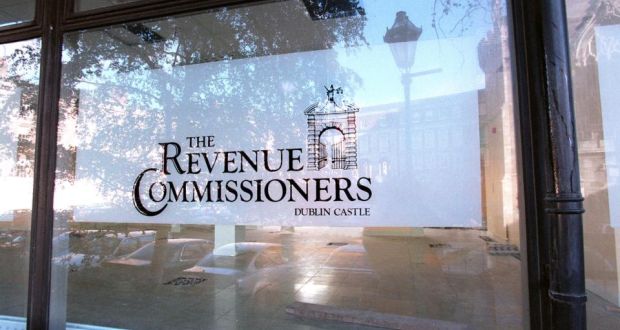

The Irish Revenue Commissioners’ 107-strong list made settlements totaling some €19.64 million
A Dublin-based amusement park operator, a Co Sligo farmer and a Dublin company director topped the latest list of tax defaulters.
The 107-strong list, published by the Revenue Commissioners, made settlements totalling €19.64 million.
The largest settlement was made by fair and amusement arcade operators Groundview Limited, of 15 Lower Mount Street, Dublin 2, which used to operate Dawson’s amusement arcade on the Bray seafront before it was demolished.
The company, whose directors are listed as Peter Courtney and Fergal Fogarty both with addresses in Howth, made a settlement of €2.39 million that related to the under-declaration of income tax.
This was followed by farmer Joseph P Clarke, from Carrowkeel, Beltra in Co Sligo , who made a settlement of €1.38 million for the under-declaration of capital gains tax following a Revenue audit.
In third place was Dublin company director Frank O’Reilly, from Charlestown Complex, St Margaret’s Road in Finglas, who settled for €1.35 million again relating to the under-declaration of income.
Mr O’Reilly is a director of car maintenance and repair firm Multipart Automotive Limited, which is based in Ballybough in Dublin.
The rest of the list, which covers the three-month period to the end of September, included building contractors, restaurateurs, medical practitioners and company directors.
Of the 107 published cases, 33 were for amounts exceeding €100,000; of which 10 exceeded €500,000. In total, there were five settlements which exceeded €1 million.
The Revenue said nine of the 107 settlements, yielding €3.89 million, related to its investigation into offshore assets and funds.
A total of seven landlords were on the list but the Revenue said there was no particular focus to its ongoing tax investigations.
A spokeswoman confirmed there had been a greater concentration on cash businesses and the rental sector in the years since the financial crash.
Sablecross, a company involved in the supply of security services with an address in Santry, north Dublin, made a settlement for €1.15 million for the under-declaration of PAYE, PRSI and VAT.
Colm Kearins, a cattle dealer also from Co Sligo, also made a settlement from €1.06 million for the under-declaration of tax and capital gains tax following an audit.
Another sizeable settlement was made by Dublin company director James Moran from Dalkey Avenue, Dalkey.
Mr Moran, who is a director of Access Control Technology Limited – a Dublin-based company involved in the supply of control products for the security industry, made a settlement for €926,000 again for the under-declaration of income tax and for offshore assets.
Another notable was the publican and restaurateur Frank Gill, associated with the well-known Monks restaurant inBallyvaughan, Co Clare, who settled for an amount of €73,000 related to the under-declaration of income tax and VAT.
Leo Varadkar say's he will seek 3 to 4% health spending increase if Irish economy grows


The health Minister says Ireland were asked to pay more than other countries for the exact same drugs
Minister for health Leo Varadkar: said there was little point in economic recovery if it did not mean more money in people’s pockets or in improved services.
If the economy is growing by 3 or 4% annually, then the health service should be seeking increases in its budget of the same amount, the Minister for Health has said.
Leo Varadkar said there was little point in economic recovery if it did not mean more money in people’s pockets or in improved services. However, in the past the provision of increased resources had not always resulted in better services.
“We saw that particularly in boom years when increases in spending went largely into more staff and more pay for staff.”
While there had been improvements in some areas and in some specialties, in relation to “intractables” such as emergency department over-crowding and hospital waiting lists, the problems were the same or even worse when the budget was much higher. “The challenge is to ensure that additional spending benefits patients and patient services.”
Mr Varadkar said the Oireachtas should unite to put pressure on the pharmaceutical industry to come up with fair prices. “So often it is the case that Ireland is asked to pay more than other jurisdictions for the exact same medicines. I think we would do better for patients and the taxpayer if we all united to put pressure on industry and not on the HSE or the Government to overpay for certain medicines.”
The Oireachtas committee on health and children approved a €680 million supplementary budget for the health service for this year.
Mr Varadkar said at the committee hearing that the HSE would start 2015 with a clean slate financially, although some voluntary hospitals would carry forward a deficit. He said there were “upside risks and downside risks” associated with the health budget for next year. On the plus side, “we could do better on drug savings or receive more income from health insurers”. However on the downside demand for services could increase while assessing the cost of dealing with negligence claims was unpredictable.
The Minister added that he believed he had succeeded in his objective of securing a “realistic” health budget for next year. However he would be “insisting that in return, those who hold budget responsibility must plan and deliver services within the resources available”.
Next year could be most exciting one for butterflies in a generation


Conservationists hope rare butterflies in Britain such as the scarce tortoiseshell can survive their winter hibernation to emerge in 2015.
Next year could be the most exciting for butterflies for a generation following the appearance of a rare species for the first time in more than 60 years, experts have said.
Conservationists disclosed that there were around 30 sightings of the scarce tortoiseshell in 2014, with many more thought to have arrived in Britain “undetected”.
The butterfly has been spotted in areas as far apart as Devon, the West Midlands and Tyneside. Its only previous sighting in this country was in 1953, when it was seen in Sevenoaks, Kent.
Butterfly Conservation, a wildlife charity, said that, with the help of a cold spell, the insects could survive their winter hibernation to emerge in 2015.
They would be the first of their species to do so since records began more than 300 years ago.
Conservationists also hope that the large tortoiseshell and continental swallowtail — both of which are very rare in Britain — could survive the winter and emerge next year after several sightings over the summer.
The first scarce tortoiseshells to be seen since 1953 were reported in July in Norfolk, Suffolk, Kent and Lincolnshire.
Although experts are still verifying the overall number of sightings, the total reached around 30 across the country, a spokesman for Butterfly Conservation said.
The large butterfly, also known as the yellow-legged tortoiseshell, is generally found in central and eastern Europe and as far afield as China and Japan. It prefers very cold conditions, meaning that a particularly chilly winter would increase the likelihood that it would successfully hibernate over the winter and emerge in March or April next year.
It is believed to have flown on easterly winds across Europe before arriving in Britain in July. Before being seen in this country, sightings were reported in Holland for the first time. Dr Tom Brereton, the head of monitoring at Butterfly Conservation, said: “Suddenly to go from one previous record 60 years ago to a good scattering of sightings is pretty amazing.”
Meanwhile, continental swallowtail butterflies, which hibernate as chrysalises, emerged as adults along the coast from Suffolk to Dorset. They were the offspring of an influx of the species in 2013 — the largest in the UK since 1945 — as a result of the warm, sunny summer.
Their yellow and black markings and streamer-shaped tails give them a tropical appearance and make them particularly distinct from the most common species in Britain. They are slightly larger than domestic swallowtails, which are restricted to the Norfolk Broads.
Butterfly Conservation said that if the species managed to “overwinter” for a second time and emerge again in southern England next year it would appear that it was attempting to establish colonies in Britain.
The continental swallowtail has the potential to become “a regular visitor to our gardens” within two decades, the charity said.
The large tortoiseshell, which stopped breeding in the UK more than 40 years ago, was also seen regularly in southern England during the summer.
There was a spate of sightings of the clouded yellow, a visitor from mainland Europe, last month, raising the prospect that it too could survive into next year.
Dr Brereton added: “The emergence and immigration of continental swallowtails and scarce tortoiseshells has made 2014 a truly remarkable butterfly year and, with a bit of luck, 2015 could shape up to be even more memorable.
“There have been lots of exciting stories recently of birds, dragonflies, moths and other insects colonising the UK as the climate has warmed up.
“This year’s events show that butterflies are finally getting in on the action, giving a much-needed boost to our depleted butterfly fauna.”


