Pages

Showing posts with label Underwater. Show all posts

Friday, July 15, 2016

Donie's Ireland daily news BLOG update

More than 259,000 vacant homes in Ireland census 2016

CSO FIGURES SHOW NUMBER OF EMPTY DUBLIN HOLIDAY PROPERTIES ‘UP 190% IN FIVE YEARS’


PRELIMINARY FIGURES PUBLISHED BY THE CENTRAL STATISTICS OFFICE ON JULY 14TH SHOW THE TOTAL POPULATION IS NOW 4,757,976.

The number of vacant holiday homes in Dublin city centre has nearly trebled in five years.
Publishing preliminary statistics from the April 24th census, the CSO said there had been a “noticeable increase”, up from 322 in 2011 to 937 this year – an increase of 190%.
The housing crisis in some parts of the State appears to have manifested itself in the census, with figures showing the number of vacant dwellings has fallen by 29,889 (13.8%).
In total, there are 259,562 vacant homes, including 61,204 vacant holiday homes, up 1,809 (3%) on the last census.
Vacancy rates for housing vary widely by county but the overall rate stands at 12.8%.
Carlow experienced the largest fall in the number of vacant dwellings from 3,202 in 2011 to 2,417 in this year’s census – a drop of 26.9%.
In Leitrim, the county with the highest vacancy rate in 2011, the number of vacant homes fell by just 3.7%.
Donegal, where the vacancy rate was 28.4% five years ago, has seen the number of vacant dwellings fall by just 97 units or less than 1%, the CSO said. This brings the vacancy rate to 28.2%.
The census provided information on the number of vacant dwellings for the first time in 2006 and the results showed there were 266,322 vacant dwellings (including holiday homes) in Ireland at that time, with a vacancy rate of 15%.
Vacancy rate
By 2011 the number of vacant dwellings had increased by 23,129 to 289,451, while the overall vacancy rate (14.4%) had fallen.
According to the 2016 preliminary census figures, household formation has fallen behind population growth and household sizes are also getting bigger in urban areas, bucking the trend of previous censuses. In rural areas, household sizes are getting smaller, the CSO’s statisticians said.
The number of occupied households increased between 2011 and 2016 by just over 49,000, or 3%.
Asked how the CSO identified housing as vacant, senior statistician Deirdre Cullen said the 4,663 enumerators were provided with very detailed notes. “It’s vitally important that we get it right,” she said.
Enumerators were instructed to call to every dwelling four, five, six and even seven times.
“They call several times; they talk to neighbours.”
If the house was vacant, neighbours might identify it as a holiday home or a property that was just visited at weekends. Overgrown gardens, for sale signs and an absence of post were also indicators a home was vacant.
“It’s really just on-the-ground knowledge by talking to people,” Ms Cullen said.
Airbnb, which allows people book short-term stays in homes of their choice around the world, insisted earlier this year that its services were not taking housing off the market.
Figures from the Airbnb website back in March showed the number of properties available to rent in Dublin for short-term holidays exceeded the number available for long-term letting.
At that point there were 1,748 apartments or houses available for holiday lettings on the site.

Ireland’s lobbyists call for investment after ‘vote of confidence’ in Republic population growth

GROUPS SAY MORE MONEY NEEDED TO COPE WITH GROWING POPULATION


IBEC CHIEF EXECUTIVE DANNY MCCOY SAID THE COMING YEARS WOULD SEE “SIGNIFICANTLY INCREASED PRESSURE” ON SERVICES, HOUSING AND INFRASTRUCTURE.

The growth in the population is “a vote of confidence” in the Republic’s future, but there is an “urgent need” for the Government to invest in services if the State is to be equipped to cope, according to lobbyists reacting to Census 2016.
Danny McCoy, chief executive of employers’ group Ibec, said the coming years would see “significantly increased pressure” on services, housing and infrastructure.
“We need a long-term approach to planning and development. The rapidly growing population is a vote of confidence in the country’s future.
“While many countries struggle to confront the problems of a declining population, Ireland must address those presented by a young, rapidly growing population.”
Mr McCoy said the shift in population from the western seaboard to the east was “a concern”. If economic activity was focused predominantly on the capital it would stretch resources, push up costs, and leave other parts of the State behind.
“It is creating a worrying economic and social imbalance. A new Atlantic-cities strategy is needed to ensure complementary growth between Dublin and other cities in terms of size, infrastructure, population and other resources.”
Crucial
Chambers Ireland director of policy Mark O’Mahoney said it was “crucial” that Government prioritises increased capital investment “in the short term”.
“We recognise that efforts have been made and that there are limited resources. However, it is only through sustained capital investment that Ireland can avoid future infrastructural bottlenecks that will hinder our economic growth.”
Simon Communities spokeswoman Niamh Randall said the figures were “unacceptable” when there are over 6,000 men, women and children in emergency accommodation “with no place to call home”.
“That there are 198,358 vacant units at a time when we are experiencing the worst housing and homeless crisis is scandalous. Clearly, having more effective housing stock management across the country must be addressed urgently.”

Irish exports slow in first four months

MAJOR CONCERNS HAVE BEEN FLAGGED OVER CURRENCY FLUCTUATIONS HITTING EXPORTS.


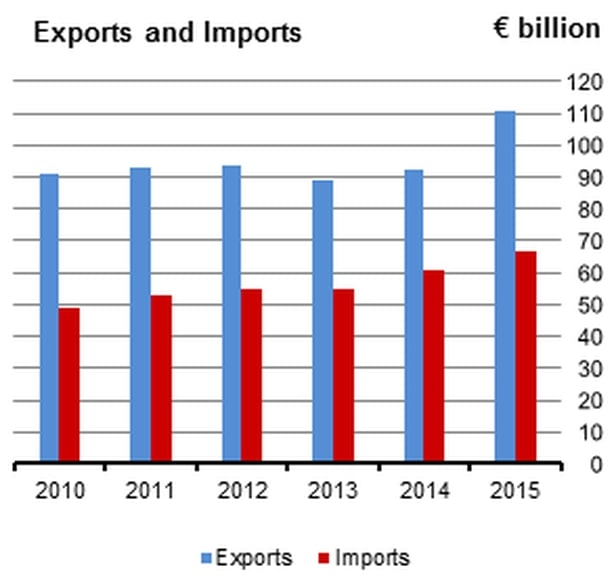
THE IRISH TRADE SURPLUS FELL BY OVER €4BN IN THE FIRST FOUR MONTHS OF THIS YEAR.

STATISTICS RELEASED BY THE CENTRAL STATISTICS OFFICE (CSO) REVEAL THAT THE NUMBER OF EXPORTS EXCEEDING IMPORTS DECLINED FROM €20.3BN IN 2015 TO €16BN THIS YEAR.

Exports to the UK declined by €162m in the year to April. Irish importation of UK products also slowed, down over €116 million compared to the January to April sequence for 2015.
Ireland’s trade surplus with the UK was €1.4bn for the first four months of the year. Germany imported €2.2bn worth of Irish goods, followed by France with €1.9bn.
Irish exports to the US were down by €480m, while Irish imports from the US fell by €771m. Exports to China were up €215m.

Obesity causes premature death, concludes a study of studies

EVEN OVERWEIGHT PEOPLE RISK EARLIER DEATH THAN THOSE OF NORMAL WEIGHT, RESEARCH SHOWS

  An overweight child and adult

MEN WHO ARE OBESE ARE AT MUCH HIGHER RISK OF PREMATURE DEATH THAN OBESE WOMEN, ACCORDING TO THE STUDY OF STUDIES PUBLISHED IN THE LANCET MEDICAL JOURNAL.

Obesity and excess weight do shorten lives, according to a major review across five continents which sought to find a definitive answer to a controversial question.
While obesity is a known risk for heart disease, stroke, cancer and type 2 diabetes, which can all be life-shortening, the impact of obesity alone has been much disputed. Overweight and obesity are measured by BMI – body mass index – which charts weight against height. Many argue that it is a seriously flawed measure because it does not allow for the muscle that replaces fat in very fit people, such as athletes.
A large group of international researchers has attempted to overcome the problems of previous studies by analysing a vast amount of data collected in smaller studies, on 3.9 million adults worldwide. They found that even overweight people risked an earlier death than those of normal weight.
“On average, overweight people lose about one year of life expectancy, and moderately obese people lose about three years of life expectancy,” said Dr Emanuele Di Angelantonio, the lead author, from the University of Cambridge.
“We also found that men who were obese were at much higher risk of premature death than obese women. This is consistent with previous observations that obese men have greater insulin resistance, liver fat levels and diabetes risk than women.”
The researchers in the Global BMI Mortality Collaboration looked at the risk of early death between the ages of 35 and 70. Men of normal weight (with a BMI of 18.5 to 25) have a 19% risk of an earlier death and women a 11% chance. For those who are moderately obese, with a BMI of 30 to 35, that rises to 29.5% for men and 14.6% for women.
If obesity does directly cause early deaths, they calculate that if all those who are overweight or obese were instead of normal weight, one in seven early deaths could be avoided in Europe and one in five in north America, where obesity rates are higher. “Obesity is second only to smoking as a cause of premature death in Europe and North America,” said co-author Prof Sir Richard Peto, from the University of Oxford.
“Smoking causes about a quarter of all premature deaths in Europe and in North America, and smokers can halve their risk of premature death by stopping. But [being] overweight and obesity now cause about one in seven of all premature deaths in Europe and one in five of all premature deaths in North America.”

New initiative launched to save threatened bee species in Ireland


Bumblebee (left) collecting pollen from a mullein and the Irish honey bee (right)

A new initiative has been launched to save Ireland’s declining bee population, following the news that one third of our 98 bee species are endangered.
The National Biodiversity Plan seeks to protect Ireland’s pollination services.
More than 68 governmental and non-governmental organisations across Europe have agreed to the shared plan, which notes 81 actions everyone can take part in to make our gardens pollinator friendly.
“If you’re a pollinator, finding enough food is the biggest challenge you have to face.” said Dr Úna FitzPatrick from the National Biodiversity Data Centre, who chaired the plan steering group.
She added “gardens can play a crucial role by acting as pit stops for busy bees as they try to move around the landscape”.
The plan includes a list of low-cost and practical actions to suit gardens of any size.
The most important thing people can do in their garden is to make sure there are bee-friendly flowers in bloom from March to October.
Dr Erin Jo Tiedeken, the project officer for the All-Ireland Plan, recommends lavender, heather, comfrey, lungwort and catmint as a great food source for bees.
The plan suggests cutting your garden lawn slightly less often to allow wildflowers such as dandelions and clovers to grow.
It also warns not to use pesticides that are harmful to pollinators.
The implementation of the All-Ireland Pollinator Plan is being coordinated by the National Biodiversity Data Centre with funding provided by the Heritage Council and Bord Bia.

New underwater microscope shows the beauty of coral turf on the ocean floor

Benthic Underwater Microscope   Benthic Underwater Microscope   Benthic Underwater Microscope
Left, Two polyps connect their gastrovascular openings at night this is dubbed ‘polyp kissing, (On right picture) Stylophora on the left of the picture and Pocillopora on the right were placed close together to induce competition. When corals compete for dominance, they emit mesenterial filaments, string-like structures,

RESEARCHERS USED THE INSTRUMENT TO CAPTURE IMAGES OF CORAL TURF WARS AND A PREVIOUSLY UNKNOWN PHENOMENON DUBBED “CORAL POLYP KISSING.”

Researchers from the Scripps Institution of Oceanography at UC San Diego have developed a diver-operated underwater microscope that can examine small-scale biological processes on the ocean floor. Referred to as the Benthic Underwater Microscope (BUM), this revolutionary tool is able to take photographs and videos of microorganisms in their native habitats without interfering with their natural settings.
Prior to the development of the BUM, scientists were forced to remove organisms from the ocean in order to analyze them with microscopes, preventing them from fully understanding the context of ecological processes.
Oceanographer Jules Jaffe led the team that developed the microscope, and he considers the instrument essential to conducting research in the ocean. “To understand the evolution of the dynamic processes taking place in the ocean, we need to observe them at the appropriate scale,” Jaffe explained.
Jaffe and his team brought the BUM to coral reefs off the coasts of Maui, Hawaii and in the Red Sea to test it in the field. While using the microscope in the Red Sea, the researchers observed corals of different species firing string-like filaments from their stomach cavities towards one another in a “coral turf war.” The filaments secreted enzymes that dissolved coral tissue in an effort to reduce competition from neighboring species. The researchers also observed individual coral polyps on a single colony embracing each other, a previously unknown phenomenon they dubbed “coral polyp kissing.”
Off the coast of Maui, the team used the BUM to observe coral bleaching, a phenomenon that occurs when waters are too warm. The change in water temperature puts stress on corals, causing them to expel algae that live in their tissue and turning them completely white. The microscope revealed a previously undiscovered honeycomb pattern formed by expelled algae as it grew on the surface of the bleached coral.
Jaffe and his team published their observations in the journal Nature Communications and also produced a video describing their research. Watch Andrew Mullen, one of the authors of the study, explain how the BUM works and see some of the beautiful footage below.     

Tuesday, June 9, 2015

Donie's Ireland daily news BLOG

Markree Castle in Sligo now sold – but it will open in March 2016 after a €5m restoration project


The exterior and the Open fire at the foot of the staircase of Markree Castle, in Co Sligo.

One of the country’s finest Victorian Gothic Revival castles has been sold to a hotel group which specialises in the restoration of such venues.
Sligo’s Markree Castle, which is a member of the luxury Manor House Hotels group, has been sold to the Corscadden family.
The property sold for an undisclosed sum, but it had been on the market at the start of May for €3.12 million.
The Corscadden family business also own Cabra Castle in Kingscourt, Co Cavan, Bellingham Castle in Castlebellingham, Co Louth, and Ballyseede Castle in Tralee, Co Kerry. All castles are operating as hotels.
Manor House Hotels is member-owned non-profit organisation, established in 1986 to market small independent luxury and family run Irish properties overseas.  The four Corscadden family owned castles are all members of Manor House Hotels.
Markree Castle will be closed until March 2016 as it undergoes a €5 million restoration project which will be carried out in three phases over three years.
The grand staircase at Markree Castle
The first phase of this will concentrate on the public areas and a large portion of the hotel’s 30 bedrooms.
Charles Cooper, who was the previous owner of Markree, will work alongside the Corscaddens to safeguard the authenticity of what is one of Ireland’s most historic castles.
This is the first time that Markree Castle has changed hands since it was gifted to the Cooper family by Cromwell in the mid-17th century. It has been a 30-bedroom hotel and popular location for wedding celebrations for the last 25 years and is situated in 225 acres of parkland, home to the castle’s resident flock of rare-breed Wensleydale sheep.
“We are delighted to add this incredible property to the Corscadden collection of Irish castles,” said Howard Corscadden.
“As a family, we have known the Coopers for many years, not just as colleagues in the hotel industry, but also as fellow members of the Manor House Hotels portfolio.
“We feel honoured that they have entrusted us to take care of their ancestral home and its 350 years of history.  It is our intention to build on the already strong reputation that Markree Castle enjoys locally, nationally and internationally.”
This is the fourth castle in the Corscadden collection.
Three generations of the family have worked in the hospitality industry, beginning with Alec Corscadden and his wife Mamie who ran the Arcadia Ballroom in Bray, Co. Wicklow during the 1940s and 1950s.
It was the premier ballroom of the Irish showband era, large enough to accommodate 5,000 on the dancefloor.  In the early 1960s, their son Pappy and his wife Mitzie converted the old regional hospital in Kildare Town into the Derby House Hotel, which ran until the 1990s.
In 1991, Pappy and Mitzie purchased the family’s first castle -Cabra Castle – before passing on the baton to their children who are the current custodians of the collection.

A new test offers hope for heart attack victims


A simple test developed in the West of Scotland could predict if a patient will survive a heart attack.

The test can accurately work out the extent of vessel injury in the heart, and can predict if the patient is likely to go on to develop heart failure, or even die.
It was developed at the Golden Jubilee Hospital in Clydebank, which is Scotland’s national heart and lung centre.
The test – known as the Index of Microvascular Resistance (IMR) – uses a pressure and temperature sensitive wire inserted into the coronary artery.
Early treatment following a heart attack can reduce the chance of heart failure and improve both wellbeing and chances of survival.
For those who survive a heart attack there is a risk that the heart will have been damaged, which can lead to heart failure.
The study was carried out in partnership with the University of Glasgow and the British Heart Foundation and will will be presented at the British Cardiovascular Society annual conference today.
Lead researcher Professor Colin Berry, a Cardiologist at the Golden Jubilee National Hospital, said: “After a suspected heart attack, a patient is routinely given a coronary angiogram to identify any narrowed blood vessels.
“Currently, we make treatment decisions based on this standard assessment technique but it can only identify narrowed vessels and cannot tell the doctor if, or how much, heart blood vessel damage has occurred.
“This new technique can tell us the level of damage in a matter of minutes, allowing us to quickly and accurately identify patients who are at a high risk of heart failure after their heart attack.
“The results of this study will help us improve the outlook for this group of patients and help us develop new treatments to limit heart damage, reducing the burden of heart failure on the patient, their families and carers.”
Professor Jeremy Pearson, Associate Medical Director at the British Heart Foundation, said: “More and more people are surviving heart attacks due to the huge advances we’ve made in cardiology, but that isn’t the end of the story.
“If we can identify the people at greatest risk of developing heart failure following a heart attack, and treat them more quickly, we could reduce the effects that these terrible events can have on individuals and communities.”

Here are the top 15 items Irish people flush down the loo (that they shouldn’t)

Are you guilty?


Irish people are flushing all sorts of items down their toilets and it’s not doing our drains or the environment any favours. 

A survey by An Taisce’s Clean Coasts Ireland and Irish Water of over 1,000 people over the age 18 reveals that three in 10 Irish adults have flushed items other than toilet paper down the toilet.
So what are we throwing down there without a thought for where it will end up?
Here’s the list:
Baby wipes 58%
Facial wipes 40%
Cotton buds 26%
Tampons 24%
Cigarette butts 21%
Plasters 18%
Condoms 18%
Food 15%
Medicines 12%
Sanitary pads 6%
Tampon applicators 5%
Toilet roll tube 4%
Nappies 2%
Cotton wool 1%
Dental floss 1%
Baby wipes are the worst offenders, with 6 in 10 adults admitting to flushing them. They are also one of the lead causes for fatbergs.
Fatbergs are caused by build up of sanitary products that can form into massive lumps of sludge.
Just recently a ten-tonne fatberg was pulled from a London sewer, so the authorities are anxious to avoid that over here.
This is the reaction you’re looking for:
One in every two females said they flushed female hygiene products, while males on the other hand dispose of more cotton buds, cigarettes, plasters and condoms.
Sure what’s the harm?
The survey also found the main reason for people doing this is due to lack of knowledge, with 40% saying they thought it was okay to do so and 33% saying they did it out of convenience.
In order to change peoples’ way of thinking, the ‘Think Before You Flush’ campaign is being launched to prevent items washing up on Ireland’s beaches.
Annabel FitzGerald, Coastal Programmes manager at An Taisce said:
“During Clean Coasts Big Beach Clean in September 2014, a total of 1,191 cotton bud sticks were found on 103 beaches. By making small changes in our flushing behaviour we can prevent the harm caused by sewage related litter in the marine environment.”
Elizabeth Arnett, head of communications in Irish Water said the initiative is necessary:
“One of our major remits is the provision of reliable wastewater treatment, but everyone has a part to play in ensuring our beaches and rivers are pollution free. Through this campaign we can work together to improve our local freshwaters and coastal areas.’’

Photographer captures breathtaking underwater shots of waves breaking


An underwater photographer has captured some incredible photos of what waves look like when they break – revealing a mysterious world beneath the surf.

Mark Tipple, a documentary photographer from South Australia, created a series of photos called Mare Vida with a slow shutter lens on the Cook Islands.
The 33-year-old, who was planning to take photographs underwater with his friend Mike, said: “On the first day the tide dropped out faster than we had anticipated, and Mike came off second best.
“A wave picked him up and bounced him over the reef for a good 20 metres, over sharp coral heads and urchins, leaving every limb to bleed as soon as he left the water.
“With the shoot put on hold until Mike’s wounds healed over I looked for something else to shoot underwater, when fish didn’t hold my interest I changed the settings on the camera, and found something I haven’t seen before.”
Mark originally created a series of underwater photos including people under the sea in the three years before he took the Mare Vida series. He made them into a book called The Underwater Project.

Sugar does not make children hyperactive, claims a psychologist


Professor David Benton says it’s a myth that sugary food and drinks make children hyperactive but parents expect children to misbehave?

Children are made hyperactive by their parents expectations, a psychologist has warned
For any parent who has witnessed the manic mayhem of a children’s birthday party, it might come as something of a shock, but sugar does not make children more hyperactive, according to experts.
Psychologists believe what parents mistake for a ‘sugar rush’ is just the natural high-spirits of children when they get together, and it is merely a coincidence that those events often include cakes or sweets.
In fact, parents could be making the problem worse by expecting their children to misbehave after sugary foods and so reinforcing the stereotype, and making youngsters act up.
Speaking at the Cheltenham Science Festival David Benton, professor of psychology at Swansea University said: “People are mixing the fact that it gives you energy with feeling energetic.
“Sugar does not increase the activity of children. It is the expectation of the parents. Children get hyperactive at party, running around wild and winding themselves up. That is the problem distinguishing one thing from another. The child knows they can let themselves go so they do.
“But there is a very clear message that sugar does not cause hyperactivity in children.”
“Because the mother anticipated a problem they put their child on a much shorter rein and interpreted behaviour differently and see what they wanted to see.
“I’ve done work where we gave glucose to many hundreds of people and I am absolutely confident it doesn’t make people feel energetic. It just doesn’t I’m afraid.”
Sugar does not make children hyperactive
  • Did banning sugar turn my kids into sweet little angels?
  • Children labelled hyperactive really ‘just naughty’
Prof Benton said studies have shown that giving sugary drinks to children at school actually makes them concentrate more fully perform better in tests and improves mood.
“They spend more time on their schoolwork,” he said,
“That’s not to say we should be giving sugar drinks to children. But children are different from adults in that their brain is a larger percentage of their body so it takes a larger percentage of energy. Also the brain tissue uses twice as much energy so you need a continual supply of energy.
“That’s not to say it should be supplied by sugar drinks but a child does need on a regular basis to be consuming food. When it is released slowly the child is in a better mood and preforms better at school.”
Children will always be more boisterous when they get together regardless of the sugar content of food
  • Children with ADHD ‘should be allowed to fidget’

Prof Benton also said it was a myth that sugar is as addictive as cocaine.
“Anything to do with pleasure involves the release of dopamine in reward pathways in the brain,” he said.
“But scientists have found no strong evidence for people, being addicted to chemical substances in certain foods.”
However Graham Macgregor , Professor Graham MacGregor, Professor of Cardiovascular Medicine at the Wolfson Institute, Queen Mary University of London, told the festival that the food industry needed to dramatically reduce the amount of sugar in processed foods to prevent the obesity epidemic growing,
“The food industry is overfeeding us with vast amounts of sugar,” he said.
“Why should we ban tobacco while allowing advertising of food that is going to kill people. It’s a scandal. We need a tax on soft drinks.
“What we eat is now the biggest cause of death and disability in the world and food industry to blame. Processed food if full of fat and salt and sugar with no feeling of satiation.”

Ancient Irish people preferred British ‘Magical’ gold to their own


The people of ancient Ireland snubbed their local gold in favor of more exotic, mystical gold found from across the sea, new research shows.

Scientists had long assumed that the gold that people in Ireland used during the early Bronze Age, about 4,000 years ago, came from nearby mineral-rich mountains. But now, extremely sensitive chemical analyses have revealed that the gold had been extracted from an area farther away, across the Irish Sea, in what’s now southwestern Britain.
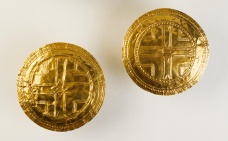
This is the oldest gold known to archaeology, said Christopher Standish, lead author of the new study and a research fellow at the University of Southampton in the United Kingdom. Dating the gold artifacts, such as embossed gold armlets and gold oval plaques, can be tricky because the artifacts are often found isolated from one another, he said.
Standish and his colleagues analyzed the lead isotopes in the gold artifacts, and compared the values to lead isotopes measured in potential sources of the gold, to determine their origin. Although the artifacts were originally collected and analyzed in the 1960s, Standish’s study is the first to conduct sensitive isotope analyses on the artifacts.
Lead isotopes are produced by the radioactive decay of the uranium that is found mixed in with the gold in the artifacts. Over time, a uranium atom will break down into a lead atom, and scientists can measure the relative amounts of uranium and lead in a sample to figure out how much time has elapsed.
When Standish began his research, he thought he would find about the same number of lead isotopes in the Mourne Mountains in northwestern Ireland and the gold relics found in Ireland, he said. When the numbers didn’t match, he looked to gold sources in southwestern Britain. Indeed, they matched closely, showing that the gold circulated in prehistoric Ireland did not come from Ireland.
Although there are many possible sources of gold in Ireland, evidence of Irish gold has not been found.
“It is unlikely that knowledge of how to extract gold didn’t exist in Ireland, as we see large-scale exploitation of other metals,” Standishsaid in a statement. “It is more probable that an ‘exotic’ origin was cherished as a key property of gold and was an important reason behind why it was imported for production.”
The mysterious, foreign gold — which was often molded into circular, sunlike shapes — complements belief systems revolving sun worship, as it would have been ideal material for sacred objects, Standish told Live Science. Knowing the source of the gold could help archaeologists learn more about the religious and functional reasons for these artifacts.
Similar gold artifacts from the early Bronze Age have not yet been discovered in Britain, indicating that people there likely viewed gold as more of a commodity. The gold was likely exported from Britain and then worked up into artifacts in Ireland, Standish said. The next steps in his research will be to measure the lead isotopes of other possible sources in southwestern Britain and Wales to form a comprehensive regional picture of the different gold deposits.